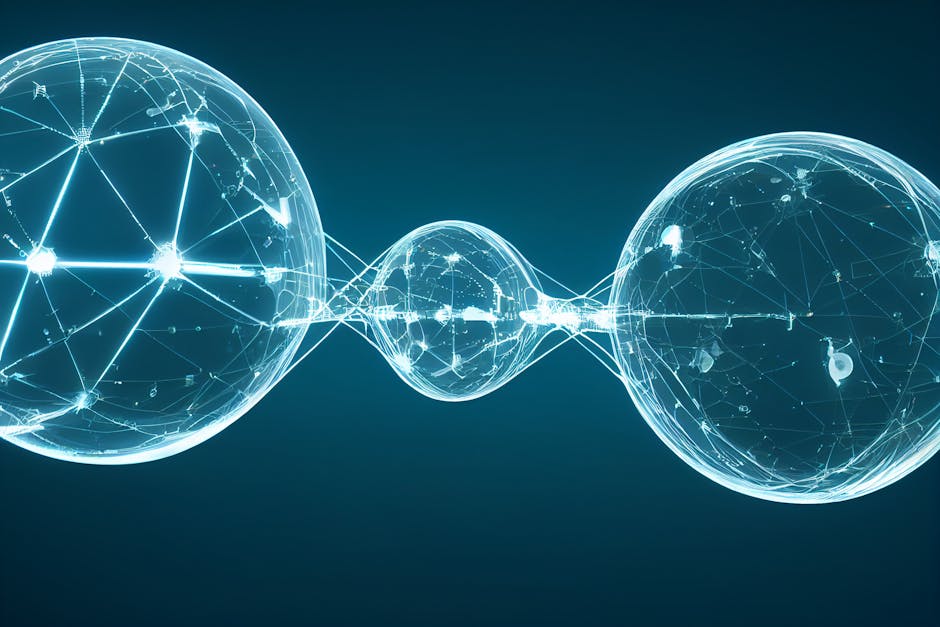
As Large Language Models evolve from experimental novelties to critical enterprise infrastructure, the limitations of standard Retrieval-Augmented Generation are becoming increasingly apparent. While traditional Vector RAG has successfully democratized semantic search by treating data as flat, statistically similar chunks, it hits a hard ceiling when faced with complex, multi-hop reasoning tasks. This architectural bottleneck has accelerated the adoption of GraphRAG, a paradigm that fundamentally reshapes retrieval by overlaying a structured Knowledge Graph onto unstructured text. Unlike vector search, which relies solely on embedding proximity, GraphRAG explicitly maps the relationships between entities, allowing the LLM to traverse connecting nodes and understand causality rather than just retrieving keywords.
This shift represents a crucial maturation in AI architecture, prioritizing contextual depth and reasoning accuracy over the raw speed of approximate nearest neighbor algorithms. Although benchmarks highlight that GraphRAG introduces higher latency and increased computational overhead compared to the simplicity of vector-only systems, the trade-off is often essential for high-stakes domains where hallucination rates must be minimized. By solving the problem of "contextual collapse"—where vital links between disparate document sections are lost in the chunking process—GraphRAG offers a path toward explainable, logically sound AI responses. For engineering teams, the move toward this hybrid or graph-centric approach is not just an optimization; it is the necessary step to unlock the next tier of automated reasoning, transforming retrieval from a simple lookup mechanism into a dynamic cognitive process.
The Verdict: GraphRAG vs. Vector RAG at a Glance
For engineering teams evaluating retrieval architectures, the choice between Vector RAG and GraphRAG is rarely about one being universally "better." It is a trade-off between speed and simplicity (Vector) versus contextual depth and reasoning (Graph).
While Vector RAG remains the standard for broad semantic search, it fundamentally treats data as flat, unconnected chunks. GraphRAG introduces a structural layer—a Knowledge Graph—that explicitly maps relationships, enabling the LLM to "reason" across documents rather than just retrieving statistically similar text.
Decision Matrix: Architecture Comparison
Use this table to map your requirements to the correct architecture.
Feature | Vector RAG | GraphRAG |
|---|---|---|
Core Data Structure | Unstructured text chunks converted to dense vector embeddings. | Structured Knowledge Graph consisting of Nodes (entities) and Edges (relationships). |
Retrieval Logic | Semantic Similarity: Finds "nearest neighbors" in vector space based on query embedding. | Graph Traversal: Navigates explicit paths between entities to find connected facts. |
Setup Complexity | Low: Standardized pipelines (Chunk → Embed → Store). | High: Requires defining ontologies, entity extraction, and relationship mapping. |
Latency | Low: Millisecond-level retrieval via ANN (Approximate Nearest Neighbor). | Moderate/High: Traversal adds overhead; often 2.4x higher latency on average compared to vector search. |
Best Use Case | Simple Q&A, FAQ lookups, and broad document search. | Complex reasoning, multi-hop queries, and supply chain/fraud analysis. |
The "Multi-Hop" Litmus Test
To determine if you need the overhead of GraphRAG, apply the Multi-Hop Litmus Test.
If a user query requires connecting two disparate pieces of information that do not share keywords and are not located in the same document chunk, Vector RAG will likely fail.
- Vector RAG Failure Mode:
- Query: "How did the 2021 regulatory change impact our Q3 2023 revenue?"
- Mechanism: The vector engine retrieves chunks about "2021 regulations" and "Q3 2023 revenue."
- Result: It misses the intermediate link—perhaps the regulation caused a "supply chain delay" which then impacted revenue. Without that bridge, the LLM hallucinates a connection or claims it doesn't know.
- GraphRAG Success Mode:
- Mechanism: The system identifies the "Regulation" node, traverses the edge
caused_byto "Supply Chain Delay," and follows the edgeimpactedto "Q3 Revenue." - Result: The retrieval context includes the causal chain, allowing the LLM to generate an accurate answer.
- Mechanism: The system identifies the "Regulation" node, traverses the edge
Cost and Performance Reality Check
Moving to GraphRAG is not free. Beyond the engineering hours required to build and maintain the graph schema, the operational costs are higher. Benchmarks indicate that GraphRAG can cost roughly 2x more per query due to increased token usage (processing schema/relationships) and more complex database infrastructure.
However, for enterprise applications where "hallucination due to missing context" is a critical failure—such as in financial compliance or biomedical research—this cost is justified by the significant gain in retrieval completeness. Conversely, for standard internal documentation search or customer support bots handling basic FAQs, Vector RAG remains the faster, more cost-effective choice.
The Ceiling of Vector Search: Why We Need Graphs

While vector databases have revolutionized information retrieval by enabling semantic search, they are fundamentally limited by their reliance on embedding proximity. Standard Vector RAG treats knowledge as a "flat bag of chunks," where retrieval is determined by calculating the cosine similarity between a query vector and document vectors. This approach works exceptionally well for direct fact lookup—such as "What is the capital of France?"—but often hits a hard ceiling when queries require reasoning across disparate pieces of information.
The Limitation of Semantic Similarity
The core issue lies in the definition of "similarity." Vector search engines retrieve chunks that are semantically close to the query, not necessarily those that are logically or structurally connected.
This phenomenon is often described as Contextual Collapse. When a large document is split into isolated chunks (e.g., 512 tokens), the structural relationships between those chunks are severed. If a critical connection relies on a bridge entity mentioned in a completely different section of the text, vector search will likely miss it because the two chunks do not share high semantic overlap with the query or with each other in the embedding space.
As noted in industry analysis, vector-based RAG struggles with complex relationships because chunking loses the structural context necessary to answer questions like "How is X related to Y through Z?".
The "Multi-Hop" Reasoning Failure
The most distinct failure mode of Vector RAG is its inability to perform multi-hop reasoning—the process of connecting two or more indirect facts to derive an answer.
Consider a corporate query: "Who was the lead engineer on Project Apollo when the Series B funding was finalized?"
A standard vector search might retrieve:
- A chunk about Project Apollo's launch, mentioning "Sarah Jenkins" as a lead.
- A chunk about Series B funding, mentioning a date of "November 2023."
However, without a chunk explicitly stating "Sarah Jenkins was leading Project Apollo during the Series B round," the LLM lacks the "connective tissue" to answer with certainty. It sees two isolated facts but cannot verify the temporal overlap. In contrast, a graph-based approach would explicitly store the relationship: (Person: Sarah Jenkins)-[ROLE: Lead]->(Project: Apollo) and (Project: Apollo)-[TIMELINE]->(Event: Series B), allowing for deterministic traversal.
Hallucination Due to Missing Context
When vector retrieval fails to surface the bridging context, the LLM is forced to guess. This leads to two types of errors:
- Confabulation: The model assumes a connection exists (e.g., "Sarah Jenkins led the funding round") to satisfy the user's prompt, resulting in a plausible but incorrect answer.
- Negative Hallucination: The model incorrectly declares that the information does not exist because it could not find a single contiguous chunk linking all keywords. As highlighted in recent experiments, standard RAG systems frequently suffer from this “negative hallucination” effect, failing on the "first jump" of a reasoning chain.
Vector RAG is excellent for finding needles in haystacks, provided the needle looks like the query. But when the answer requires assembling the haystack into a structured narrative, vector search provides insufficient context, leaving the LLM to hallucinate the gaps.
Architecture Deep Dive: How GraphRAG Works
To understand why GraphRAG outperforms vector baselines in complex reasoning tasks, we must look beyond the buzzwords and examine the fundamental differences in how data is indexed and retrieved. While vector stores rely on mathematical proximity in a high-dimensional space, GraphRAG relies on explicit structural relationships.
Phase 1: Indexing (The Structural Shift)
The divergence begins at ingestion. In a standard Vector RAG pipeline, documents are split into chunks (e.g., 512 tokens), embedded into vectors, and stored in a flat index. The system retains the semantic meaning of the chunk but discards the structural context of how entities in that chunk relate to entities in other chunks.
GraphRAG introduces an intermediate extraction step. Instead of simply embedding text, an LLM processes the raw content to identify Nodes (entities like people, organizations, concepts) and Edges (relationships like OWNS, AUTHORED, DEPENDS_ON).
Consider the sentence: "Service A failed because dependency B timed out."
- Vector Store: Stores a numerical array representing the semantic vibe of "failure" and "timeout."
- GraphRAG: Creates a structured triple:
(Service A) -[CAUSED_BY]-> (Dependency B).
This process builds a Knowledge Graph where information is physically connected, regardless of where it appeared in the source text. As noted in technical analyses by Vellum AI, this structure allows the system to integrate diverse knowledge, providing a holistic view rather than the "myopia" of isolated vector chunks.
Phase 2: Retrieval (Traversal vs. Similarity)
The retrieval mechanism is where the architectural difference becomes tangible.
Vector Retrieval (Nearest Neighbor Search):
When a user asks a question, the system converts the query into a vector and performs an Approximate Nearest Neighbor (ANN) search. It retrieves the top-k chunks that are mathematically closest. This is efficient but brittle; if the answer requires connecting facts that don't share semantic keywords (the "multi-hop" problem), vector search often fails to retrieve the bridging context.
Graph Retrieval (Graph Traversal):
GraphRAG treats retrieval as a navigation problem.
- Anchoring: The system identifies key entities in the user's query (e.g., "Service A").
- Traversal: It performs a "walk" along the edges connected to those entities, gathering neighbors (1-hop) or neighbors of neighbors (2-hop).
- Contextual Assembly: The final context includes not just the text mentioning "Service A," but the explicit relationship to "Dependency B," even if "Dependency B" was mentioned in a completely different document.
This approach enables Contextual Retrieval, preserving the logical thread between facts. As described in Instaclustr's comparison, this mechanism leverages graph traversal to explore relationships, enabling complex reasoning that pure vector methods miss.
Code-Concept: The Logic Gap
For engineers, the difference is best visualized as a change in query logic.
Vector Logic:
# Pure semantic similarity
# Risk: Returns chunks about "Service A" generally, but misses the specific root cause
# if "Dependency B" isn't semantically similar to the query.
relevantchunks = vectordb.similaritysearch(queryembedding, k=5)
GraphRAG Logic:
# Entity-anchored traversal
# Benefit: Explicitly follows the "CAUSEDBY" edge to find the root cause.
startnodes = extractentities(query) # e.g., "Service A"
subgraph = graphdb.traverse(
    startnodes,
    relationships=["CAUSEDBY", "DEPENDS_ON"],
    depth=2
)
# The context now contains the specific path to the answer
context = synthesize(subgraph)
In many production implementations, a hybrid approach is the gold standard. As Neo4j's developer guides suggest, modern architectures often use vector search to identify the initial relevant nodes (anchoring) and then use the knowledge graph to traverse and expand the context. This combination ensures you get the fuzzy matching capabilities of vectors with the precise, multi-hop reasoning of graphs.
Benchmarks: Accuracy, Explainability, and Hallucination Rates
For engineering teams evaluating the migration from standard Vector RAG to GraphRAG, the decision rarely hinges on theoretical elegance. It comes down to three hard metrics: does it answer complex questions more accurately, can we debug why it gave that answer, and does it lie less often? Recent benchmarks suggest that while Vector RAG creates a strong baseline for simple retrieval, GraphRAG significantly outperforms it in scenarios requiring multi-step reasoning.
Quantitative Gains in Multi-Hop Reasoning
The primary limitation of Vector RAG is its reliance on semantic similarity. If a user asks a question that requires connecting piece A (found in document X) to piece B (found in document Y), vector search often fails to retrieve both chunks if they don't share similar embedding vectors to the query itself.
Benchmarks on datasets like HotpotQA—designed specifically to test multi-hop reasoning—highlight this gap. A comparative study indicates that GraphRAG architectures can yield a performance improvement of nearly 20% across the full dataset compared to standard RAG. More tellingly, for questions where standard RAG failed completely (returning "I don't know"), GraphRAG was able to successfully generate an answer in 80–90% of cases by traversing the structured links between entities.
Similarly, evaluations in complex domains like telecommunications show that while Vector RAG performs well on "easy" factual lookups (scoring ~0.61 accuracy), its performance degrades on medium and hard questions. In contrast, Graph-based pipelines outperform vector-based RAG on these complex tasks, maintaining higher context relevance and answer faithfulness.
The "Black Box" vs. Provenance
In enterprise environments—particularly Finance, Healthcare, and Legal—accuracy is not enough; auditability is required. This is where the architectural difference becomes most critical.
- Vector RAG (Opaque): When a vector search retrieves a chunk, the only justification is a mathematical similarity score (e.g.,
cosine_similarity: 0.89). It cannot explain why it thinks the document is relevant beyond "the embeddings are close." If the model hallucinates a connection between two retrieved chunks, debugging is difficult because the relationship exists only in the model's latent space. - GraphRAG (Transparent): GraphRAG relies on explicit traversal paths. As noted in industry analyses, this shifts the paradigm from "Trust Me" to "Prove It".
For example, consider a query: "Who led Project Atlas when the Q4 budget was approved?"
A vector search might retrieve a bio of a manager and a separate memo about the Q4 budget. However, it lacks the "connective tissue" to prove the manager was active during that specific date range. GraphRAG, conversely, retrieves the specific path:Manager --(managed)--> Project Atlas --(during)--> 2023 --(has_budget)--> Q4 Approval.
This provides a deterministic lineage (provenance) for the answer, allowing engineers to trace exactly which relationship led to the conclusion.
Reducing Hallucination Rates
Hallucinations often occur when an LLM tries to bridge the gap between two disparate chunks of text that lack explicit context. By constraining the LLM to structured facts (Subject, Predicate, Object), GraphRAG reduces the "creative license" the model takes.
Research on "Faithfulness"—a metric measuring how well the generated answer adheres to the retrieved context—shows that Graph and Hybrid approaches consistently score higher (0.59) compared to Vector RAG (0.55). While this numerical difference may appear subtle, in production, it represents a significant reduction in fabrication. By anchoring generation to a knowledge graph, the system effectively prevents the model from inventing relationships that do not exist in the source data, addressing the "lost relationships" problem common in ineffective text chunking.
The Engineering Reality: Complexity, Latency, and Cost
While the accuracy gains of GraphRAG are compelling, they come with a significant "engineering tax." For senior engineers and architects, the decision to migrate from a standard Vector RAG to a Graph-based system must be weighed against tangible increases in system complexity, query latency, and operational costs. It is not merely a drop-in replacement; it is a fundamental architectural shift.
The "Setup Tax": From Chunking to Ontology Design
In a standard Vector RAG pipeline, the ingestion process is relatively linear: chunk the text, generate embeddings, and upsert into a vector store. This approach is "schema-agnostic"—the system does not need to understand the data structure, only its semantic similarity.
GraphRAG breaks this simplicity. Before a single query can be answered, you face the Cold Start problem: you must define an ontology (the schema of nodes and edges) that accurately represents your domain. As noted in industry analyses, building a comprehensive knowledge graph is labor-intensive, requiring pipelines for entity extraction, relationship resolution, and schema enforcement.
The complexity manifests in two specific areas:
- Extraction Pipelines: You cannot simply "store" text. You must run LLMs over your raw data to identify entities (e.g., "Product X", "Error 500") and relationships (e.g., "CAUSES", "MITIGATED_BY"). This effectively turns your ingestion process into a heavy ETL workload.
- Dirty Data Handling: Unlike vector stores which are tolerant of noise, graphs are brittle to duplicates. If one document refers to "AWS" and another to "Amazon Web Services," a vector store sees them as similar; a graph sees them as two disconnected nodes unless you implement rigorous entity resolution (deduplication) layers.
Latency Analysis: The Cost of Traversal
Vector search relies on Approximate Nearest Neighbor (ANN) algorithms, which are mathematically optimized for speed, often returning results in milliseconds regardless of dataset size. GraphRAG, however, relies on graph traversals (hopping from node to node), which are computationally more expensive.
Recent benchmarks highlight this latency penalty:
- Simple Lookup: GraphRAG (1.2s) is roughly 50% slower than Vector RAG (0.8s).
- Multi-Hop Queries: The gap widens significantly. GraphRAG averages 2.4s, nearly 2.5x slower than Vector RAG (0.9s).
- P99 Latency: For complex aggregations, GraphRAG tail latencies can reach 4.5s, rendering it unsuitable for real-time applications requiring sub-second responses (e.g., autocomplete or voice bots).
This latency stems from the "retrieval logic." While a vector DB performs a single index lookup, a GraphRAG system often executes a multi-step workflow: identifying entry nodes, traversing edges to gather context, and often re-ranking the subgraph before passing it to the LLM.
Operational Costs and TCO
The Total Cost of Ownership (TCO) for GraphRAG is higher, primarily driven by the "LLM tax" during both ingestion and retrieval.
- Ingestion Cost: In Vector RAG, you pay for embedding generation (cheap). In GraphRAG, you pay for LLM inference to extract entities and relationships from every document. This can increase ingestion costs by orders of magnitude.
- Query Cost: Because GraphRAG retrieves structured context, the prompts sent to the LLM often contain more tokens (the graph schema, node attributes, and edge definitions). Benchmarks suggest the total cost per query jumps from ~0.034 for GraphRAG—a ~47% increase.
- Infrastructure: While vector databases (like Pinecone) are relatively inexpensive, production-grade graph databases (like Neo4j or Neptune) often carry higher licensing or managed service fees. For a limited budget scenario, infrastructure costs can rise from ~800/month for a Graph setup.
Summary of Trade-offs
Ultimately, GraphRAG is not a "better" RAG; it is a "specialized" RAG. It trades speed and simplicity for context and explainability.
Feature | Vector RAG | GraphRAG | Engineering Implication |
|---|---|---|---|
Setup | Low (Chunk & Embed) | High (Ontology & ETL) | Expect weeks of data modeling before launch. |
Latency | < 1s (P50) | ~2.2s (P50) | Avoid GraphRAG for speed-critical user paths. |
Maintenance | Low (Re-index chunks) | High (Schema drift, Entity Resolution) | Requires ongoing data stewardship. |
Best For | Semantic similarity, broad search | Multi-hop reasoning, auditability | Use Graph only when "reasoning" is the bottleneck. |
The Optimal Path: Hybrid RAG Architecture
In production environments, the debate between GraphRAG and Vector RAG is often a false dichotomy. While GraphRAG solves the reasoning and hallucination problems inherent in vector-only systems, it introduces latency and engineering complexity. Consequently, the practical industry standard is converging on Hybrid RAG—an architecture that leverages the semantic flexibility of vectors alongside the structured precision of knowledge graphs.
The Mechanics of Fusion
Hybrid RAG operates on the principle of complementary strengths. Vector search excels at identifying broad semantic similarities and handling unstructured nuance (e.g., matching "automobile" to "car"), while knowledge graphs provide the "factual spine" required for multi-hop reasoning and auditability.
A typical Hybrid RAG workflow follows this pipeline to balance the latency vs. accuracy trade-off:
- Initial Retrieval (Vector Layer): The system executes a standard Approximate Nearest Neighbor (ANN) search to rapidly retrieve a broad set of candidate chunks. This ensures that relevant unstructured context—which might not yet exist in the ontology—is not missed.
- Context Injection (Graph Layer): The system identifies entities within the user query or the retrieved chunks and traverses the knowledge graph to fetch related nodes (e.g., "Supplier A" is connected to "Part B"). This step injects structured facts that "ground" the LLM, preventing it from hallucinating relationships that don't exist.
- Reranking and Synthesis: The unstructured vector context and the structured graph context are concatenated. Advanced implementations may use reranking models to prioritize graph-verified evidence before feeding the combined context window to the LLM.
Research backs this architectural shift: recent studies demonstrate that HybridRAG offers improvements over VectorRAG and GraphRAG, particularly in metrics like faithfulness and answer relevancy. By combining these methods, engineers can maintain high context recall without sacrificing precision.
Strategic Implementation: When to Upgrade
Implementing a Knowledge Graph is a significant engineering investment compared to spinning up a vector store. Therefore, the recommended adoption path is iterative rather than binary:
- Phase 1: Vector Baseline. Start with a standard Vector RAG implementation. It is cost-effective, easy to scale, and sufficient for general Q&A tasks where deep reasoning is not required.
- Phase 2: Hybrid Enhancement. When you hit the "accuracy ceiling"—characterized by persistent hallucinations on multi-hop queries or an inability to explain why an answer was retrieved—introduce the graph layer.
As noted in enterprise deployments, fusing Knowledge Graphs with traditional vector RAG is particularly effective for domains like financial analysis or compliance, where you need to lock in high-precision evidence while still capturing the nuanced context that vectors provide.
Ultimately, the goal is not to choose between "fast" or "smart," but to architect a system where vector search provides the breadth of coverage and the knowledge graph enforces the boundaries of truth.