The 2026 quantitative trading landscape is undergoing a profound paradigm shift. Large Language Models (LLM) empower AI Agents with unprecedented unstructured data parsing capabilities, enabling precise cross-market probability hedging and completely reshaping the core logic of decentralized prediction markets and Polymarket arbitrage. This new automated trading practice abandons subjective betting on event outcomes. Instead, it monitors implied probability deviations between traditional financial derivatives and on-chain platforms 24/7, using rigorous expected value (EV) calculations to pinpoint mispriced assets. Leveraging continuously iterating open-source arbitrage scripts and detailed prediction market backtesting data, traders can deploy agents to execute two-way hedging in milliseconds, converting fleeting market divergences into real returns (PnL) immune to unilateral fluctuations. For investors seeking stable profit models, mastering this mechanism is not just a hardcore beginner's guide to AI arbitrage, but a structural opportunity to break Wall Street's technological monopoly. However, behind machine computing power crushing human subjective judgment, true winners rely not on mystical predictions, but on the ultimate pursuit of API latency optimization and deep defense against smart contract risks. Stripping away the over-deification of AI, this large model-based arbitrage mechanism is essentially an ultimate probability optimization engine, using cold mathematical logic and rigorous risk management to transform market uncertainty into a statistical absolute advantage.
Core Mechanism: What is AI Agent Prediction Market Arbitrage?
The core mechanism of AI Agent prediction market arbitrage is essentially utilizing machine computing power to capture pricing consensus deviations across different trading platforms. To quickly understand this arbitrage logic, it can be distilled into the following three core steps:
- Real-time monitoring of implied probability differences: Scanning traditional options markets and decentralized prediction markets (e.g., Polymarket) around the clock for the pricing of the same event, seeking probability mismatches caused by liquidity or sentiment fluctuations.
- Utilizing Expected Value (EV) to identify price dislocations: Calculating the difference between the true probability of an event and the current market quotes using mathematical models, precisely pinpointing overvalued or undervalued contract assets.
- Automated cross-market order placement to lock in profits: Simultaneously buying undervalued assets and shorting overvalued assets within milliseconds, locking in risk-free returns unaffected by the final event outcome through hedging mechanisms.
This cross-market arbitrage logic has long existed in traditional finance, but the core driving force behind its explosive growth in 2026 lies in the qualitative leap in the data parsing capabilities of Large Language Models (LLMs). Today's AI Agents have completely broken free from the early scope of simple text generation, evolving into intelligent trading systems capable of processing massive amounts of on-chain data, breaking news streams, and social media sentiment in real-time. LLMs can perform probability optimization in uncertain environments, instantly transforming unstructured information into executable trading signals, bridging the technical gap that previously only top Wall Street quantitative institutions could cross.
Stripping away the obscure financial jargon, the underlying logic of this mechanism is actually very clear. Below, we will use specific, time-sensitive cases to deeply deconstruct the actual operational steps of "probability hedging" for you, compare the overwhelming advantages of AI over traditional manual trading, and directly address the structural risks and slippage traps that cannot be ignored in actual deployment.
Understand "Probability Hedging" and Cross-Market Arbitrage in 3 Steps
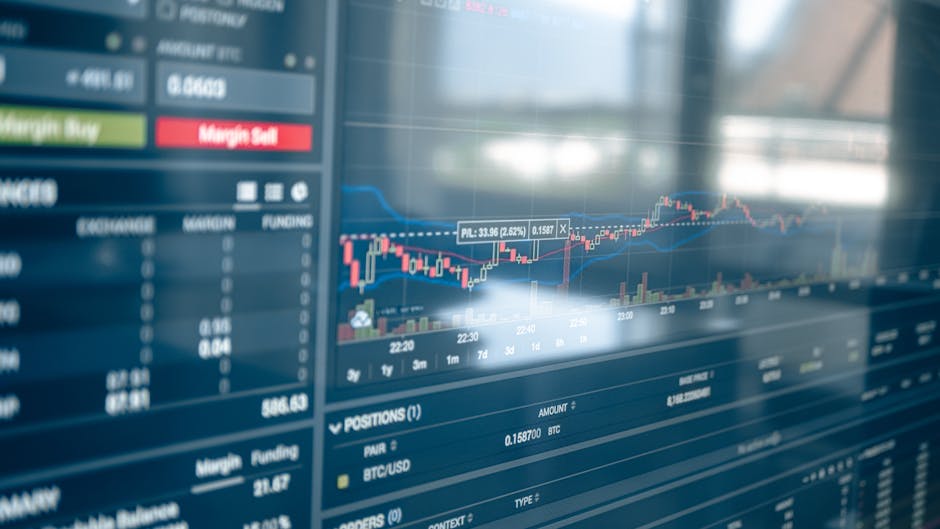
What is "Implied Probability"? Simply put, it is the likelihood of an event occurring as voted by the market with real money.
In prediction markets like Polymarket, price directly equates to probability: if a contract betting "Yes" is priced at 1, then the market's current implied probability of occurrence is 55%. In traditional finance, the options market itself acts as a giant probability computer; through the prices of call and put options at different strike prices, an exact percentage can similarly be deduced.
When these two markets have divergent "views" on the same event, arbitrage space is born. Let's break this down using a highly timely case: "The probability of OpenAI achieving AGI (Artificial General Intelligence) before 2030".
Suppose a pricing dislocation between the two different markets occurs at this moment:
- Traditional Options Market (consensus deduced through related AI tech stock derivatives): Implied probability is 62%.
- Polymarket Prediction Market: The "Yes" contract for this event is trading at $0.55, with an implied probability of only 55%.
This 7% probability difference is a "free lunch" in the eyes of an AI Agent. A complete cross-market probability hedge requires only the following three steps:
- Step 1: Real-time Monitoring and Conversion. The Agent scrapes complex data from traditional options exchanges 24/7, converts it into standard percentage probabilities, and aligns it in real-time with the simple pricing of prediction markets (e.g., $0.55).
- Step 2: Identifying Price Mismatches and Calculating Expected Value. When the true probability (the 62% consensus of the options market) is higher than the prediction market price (55%), the system calculates a positive expected return. That is to say, because the asset in the prediction market is incorrectly undervalued, buying it holds a mathematically guaranteed long-term winning advantage.
- Step 3: Cross-Market Bidirectional Locking. The Agent will buy a large amount of the undervalued "Yes" shares in the prediction market, while simultaneously shorting an equal amount of assets in the options market or related derivatives market to hedge. Through this bidirectional operation, regardless of whether OpenAI actually achieves AGI in 2030, as long as the prices of the two markets eventually converge, the system can safely capture this 7% spread profit.
To more intuitively demonstrate the overwhelming superiority of this arbitrage logic, we can compare the core differences between traditional manual trading and AI cross-market hedging through the following table:
Dimension | Traditional Manual Hedging | Cross-Market Probability Hedging (AI Agent) |
|---|---|---|
Data Processing Capability | Relies on individual traders monitoring the market, usually only able to focus on a few familiar assets simultaneously. | Millisecond-level concurrent monitoring of implied probability differences across thousands of prediction contracts and options markets. |
Arbitrage Opportunity Discovery | Severely lagging. Usually intervenes only when the spread widens to a visible extent, making opportunities easily preempted. | Extremely fast response. Instantly captures even a tiny 1% deviation in implied probabilities between the two markets. |
Risk Exposure Management | Prone to exposing unilateral risk (e.g., unilaterally buying "Yes", purely gambling on the final outcome of the event). | Strict bidirectional locking (buying the undervalued end, shorting the overvalued end), completely stripping away the outcome risk of the event itself. |
Core Source of Profit | Predicting the final win or loss of the event (carrying strong subjective judgment and gambling nature). | The "probability difference" between the two markets and price convergence (pure mathematical and statistical arbitrage). |
In this process, no obscure financial indicators interfere with decision-making. The AI Agent does not care whether OpenAI's technical route is correct; it only cares about one thing: strictly executing probability optimization in an uncertain environment, transforming the market's pricing errors into risk-free, deterministic returns.
Why Do AI Agents Crush Traditional Manual Trading?
Arbitrage windows in prediction markets are often fleeting, and traditional manual traders frequently struggle when dealing with complex cross-platform, multi-variable calculations. In contrast, AI Agents achieve an overwhelming advantage over human traders through three core strengths:
- 24/7 Cross-Market Monitoring: While humans need to rest, AI bots can simultaneously monitor thousands of niche markets (such as Polymarket and traditional options platforms), capturing minute mismatches in implied probabilities in real time.
- Millisecond-Level Emotionless Execution: When facing severe market volatility, AI can completely strip away fear and greed, strictly executing expected value (EV)-based trading strategies at millisecond speeds, eliminating the hesitation and slippage risks associated with manual order placement.
- Automated Portfolio Rebalancing: Modern AI agents are not just single-threaded order placement tools; they can also dynamically test strategy variants, optimize execution thresholds, and automatically rebalance exposure when market volatility changes, and even automatically close positions to stop losses when performance deteriorates.
Beyond basic numerical calculations, breakthroughs by Large Language Models (LLMs) in parsing unstructured data have endowed AI Agents with the ability to anticipate probability fluctuations in advance. In prediction markets, the true probability of an event occurring is often reflected in external information sources before it impacts the price. AI Agents can ingest and aggregate massive amounts of data in real time via APIs—including breaking news streams, abnormal movements in on-chain whale wallets, and sentiment indicators on social media. When the model uses Natural Language Processing (NLP) technology to identify that the true probability of an event (e.g., the passage of a bill) has rapidly surged to 60%, while the order book quotes in the prediction market remain at 40%, the Agent will automatically buy the undervalued asset and sell the overvalued asset before retail investors can react. This information asymmetry based on data depth is impossible for humans to acquire through manual analysis.
However, we must strip away the excessive mythologizing of artificial intelligence. AI Agents are not "crystal balls" with the magic to predict the future. As revealed by the architectural philosophy of the on-chain smart trading system TradeAI, its core objective has never been the mystical "prediction of the market," but rather extreme probability optimization and risk management in uncertain environments. Essentially, an AI Agent in prediction markets is merely an extremely efficient "execution and calculation engine." It relies on rigorous risk control frameworks, continuously retrained machine learning models, and robust system infrastructure to earn statistically certain returns. Once market liquidity dries up or APIs experience high latency, even the smartest models cannot create profits out of thin air. Therefore, viewing AI as a hardcore tool for managing probability distributions, rather than a guaranteed get-rich-quick code, is the objective understanding that quantitative arbitrageurs should possess.
The Cornerstone of Profit: Expected Value (EV) Calculation and Position Management Model

In the low-margin game of prediction markets, intuition is the cheapest asset, while mathematics is the only faith. The core reason why AI Agents can completely outclass traditional human traders lies in their ability to strip away all emotional interference, transforming every market pricing deviation into a pure mathematical expectation problem. To build an arbitrage machine capable of surviving and consistently profiting in 2026, two major mathematical cornerstones must be implanted: Expected Value (EV) monitoring and position management based on the Kelly Criterion.
Expected Value (EV): Understanding the AI's "Trigger Logic" in Plain English
Expected Value (EV) refers to the average return obtained per trade after repeating the same trade an infinite number of times under the same probabilities. In prediction markets like Polymarket, the final settlement of assets is extremely simple: if the event occurs, the token value is $1; if the event does not occur, the token value goes to zero.
In the most down-to-earth terms: The AI Agent patrols various order books every day, looking for those commodities whose "price is lower than the actual win rate."
Suppose that through data mining and sentiment analysis by a large language model, the AI determines the true probability () of an event occurring to be 70%. However, at this time, due to a liquidity gap or mass panic, the market has driven the price of this share () down to $0.60.
For the AI, the expected value of this trade is calculated as follows:
For every 0.40, and a 30% probability of losing the principal of $0.60. As long as the EV is positive (+EV), this machine will pull the trigger without hesitation.
Kelly Criterion: The AI's Bottom Line Against Liquidation
Finding a +EV trade is only the first step. Countless traders with high-win-rate strategies ultimately face destruction, all due to poor position management—going all-in on a seemingly 90% win-rate "sure thing," only to unfortunately hit that 10% black swan and get liquidated outright.
For a fully automated AI Agent, risk control and long-term profitability strategies are more important than a single massive windfall. This is where the Kelly Criterion comes into play. By calculating the mathematical relationship between win rate and odds, it tells the AI what the optimal betting capital proportion is for the current trade, thereby maximizing the long-term return on investment while reducing the risk of ruin to infinitely close to zero.
Core Formula Block: Mapping from Theory to Code
When translating these mathematical principles into Python scripts or smart contract logic executable by an AI Agent, we typically use the following simplified mathematical models:
Core Formulas of the AI Arbitrage Decision Engine
1. Expected Value Determination (EV)
Logic: If and only if , the AI will proceed to the next step of position calculation.
2. Optimal Position via Kelly Criterion (Kelly Fraction, )
$f^$: The recommended proportion of total capital to invest (e.g., 0.25 means utilizing 25% of the capital)
* : The true win rate determined by the AI (e.g., 0.70)
* : The profit-loss odds of the prediction market. When the buy price is ,
Practical Simulation:
Continuing with the example above, the AI determines the win rate to be 70% (), and the market price is V_{market} = 0.6$).
- Calculate the odds : Buying costs 1 (netting b = 0.4 / 0.6 \approx 0.667$.
- Substitute into the Kelly Criterion: .
- AI Decision: Extract 25% of the current capital pool to buy the asset.
Translating into Executable Engineering Logic for the AI Agent
In real-world engineering deployments, we absolutely cannot let the AI trade directly using "Full Kelly." This is because the real world is full of noise: oracles may be delayed, APIs will throw errors, and the large language model's estimation of the true probability () will inevitably contain margins of error.
To safely implement the formula within the AI Agent, senior quantitative developers typically introduce the following mechanisms into the code:
- Half-Kelly Constraint: Forcibly multiply the calculated by 0.5 in the code. This not only significantly reduces the drawdown volatility of the capital pool but also leaves room for error regarding the large model's "hallucinations" or probability misjudgments.
- Hard Position Cap (Hard Cap): No matter how tempting the proportion calculated by the Kelly Criterion is, forcibly set a single-trade limit in the configuration file (for example,
MAXPOSITIONSIZE = 0.04, meaning a single trade cannot exceed 4% of the total capital). - Dynamic Risk Premium Filtering: Prediction markets carry smart contract risks and liquidity depletion risks. Before execution, the AI must quantify these unhedgeable systemic risks into a "Risk Premium" parameter , and apply a discount deduction when calculating . This ensures that even in the most extreme market environments, the Agent can still adhere to the principle that "survival is the prerequisite for generating returns."
-----
Practical Automated Trading: Deploying an Open-Source Arbitrage Script from Scratch

Between theoretical derivation and real-world trading profitability lies a chasm known as "engineering implementation." In the micro-profit arbitrage of prediction markets, relying solely on manual expected value calculations or order book observations no longer stands a chance. A modern arbitrage machine is a highly automated system, essentially functioning as a micro-quantitative startup.
To deploy an AI arbitrage Agent for Polymarket from scratch, you need to build a modular architecture that combines high data throughput with intelligent decision-making. The official open-source Polymarket Agents project provides an excellent engineering starting point. A standard, combat-ready Agent tech stack typically includes the following core components:
- Core Language and Interaction Layer: Primarily Python (3.9+ recommended), paired with Web3.py to handle underlying interactions with the Polygon chain, wallet private key management, and EIP-712 signatures.
- Node and Data Infrastructure: Relies on high-availability RPC nodes like Alchemy or Infura to ensure the stability of on-chain state queries; simultaneously uses PostgreSQL or columnar databases to accumulate historical order books, spreads, and market metadata for model backtesting.
- Large Language Model (LLM) Interface: Integrates with OpenAI or DeepSeek APIs to quickly parse complex market rules, extract event dependencies (Dependency Detection), and complete fundamental logic validation at the millisecond level.
In terms of architectural design, an outstanding arbitrage script must adhere to strict modular decoupling. Its core logic chain can be broken down into three key nodes:
- Data Pipeline: Listens to real-time order book updates via WebSocket and integrates with the Gamma API to maintain synchronization of the active market list.
- Pricing & Optimization: Discards the simplistic highest bid/lowest ask (Top of Book) approach, adopting the Volume-Weighted Average Price (VWAP) to calculate the true cost of position building, thereby preventing being misled by extremely thin orders (Fake Walls).
- Execution: Responsible for concurrently submitting orders, handling failure rollbacks for non-atomic trades, and managing the USDC capital pool.
However, completing the setup and code deployment of the aforementioned tech stack merely means you have secured an entry ticket to prediction markets. In actual operation, the EV (Expected Value) on paper is often devoured by real-world engineering friction. What determines whether an AI Agent ultimately reaps massive profits or continuously bleeds capital is its ability to handle extreme network environments and concurrent requests. Next, we will delve into the most fatal latency bottlenecks in practical operations and optimization strategies for cross-market monitoring.
Cross-Market Monitoring and API Latency Optimization in Practice
In the practical application of Micro-Arbitrage, even a delay of a few tens of milliseconds can cause your AI Agent to hand over what was originally risk-free profit to others. When multiple arbitrage bots are simultaneously eyeing the same multi-outcome event on Polymarket, the competition is no longer just about the probability prediction capabilities of large models, but squeezing performance out of the underlying infrastructure. Relying solely on REST APIs for high-frequency polling will not only quickly trigger the platform's Rate Limits but also introduce fatal HTTP handshake overhead. The correct approach is: use the REST API only for low-frequency basic data synchronization (such as calling the Gamma API every 5 seconds to refresh the active market list), and hand over all core order book monitoring to WebSocket real-time streams. In addition, physical network latency cannot be ignored. For the best results, it is highly recommended to deploy your node on a VPS close to the Polymarket servers to maintain an extremely low ping value, because in the arbitrage game, high latency means being front-run.
To achieve concurrent monitoring of hundreds or thousands of prediction markets, we need to build a non-blocking architecture based on asynchronous I/O. Below is a snippet of core logic pseudocode based on Python's asyncio and websockets, demonstrating how to efficiently maintain the local order book state of multiple markets and execute millisecond-level "QuickCheck" filtering:
import asyncio
import websockets
import json

# Local memory-level order book state
localorderbook = {}

async def monitormarketstream(uri, marketids):
    """Concurrently listen to WebSocket feeds of multiple markets"""
    async with websockets.connect(uri) as websocket:
        # Subscribe to order book updates for multiple target markets
        subscribemsg = {
            "type": "subscribe",
            "channels": [{"name": "orderbook", "marketids": marketids}]
        }
        await websocket.send(json.dumps(subscribemsg))

async for message in websocket:
            data = json.loads(message)
            marketid = data.get("marketid")

# Update local order book state
            updatelocalorderbook(marketid, data.get("bids"), data.get("asks"))

# Trigger microsecond-level QuickCheck filtering to eliminate 99% of unprofitable markets
            if quickcheckarbitrageopportunity(marketid):
                # Further calculate VWAP and hand it over to the execution module
                asyncio.createtask(executearbitrageleg(marketid))

async def main():
    uri = "wss://ws-subscriptions-clob.polymarket.com/ws/market"
    activemarkets = ["marketA", "marketB", "marketC"] # Periodically refreshed by REST API
    await monitormarketstream(uri, activemarkets)

if name == "main":
    asyncio.run(main())
After solving concurrent monitoring, the easiest trap for beginners to fall into in practice is the "paper profits" trap—ignoring the erosion of micro-profit margins by Gas fees and Slippage. Many beginners see V(Yes) + V(No) = 0.96 and blindly place orders thinking there is a 4% profit margin per trade, forgetting that executing Multi-leg Trading requires paying network fees. Although Polymarket is deployed on Polygon, where all trades are settled in USDC and the base Gas is relatively low, under high-frequency concurrency, Gas costs add up and can easily turn a positive expected value (+EV) strategy into a net loss. Therefore, before triggering the execution module, you must dynamically fetch the current Gas Price of the Polygon network via Web3.py and strictly plug it into the profit calculation formula: profit = (K - 1) amount - sum(NO_price[i] amount) - gas. Only when the net profit after deducting Gas and estimated slippage is greater than 0, and meets the minimum bet threshold of the Kelly Criterion, should the Agent sign and broadcast the transaction.
To ensure that your AI Agent can stably capture orders amidst extreme market volatility, here is a 3-point core Checklist for optimizing the API and execution layers:
- Connection Multiplexing and Private RPC Node Access: Never use public RPC nodes to send transactions. You must configure Alchemy, Infura, or a self-built dedicated Polygon RPC node, and maintain a Keep-Alive connection via
aiohttp'sClientSessionto avoid re-establishing the TCP/TLS handshake for every API request. - Memory-Level State Management and Asynchronous Persistence: On the real-time arbitrage decision-making chain, any synchronous database read/write operations are strictly prohibited. Order book and price states must be updated entirely in memory (or Redis). For data required for backtesting, it should be written to PostgreSQL or other columnar storage engines using asynchronous batch processing to ensure the main thread is absolutely non-blocking.
- Execution Path Merging (Batch Execution): Utilize the atomic operations of smart contracts (such as NegRiskAdapter or Builder Relayer) to bundle multi-step operations—like buying multiple mutually exclusive outcomes (NO shares) and converting them to USDC—into a single transaction. This not only significantly reduces overall Gas consumption but also completely eliminates the exposure risk of "one leg executing while the other fails."
Demystifying Prediction Market Backtesting: What Does Real PnL Data Look Like?
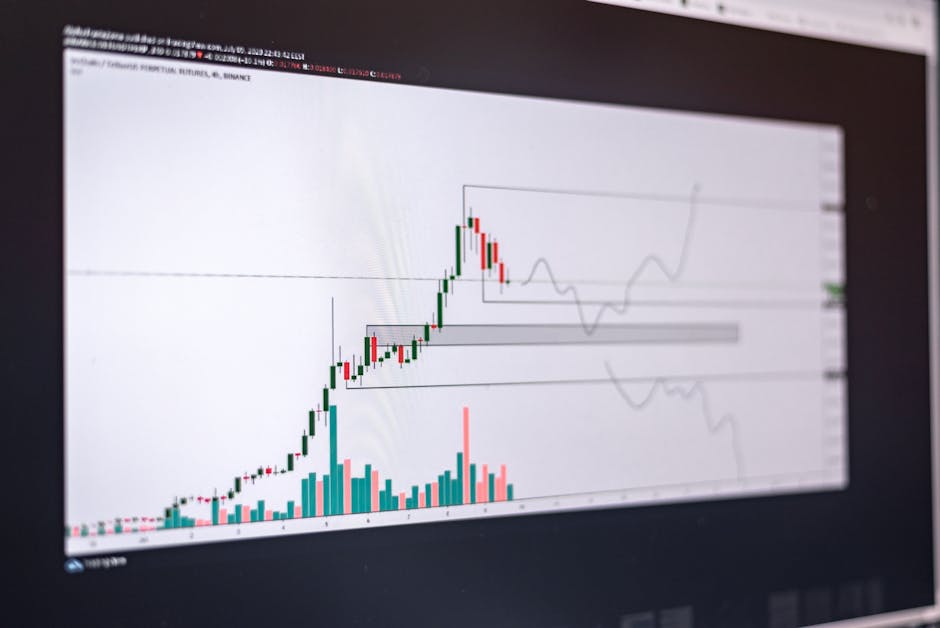
Under the hype of social media, AI Agents seem to have become "guaranteed-profit" money-printing machines in prediction markets. However, putting aside marketing rhetoric, real quantitative arbitrage is an extremely tedious long-term project of "low risk and stable micro-profits." To break the blind hype of "making millions a month," we need to face the real PnL (Profit and Loss) data and backtesting curves.
Take a typical Polymarket mutually exclusive event arbitrage (Dutch Book Arbitrage) as an example, such as a highly liquid US election or a cryptocurrency ETF approval event. Theoretically, when V(Yes) + V(No) < $1 (for example, the buying cost is only 1), there is a 4% risk-free arbitrage space. But in real backtesting models, the PnL curve is not a perfect straight line; instead, it presents the characteristics of "step-like slight ascents, accompanied by occasional drawdowns." In rigorous backtesting that includes slippage and latency simulations, the Max Drawdown of top strategies is usually controlled between 2% and 5%, while the annualized return is often around 15% to 30%, which is by no means an exaggerated windfall.
The Fatal Difference Between Backtesting Data and Live Trading: Slippage and Non-Atomicity
Many entry-level developers fall into the trap of "paper wealth" during backtesting because the backtesting environment usually assumes that orders can be fully executed instantly at the market price. But in live trading, the order book depth of prediction markets is often insufficient to support the lossless entry and exit of large funds.
When an AI Agent detects an arbitrage signal and simultaneously issues buy instructions for Yes and No, due to network latency and non-atomic trading risks (one leg executes, the other fails), live orders often suffer from severe slippage. For example, Yes successfully executes at $0.60, but the No pool is instantly drained by other high-frequency bots, causing the volume-weighted average price (VWAP) to slip to 1.02, and the original risk-free arbitrage directly turns into a loss. Research shows that under fierce speed competition, even if the system latency is below 30ms, the actual execution success rate is only between 45% and 87%.
Top 3 Core Factors Affecting Real Returns
For an AI Agent to survive long-term in prediction markets, the algorithm must perform extremely conservative weighted calculations on the following three profit-eroding factors:
- Trading Frictions and Platform Fees: The theoretical spread must be significantly greater than the operational costs. The actual achievable arbitrage profit must satisfy: Profit Arbitrage > Polymarket Trading Fees (approx. 2%) + Gas Fees + Bid-Ask Spread. If the spread space is less than 2%, forced arbitrage will only end up working for the platform.
- The Non-Atomicity Trap of Order Execution: Prediction markets lack the native cross-currency atomic hedging mechanisms found in centralized exchanges. In a hybrid architecture of off-chain matching and on-chain settlement, it is extremely easy to encounter counterparty order cancellations or transaction rollbacks caused by on-chain Gas competition, forcing the strategy to bear one-sided exposure risks.
- The Paradox of Liquidity Depth and Capital Scale: Although small capital can easily capture tiny spreads, the absolute profit cannot cover the fixed costs of API nodes and servers; whereas once large capital enters, instant market sweeping will trigger severe slippage. Therefore, one must rely on the Kelly Criterion for dynamic position sizing, rather than going all-in and all-out.
True AI prediction market arbitrage does not rely on the luck of predicting the future, but on rigorous mathematical infrastructure, convex optimization, and extremely strict risk control, accumulating profits through countless tiny win-rate advantages.
Risk Clearance: The "Invisible Killers" of Prediction Market Arbitrage
In the fervent narrative of AI trading, "arbitrage" is often over-packaged as a guaranteed, risk-free money printer. However, when real funds actually pour into prediction markets, the true yield curve is by no means a perfectly upward-sloping straight line. The probability hedging of AI Agents is essentially an intensely competitive mathematical and engineering game, with numerous "invisible killers" lurking in the market capable of instantly swallowing meager profits. Between the theoretical expected value (EV) calculation and the actual pocketed profit lie multiple highly specific risk dimensions such as execution latency, order book depth, and fee friction.
For any arbitrage strategy hoping to survive long-term in prediction markets, merely having an LLM or algorithm to discover price spreads is far from enough. Emphasizing the use of hardcore technical means and engineering architectures to circumvent risks is the core moat that enables a strategy to cross cycles and remain consistently profitable. A professional arbitrage system must possess the capability to handle non-atomic transaction risks, millisecond-level latency optimization, and dynamic position adjustments. Under the rules of the micro-profit arbitrage game, the robustness of risk control code is often more critical than the accuracy of the prediction model.
We must abandon the generic "investment involves risk" disclaimers of traditional finance, and instead conduct a deep analysis of the underlying characteristics of decentralized prediction markets like Polymarket. For example, in pursuit of a seamless trading experience, such platforms typically adopt a hybrid architecture of "off-chain matching + on-chain settlement." Although this mechanism achieves zero-Gas order placement, it also introduces fatal time-gap vulnerabilities and non-atomic execution risks—namely, during cross-market hedging, it is highly prone to the crisis of "one leg executing while the other fails," resulting in a Naked Position. In the following content, we will break down these core risks lurking within liquidity, network nodes, and the platform's underlying mechanisms one by one, and explore how to effectively clear these mines through systematic code logic.
Liquidity Traps, Slippage, and Gas Fee Losses
In prediction markets, the arbitrage opportunities discovered by AI Agents often look extremely lucrative, but during live execution, book profits can easily vanish in milliseconds. For long-tail topics or breaking events, the biggest "invisible killers" are precisely liquidity traps and execution friction.
1. Liquidity Traps and VWAP Slippage
Prediction markets (such as Polymarket) generally adopt the Central Limit Order Book (CLOB) model. When a large model detects that V(Yes) + V(No) = 0.96, there appears to be a 4% risk-free arbitrage space on paper. However, the order book depth for long-tail events is usually extremely shallow. Once an AI Agent attempts a large taker order, it can easily trigger a "liquidity drain" phenomenon. The 0.99 or even $1.01 due to massive slippage. If the execution encounters market maker order cancellations or "single-leg execution" caused by non-atomic transactions (one side of the order executes while the other fails due to insufficient depth), the Agent will be forced to bear extremely high unilateral directional exposure risk.
2. The Erosion of Micro-Profit Strategies by Gas Fee Fluctuations
Prediction market arbitrage is essentially a micro-profit, high-frequency game of "picking up pennies." The absolute mathematical iron law for the long-term survival of an arbitrage strategy is: actual arbitrage profits must be greater than the sum of transaction fees, Gas fees, and the bid-ask spread.
Although many prediction markets are deployed on L2 networks like Polygon, Gas fees are not constantly zero. During network congestion or extreme market outbreaks (such as ballot counting in key swing states during an election, or the moment an important bill is passed), Gas fees can spike exponentially. If the spread profit captured by the Agent is only 3, this transaction will directly result in a net loss. Even more fatally, if concurrent front-running causes the transaction to fail (Reverted), the Agent still has to pay the Gas fee. This continuous frictional loss is enough to drain small-capital arbitrage accounts.
3. Developer's Pitfall Avoidance Guide: Code-Level Risk Control Solutions
To ensure stable profitability for AI Agents in live trading, strict risk control logic must be hardcoded at the execution layer, rejecting any transactions blindly initiated based solely on "book spreads":
- Hardcode Maximum Acceptable Slippage (Max Slippage): When constructing transaction payloads, absolutely avoid using Market Orders. You must fetch the complete order book depth (L2 Orderbook Data) via API and pre-calculate the VWAP locally. If the estimated execution price exceeds the set
maxslippagetolerance, the transaction must be blocked directly. - Dynamic Gas Fee Threshold Interception: Introduce a real-time Gas Estimator in the execution module. Before submitting a transaction, calculate the exact USD Cost based on the current network's Base Fee and Priority Fee, and incorporate a hard circuit breaker mechanism.
    # Pseudocode example: Risk control interception based on dynamic profit
    expectedgrossprofit = calculateev(yesprice, noprice, amount)
    estimatedgasusd = getcurrentgasfeeinusd()
    netprofit = expectedgrossprofit - estimatedgasusd - platformfees

if netprofit < MINPROFIT_THRESHOLD:
        logger.warning("Abort: Gas fees and slippage eat up the profit.")
return False- Enforce Fill-or-Kill (FOK) Order Attributes: For combinatorial arbitrage across multiple prediction outcomes, the atomicity of orders must be ensured. Utilize smart contracts or platform-supported FOK mechanisms to either execute entirely at the target price or cancel entirely, completely eliminating the disaster of arbitrage turning into "unilateral naked long/naked short" positions.
Smart Contract Vulnerabilities and Black Swan Event Prevention

The core closed loop of prediction markets relies heavily on Oracles for the final resolution of real-world events. Taking the UMA Optimistic Oracle, widely adopted by platforms like Polymarket, as an example, its resolution mechanism is built on the game theory and voting of token holders. However, when faced with real-world events featuring ambiguous wording, blurred boundaries, or sudden reversals, the oracle's judgment is highly prone to triggering resolution disputes. Even if an AI Agent achieves perfect expected value (EV) calculation and hedging in its mathematical model, once the oracle provides a resolution result contrary to common sense or expectations due to rule loopholes or community disputes, the probabilistic hedging strategy built on the premise of a "correct resolution" will instantly fail, leading to exposure and loss of principal.
Besides resolution disputes, the security of the underlying infrastructure is the Sword of Damocles hanging over all on-chain automated strategies. No matter how rigorous the code logic of the AI Agent is, funds ultimately need to execute interactions by calling underlying routers (such as the NegRiskAdapter conversion contract used in multi-outcome markets) or by directly depositing into liquidity pools. Smart contract code vulnerabilities, oracle manipulation attacks, reentrancy attacks, or large-scale downtime of RPC nodes on the underlying public chain can all trigger extreme black swan events. In these extreme scenarios, liquidity pools could be completely drained by hackers within minutes. Even if the AI Agent possesses microsecond-level WebSocket monitoring and order cancellation capabilities, it cannot retreat unscathed before the underlying assets go to zero or the network becomes congested.
Facing these systemic tail risks that cannot be eliminated by algorithms, a rigorous fund management strategy is more crucial than pure Alpha discovery. In terms of engineering implementation, strict permission isolation must be enforced on the AI Agent. Avoid granting unlimited approval (Approve) of all funds to a single smart contract or a single prediction platform. Developers should configure independent trading sub-wallets for the bot, adopt a strategy of transferring funds on demand and withdrawing them immediately after use, and regularly review and revoke unnecessary contract approvals. By diversifying fund exposure across multiple protocols, different underlying chains, and different types of prediction events, the blast radius of a single protocol's collapse can be effectively controlled within an acceptable range.
Ultimately, an AI Agent is a powerful tool for executing 24/7 monitoring and probability capturing. It can eliminate human emotional fluctuations and significantly improve the execution precision of multi-variable complex hedging, but it is not immune to physical single points of failure in the underlying architecture. In decentralized prediction markets, code is law, and code also has vulnerabilities. No matter how exquisite the logical reasoning and arbitrage algorithms of large models are, respecting the market and holding the bottom line of risk control remain the enduring foundation for quantitative traders to survive long-term across bull and bear markets.