
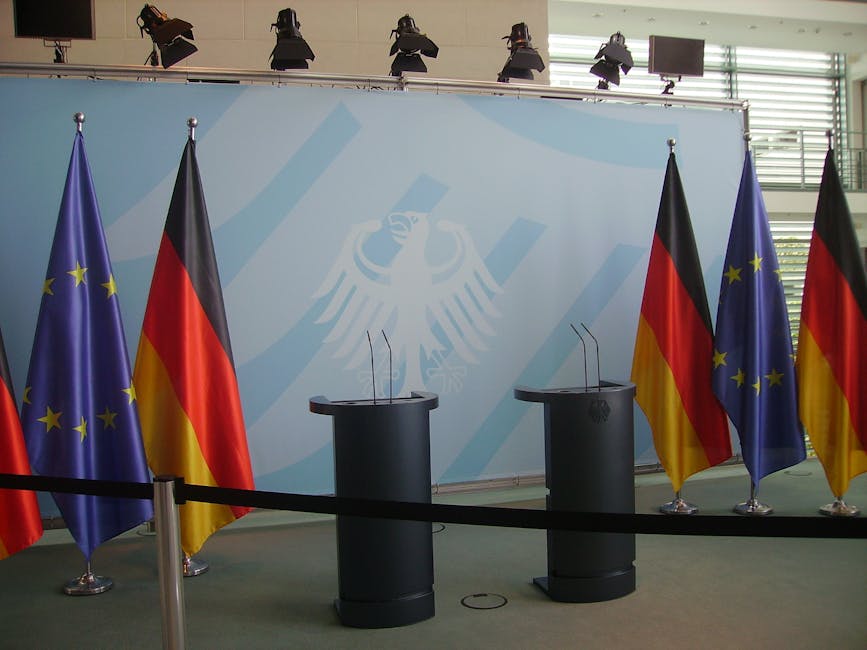
In the rapidly evolving omnimedia landscape, corporate assessment of PR talent has shifted from simple copywriting to comprehensive crisis decision-making capabilities. Consequently, crisis PR media response interview questions have become the litmus test for a candidate's professional caliber. Senior interviewers often use specific public opinion response interview questions to assess whether candidates possess "structured crisis thinking" and a strict adherence to legal compliance red lines. Merely reciting traditional "5S principles" is insufficient for this fragmented era; top-tier answers require transcending the "press release mindset" and demonstrating a deep understanding of new media crisis PR contexts—specifically distinguishing between Douyin's emotional empathy, Weibo's topic management, and official media's factual logic. Whether facing leading questions in spokesperson interviews or handling sudden negative trending topics, you must demonstrate mastery of the crisis management STAR method and the ability to apply media communication techniques and ABC bridging skills in high-pressure simulations, transforming adversarial questions into opportunities to deliver core brand messages. This article analyzes 30 high-frequency real crisis PR interview questions, combined with the latest crisis PR case studies, to help job seekers build a practical framework encompassing the "3S+1" golden rule, emotional stability, and stakeholder empathy. By mastering this underlying logic, you will not only calmly handle "stress tests" but also demonstrate superior competence in resolving crises and safeguarding brand reputation within a complex public opinion ecosystem, allowing you to pass through the "narrow gate" of career advancement in a competitive market.
Core Framework: The Underlying Logic of Crisis Response (The "Golden Rule" Interviewers Value Most)
Before diving into specific interview question drills, it is essential to establish a solid "underlying logic for crisis response." When senior PR directors or interviewers ask questions, they often look not just at whether you have recited standard answers, but whether you possess "structured crisis thinking."
In the era of fragmented dissemination and "video clips," traditional textbook-style answers often appear outdated. High-scoring answers are usually built upon the following three core dimensions:
1. The Iterative Golden Rule: From Traditional "5S" to "3S + 1"
Although the classic "5S Principles" (Speed First, Sincere Communication, Shouldering Responsibility, Authoritative Confirmation, Systematic Operation) remain effective, in an interview, you can demonstrate a more modern "3S + 1" model, which reflects your sensitivity to the current public opinion environment:
- Speed: It is no longer just the "Golden 24 Hours," but the "Golden 4 Hours" or even the "Golden 1 Hour." In the short video era, the vacuum period of a response will be filled with rumors and emotions.
- Sincerity: Sincerity is not a hollow apology, but "Attitude + Action." As mentioned in the Review of Crisis PR in the First Half of 2024 regarding the Pang Dong Lai case, the core lies in not covering up problems and providing compensation that exceeds expectations (action). This kind of "defensive self-disclosure" is often more effective than justification.
- Solution: The public does not care about your grievances; they only care about how you solve the problem. Every statement must include specific rectification measures or remedial plans.
- Safety: This is the "red line" for corporate PR in recent years. Issues involving food safety, personal privacy, or personal safety (such as supply chain compliance highlighted in the 315 Gala) cannot be explained away merely as a "misunderstanding." Law and compliance must be the highest standards; never cross legal red lines just to appease public opinion.
2. Platform Context Awareness: Rejecting "One Press Release Fits All"
Interviewers place great emphasis on whether candidates possess "Platform Awareness." Modern crisis PR requires customizing communication strategies for different channels to avoid “Context Collapse”—that is, speaking with the wrong tone in the wrong setting.
- Douyin/Short Video Platforms: The core is "Emotional Empathy." Users value attitude and intuitive feelings. Long, stamped statements often fail here and may even be snipped into fragments (clips) and taken out of context. The response strategy should focus on video responses, executive appearances, or live streams of rectification sites.
- Weibo/Social Media: The core is "Topic Management." This is the breeding ground for public opinion. You need to pay attention to KOL guidance and the trend of hashtags. When answering, emphasize how to use the "Golden First Three Sentences" to cut off the spread of negative emotions.
- Official Media/News Clients: The core is "Facts and Logic." Facing serious media, you must provide a detailed chain of evidence, data support, and legal basis to establish the brand's authority.
3. Interview "Cheat Sheet": Three Core Competencies
When answering any Situational Questions, be sure to demonstrate the following three qualities through your behavior between the lines; these are key items for interviewers' scoring:
1. Emotional Stability
The biggest taboo at a crisis scene is "confrontation." No matter how aggressive a reporter's questions are, you must never show a defensive posture or anger. As stated by a senior PR expert, remain calm when facing tricky questions and never argue emotionally with the questioner, because "counterattacking is not for quarreling, but for reserving leverage for the future."
2. Strategic Bridging
Do not passively answer "yes" or "no," but learn to guide the topic to the brand's Key Message. For example, use the "ABC Rule": Acknowledge (the concern), Bridge (the transition), Communicate (the key message).
3. Stakeholder Empathy
Step out of the corporate perspective of "we are innocent" and switch to the public perspective of "we apologize for the inconvenience caused by our errors." When dealing with issues like employee relations or consumer complaints, empathy is the only antidote to resolve antagonistic emotions. Especially in the "era of the overworked," the public easily identifies with the weaker party, and a PR response lacking empathy often triggers secondary disasters.
Category 1: High-Frequency Scenario Simulation Questions (Situational Judgment)
In Crisis PR interviews, "Situational Judgment Tests" (SJTs) are often the "make-or-break" hurdle determining whether a candidate passes. Unlike past experiences listed on a resume, these questions usually begin with "What would you do if..." placing the candidate in a simulated scene that is high-pressure, possesses incomplete information, and is full of traps.
Through these questions, interviewers are not simply checking if you have memorized textbook definitions, but are using a "stress test" to assess your Gut Reaction, Decision Logic, and Sensitivity to the Platform's Public Opinion Ecosystem.
The Interviewer's "Invisible Scorecard": What Are They Looking For?
When answering such questions, many candidates easily fall into the trap of "being eager to solve the problem," ignoring that the core of PR is "managing relationships and reputation." Senior interviewers usually score your answer based on the following three dimensions:
- Risk & Compliance
- Can you identify legal risks or regulatory red lines immediately?
- Negative Example: When facing a simulated scenario like "product accused of causing cancer," if your first reaction is to "immediately issue a denial" rather than "first contact the legal and R&D departments to verify the facts," you will usually be directly eliminated.
- Platform Nuance
- Are you aware that the response strategies for Douyin (algorithm recommendation, emotion-driven) and Weibo (hot search square, topic-driven) are completely different?
- Current search results show that most outdated interview guides do not distinguish between platforms. Excellent senior candidates will clearly state: "If it erupts on Douyin, we need to prioritize responding to emotions through video; if it is on Weibo, we need to focus on the logical chain of the official statement."
- Emotional Stability & Empathy
- Do you show Defensiveness when simulating facing aggressive media or angry consumers?
- Referencing the lesson of the 2024 Baidu VP Qu Jing incident, the emotional loss of control by a PR head is often more destructive than the crisis itself. Interviewers will observe whether you can maintain a professional posture that is "tough but warm" under high pressure.
The Underlying Logic of Answering: From "Firefighting" to "Taking Control"
In the following chapters, we will break down specific scenarios such as leading questions from reporters, sudden negative hot searches, and inappropriate remarks by executives. But before entering into specific scripts, please keep in mind the universal principle for handling all situational questions:
Principle: Reputation Over Resolution
Even if you cannot immediately solve a stockout problem caused by the supply chain, you can still preserve or even enhance brand reputation through transparent communication and a sincere attitude (such as the textbook-style compensation in the Pang Dong Lai "Ganmianpi" incident).
The following content will translate these principles into specific interview answer templates, helping you respond calmly even when facing the trickiest "difficult questions."
Scenario 1: Facing "Leading" or "Aggressive" Questions from Reporters

In crisis PR interviews, interviewers often play the role of a "hostile reporter," throwing out questions with strong preconceived stances, a leading nature, or even aggression. This type of simulation (Role Play) not only tests the candidate's language organization skills but also their Emotional Stability and Agenda Setting abilities.
The interviewer's core focus is: Will the candidate be provoked by the question? Will they fall into the language trap where "denial implies confirmation"? Can they pull the topic from the "quagmire" back to the core message the brand wishes to convey?
1. Examples of High-Frequency "Trap" Questions
Common leading questions in interviews usually contain unverified assumptions or direct attacks:
- Competitor Provocation Type: "Your competitor, Company X, publicly stated that your product has serious design flaws regarding safety. Do you agree with this statement?"
- Personnel Turmoil Type: "Rumors say your CEO is about to resign due to this scandal. Has the board already started the process of looking for a successor?"
- Presumption of Guilt Type: "Why did you try to cover up the truth after the accident and only come out to apologize after being exposed?"
- False Dilemma Trap: "Due to this crisis, do you intend to sacrifice profits to compensate consumers, or continue to ignore quality issues to make the financial reports look good?"
2. Core Response Model: ABC Bridging Technique
Facing the above questions, answering directly with "yes" or "no" usually leads to falling into the trap. The most effective strategy is to use the ABC Bridging Model common in the PR industry:
- A - Acknowledge: Not admitting a mistake, but acknowledging the questioner's emotions or concerns, using neutral language to establish a connection and avoid direct confrontation.
- B - Bridge: Use transition sentences to shift the topic from the "negative frame" set by the reporter to the "positive frame" you have prepared.
- C - Communicate: Deliver the Key Message the brand wants the public to remember.
Interview Reference Script (Addressing "Competitor Accusations of Unsafe Products"):
"I have noted the relevant discussions (Acknowledge, do not repeat the word 'flaws'). In fact, the metrics we value most during the product R&D phase are user experience and compliance (Bridge, shifting focus from 'competitor' to 'own standards'). This is also why we possess the industry's only dual quality control process, ensuring every product leaving the factory meets national standards (Communicate, outputting core advantages)."
3. Key Guide to Avoiding Pitfalls
When simulating answers, candidates must demonstrate mastery of the following principles:
- Refuse to Repeat Negative Vocabulary (No Negative Repetition):
The human brain tends to ignore negative words and remember keywords. If you answer "We did not cover up the truth" or "Our product is not unsafe," the audience subconsciously remembers only "cover up the truth" and "unsafe." - Wrong Answer: "We did not try to cover it up."
- Correct Answer: "We have always been committed to maintaining openness and transparency of information."
- Distinguish between "Speculative Questions" and "Factual Errors":
- Facing Speculation (e.g., CEO resignation): Do not get bogged down in debating details; use a sophisticated form of "no comment." For example: "We do not comment on market rumors, but the current management team is fully focused on resolving the immediate customer service issues."
- Facing Factual Errors (e.g., faked data): You must correct them gently but firmly. As senior legal and PR experts suggest, facing persistent questioning or misleading guidance from reporters, maintaining composure is crucial; do not get emotional or argue with the reporter, but instead use data and facts to pull the conversation back on track.
- Beware of the "False Dilemma" Trap:
When a reporter gives two bad options (e.g., "sacrifice profits" vs. "ignore quality"), do not choose between them. You need to step out of this frame and point out that this is not a zero-sum game. - Answer Strategy: "I believe the two are not contradictory. Long-term quality assurance is the cornerstone of corporate survival, which is exactly the prerequisite for us to achieve sustainable profits."
By demonstrating these techniques, candidates can prove to the interviewer: they are not just an executor, but a strategic thinker who knows how to protect the brand's reputation under pressure.
Scenario 2: Social Media "Blowups" (Differentiated Responses for Douyin/Weibo/Xiaohongshu)

In current crisis PR interviews, if your answer is still stuck at the level of "publishing a Press Release," you will almost certainly be eliminated immediately. Interviewers highly value whether a candidate possesses "Platform Nuance," that is, the ability to formulate distinctly different response strategies based on Douyin's algorithmic recommendation mechanism, Weibo's public square opinion attributes, and Xiaohongshu's community "seeding" (recommendation) atmosphere.
High-Frequency Interview Questions
- "A negative short video about our product is going viral on Douyin, with over 100,000 likes. As the PR head, what would you do in the first hour?"
- "A top influencer posts a long complaint on Weibo versus posting a rant note on Xiaohongshu. How does your processing logic differ?"
- "How do you view the phenomenon of 'Blue Vs' (verified corporate accounts) in the comment section 'even personally getting into arguments'? If it were you, what would you do?"
Core Solution Logic: Refusing "One Draft Fits All"
The key to answering such questions lies in demonstrating your understanding of "Golden PR Time" and "User Psychology" across various platforms. You need to prove to the interviewer that you will not use a set of rigid official rhetoric to deal with all channels.
The following is a differentiated response framework for mainstream platforms, suggested as your underlying logic during interviews:
Dimension | Douyin (TikTok) | Xiaohongshu (Little Red Book) | |
|---|---|---|---|
Underlying Logic | Algorithm + Emotion. Videos have strong visual impact and emotional contagion, easily forming "viral transmission" through algorithmic recommendations. | Square + Trending Search. It is a public opinion arena with strong media attributes, suitable for qualitative definition, concluding statements, and releasing official notifications. | Community + Search. Users focus on real experiences and avoiding pitfalls. The long-tail effect is obvious, and negative content will affect search conversion for a long time. |
Golden Time | Golden 1 Hour. Once the video enters the next traffic pool, the difficulty of refuting rumors will rise exponentially. | Golden 4 Hours. Although trending searches ferment quickly, they usually require media follow-up to boost them, leaving a brief window for analysis. | Within 24 Hours. Although the explosive power is not as high as Douyin, if not intervened in time, a consensus on "avoiding this brand" will form. |
Content Form | Video/Live Stream Clips. Text statements are almost ineffective on Douyin. Requires a real person on camera or intuitive visual evidence (e.g., surveillance footage, testing processes). | Blue V Statement/Long Image. Requires a logically tight chain of evidence in text, combined with guidance in the comment section. | Note/Private Message. The tone needs to be "de-PR'd," communicating like a real person and avoiding cold official jargon. |
Common Pitfalls | Attempting to reason with long-winded arguments; ignoring the risk of video clips taken out of context. | Closing the comment section (viewed as a guilty conscience); engaging in emotional arguments with netizens in the comments. | Arrogant preaching ("Dad flavor"); using a large number of bots/water army to post fake positive reviews (easily flagged as violations by the community and triggers disgust). |
Deep Bonus Points: Emotional Hedging and "De-Dad-flavoring"
When answering specific strategies, you can cite recent negative examples to support your point. For instance, cases like Zhong Xue Gao and Pagoda show that when entrepreneurs or brands adopt a posture of "educating consumers" on social media (what netizens often call "Dad flavor" [condescension]), it often triggers public opinion backlash more severe than the product issue itself.
Interview Answer Reference (For Douyin Scenario):
"If a negative issue explodes on Douyin, I would prioritize emotional hedging rather than simple logical refutation. Because Douyin users are swiping through videos, their attention span is only a few seconds. First, I would monitor the source of the public opinion to see if it is a maliciously edited 'clip'; second, if the facts are caused by a misunderstanding, I would suggest responding with a 'real person on camera' or 'scene reconstruction,' because on video platforms, the sincerity of a persona is more persuasive than a cold, stamped document. For example, if product safety is involved, a live stream directly showing the production line might be more effective than sending a lawyer's letter."
Interview Answer Reference (For Weibo Scenario):
"Weibo is the main battlefield for defining the nature of public opinion. Regarding Weibo Trending Searches, my strategy is 'Official Tone Setting, Comment Section Management'. I would draft a factually clear official statement without emotional coloring, pin it to the official account, and coordinate with authoritative media or industry experts for objective interpretation. At the same time, I would closely watch highly-liked comments in the comment section, because on Weibo, the direction of top comments often determines the perception of passersby."
Scenario 3: Unexpected Situations at Press Conferences
Although modern crisis PR mostly occurs online, offline Press Conferences remain essential during critical moments such as major product recalls, accident briefings, or IPO bell-ringing ceremonies. When interviewers test this scenario, the core is not to test your public speaking skills, but to examine your Agility and Composure in an "irreversible" live broadcast environment.
Common Interview Questions
These questions usually set extreme "Unplanned" scenarios, forcing candidates to step outside their prepared Q&A scripts:
- Victim Intrusion: "During a product recall apology press conference, an emotionally agitated person claiming to be a victim rushes onto the stage to grab the microphone. Security has not arrived yet. As the spokesperson, what should you do?"
- Technical Malfunction: "At the critical moment when you bow your head to read the apology letter, the microphone suddenly emits a piercing screech and breaks down completely, causing an uproar in the audience. How should you save the situation?"
- Sudden Information Ambush: "During the Q&A session, someone suddenly throws out evidence of an 'internal bribery email' that was just exposed online. You know nothing about this. How should you respond?"
Core Response Strategy: The Stop, Look, Listen Rule
Facing sudden on-site situations, the most taboo reactions are Ignoring it or mechanically continuing to read the script. This "rigidity" not only appears lacking in humanity but will also be captured by cameras and infinitely magnified. Just like the public backlash caused by the rigid and dogmatic response from customer service in the Zhang Xiaoquan "Kitchen Knife Cannot Smash Garlic" Incident, the rigidity of a spokesperson on site is fatal.
It is recommended to adopt the "Stop, Look, Listen" tactical model:
- Stop (Pause and Stabilize Presence)
- Action: Immediately stop the current speech. Do not attempt to drown out the source of interference (such as protesters or noise) with a higher volume.
- Mindset: Take a deep breath and tell yourself, "This is an opportunity to demonstrate control, not a disaster."
- Taboo: Do not show expressions of panic, eye-rolling, or anger.
- Look (Observe and Judge the Nature)
- Assess Threat Level: Is it a pure technical malfunction? Is it a rational appeal for interests? Or is it a security threat with violent tendencies?
- Body Language: If it is a victim, lean forward slightly to show listening, and do not cross your arms (defensive posture); if it is a technical malfunction, maintain a smile and use eye contact to reassure the restless reporters offstage.
- Listen & Act (Listen and Intervene Humanely)
- For Intruders: If security is controllable, signal security guards to handle it gently ("Please do not hurt him"), and actively say to the intruder: "I see that you are very emotional. Please give the staff some time, and I will set aside time specifically to listen to your appeals after the press conference." This demonstrates strong empathy and leadership.
- For Technical Malfunctions: Use this gap to show humor or sincerity. For example, walk to the front of the stage and say loudly: "It seems our equipment wants me to speak a bit closer to everyone." Then use this as an opportunity to speak off-script about a few core points.
Advanced Technique: Using "Holding Statements"
When a reporter throws out "new negative revelations" on site that you know nothing about, never make up an answer on the spot to appear "omniscient," nor bluntly refuse to answer.
At this time, you should use the Holding Statement technique, neither admitting nor denying, but promising action:
"Thank you for your question. This is also the first time I am hearing this information. Since this matter is significant, and in the spirit of being responsible to the public, we need to verify the specific situation immediately after the meeting. We promise to provide a supplementary explanation regarding this specific issue through official channels before X o'clock this afternoon."
Interview Bonus Point:
Point out to the interviewer that unexpected situations at press conferences can often become opportunities to turn public opinion around. If the spokesperson shows a desire to protect others during the chaos (such as protecting staff members being jostled) or extreme candor, this "unscripted" revelation of authenticity often wins back public trust more effectively than polished PR drafts. Conversely, if one shows arrogance or shirking of responsibility during unexpected situations, such as the emotional loss of control shown by certain corporate founders arguing with netizens on social media, it will escalate the crisis.
Category 2: Strategy and Deep Thinking Questions (Strategic Thinking)
If the first category of scenario questions tests "craft" (How), then this category of strategic questions tests "brainpower" (Why). For mid-to-senior PR positions, interviewers are not just concerned with whether you can write a statement, but more concerned with whether you possess a decision-making mindset.
These questions usually have no standard answers; the core lies in testing how the candidate finds a balance point between complex commercial interests, legal risks, and public sentiment. Interviewers attempt to use these questions to judge whether you have the potential to become a "corporate advisor" rather than merely an "execution tool".
Core Assessment Point 1: The Game Between Legal and PR (Legal Safety vs. Public Trust)
This is the most classic and trickiest strategic conflict in crisis PR interviews. The Legal department's primary task is to avoid legal liability, usually advising to "say less, wrong less" or even "say nothing"; while the Public Relations department's (PR) goal is to maintain brand reputation, often requiring "more communication" to rebuild trust.
Common Interview Question:
"When public sentiment ferments rapidly, but the Legal department strongly advises against speaking out publicly to avoid leaving legal handles, as the PR head, how do you handle this?"
High-Score Answer Strategy:
- Reject Binary Opposition: Do not view Legal as the enemy, but emphasize that the common goal of both parties is "corporate damage control."
- Risk Grading Assessment: Show the interviewer how you quantify risk. If the legal risk is a manageable fine, while the public opinion risk is brand collapse or a total internet boycott, then "survival" takes precedence over "compliance."
- Cite Practical Logic: You can cite industry cases to illustrate the consequences of "over-reliance on Legal." For example, in the H1 2025 Crisis PR Review, the Romoss case is mentioned where the company attempted to resolve public opinion through legal means, which instead intensified the conflict; in contrast, Anker chose to face the problem directly and initiate a recall. Although there was a short-term cost, they won long-term consumer trust.
- Propose a "Middle Ground": Demonstrate your negotiation skills. For instance, can you release a "Holding Statement" that does not admit legal liability (satisfying Legal) but expresses empathy and an investigative attitude (satisfying the public)?
Core Assessment Point 2: The Choice Between Ethics and Commercial Interests (Ethics vs. Profit)
Crises often touch the bottom line of corporate values. Interviewers will use extreme hypotheses to test whether candidates will sacrifice corporate values under pressure, or whether they are too idealistic and ignore commercial reality.
Common Interview Question:
"If a core profitable product of the company is exposed to have a non-fatal but non-compliant defect, and a recall would cause a loss in the current year's financial report, so the boss tends to handle it quietly, how do you persuade them?"
High-Score Answer Strategy:
- Calculate the Big Picture: Don't just talk about morality, talk about "trust cost." Citing the analysis from The Paper regarding entrepreneur PR reviews, the cases of Zhong Xue Gao and Xibei show that when companies display arrogance or attempt to cover up product quality or core concerns, the public's "emotional backlash" is often more destructive than the product issue itself.
- Anticipate Regulatory Trends: Mention that "safety is the bottom line." Point out that in modern crisis PR, government regulatory bodies (such as the SAMR and Consumer Council) intervene extremely quickly. Once officially characterized by authorities, the subsequent space for PR drops to zero.
- Provide Stop-Loss Solutions: An excellent answer will not only say "we must recall" but also provide a plan on "how to turn danger into opportunity through recall," such as transforming the recall into a "quality commitment" marketing campaign.
Core Assessment Point 3: Resource Allocation and Prevention System (Prevention & Resource Allocation)
High-level positions need to answer "how to prevent crises from happening." These questions test whether the candidate possesses systemic thinking and can position PR work upstream in the business chain.
Common Interview Question:
"The company has a limited budget. How do you allocate the crisis PR budget? Do you focus on media relations maintenance or building a sentiment monitoring system?"
High-Score Answer Strategy:
- Emphasize "365-Day PR": Crisis PR is not just "firefighting," but daily "fire prevention." As industry analysis states, Crisis PR is not 315, but 365; establishing daily risk screening mechanisms (such as supply chain compliance and employee mood management) is more effective than spending huge sums to delete posts after the fact.
- Data-Driven Decision Making: Prioritize investment in monitoring systems. In the "era of video clips," any tiny negative incident (such as an employee complaint or a slip of the tongue in a livestream) can explode instantly. Only by "seeing" the spark first can you talk about extinguishing the fire.
- Internal Empowerment: Mention media literacy training for founders and executives. In recent years, many crises have stemmed from inappropriate remarks by entrepreneurs (such as "patronizing preaching" or "hard confrontation with netizens"); therefore, investing resources to manage "key person risk" is a manifestation of great strategic vision.
Truth vs. Panic: Where Are the Boundaries of Information Disclosure?

In senior-level crisis PR interviews, interviewers often present an ethical dilemma to assess whether the candidate possesses mature business acumen. These questions not only test your media communication skills but also test your understanding of Corporate Governance.
The core point the interviewer is assessing is: Can you find a balance between Legal Liability and Public Trust, rather than simply acting as a "mouthpiece"?
Common Interview Questions
- "The Legal department strongly advises remaining silent to avoid leaving legal leverage, but the public and media are demanding an immediate explanation. As the head of PR, what should you do?"
- "How much information should we disclose to the public before the cause of the accident has been fully investigated? What if we disclose something that turns out to be incorrect?"
- "To quell panic, can we offer a 'white lie' or a promise first?"
Response Strategy: A Framework from "Confrontation" to "Collaboration"
When answering such questions, never display the slickness that "PR is just for covering up the truth," nor the naivety that "transparency justifies ignoring legal consequences." You need to demonstrate the ability for Cross-functional Alignment.
1. Reject Binary Opposition: Legal and PR Are Not Mortal Enemies
An excellent answer should point out: Legal focuses on Liability Minimization in the court of law, while PR focuses on Reputation Survival in the court of public opinion. If a company is characterized as "arrogant" or "cold-blooded" in the public arena, it will ultimately lead to regulatory intervention and stock price drops, thereby transforming into substantial legal and financial risks.
Script Example:
"I would communicate with the Legal department to explain that 'No Comment' is equivalent to 'admission of guilt' in the current public opinion environment. Silence does not eliminate risk; it only allows rumors to fill the information vacuum. We need to formulate a 'middle-ground narrative' that does not admit to unverified legal liability but demonstrates the company's responsible attitude."
2. Core Principle: Only Speak "Verified Truth"
This is the golden rule of information disclosure. You don't need to reveal everything immediately (because often you don't know the whole truth), but you must absolutely not lie, nor should you speculate when you should remain silent.
- Wrong Approach: To soothe emotions, promising "it is absolutely not a problem with our product" (before the investigation ends, this is gambling).
- Correct Approach: Acknowledge the "status quo," but do not admit to "attribution."
- Say: "We are aware of the accident and feel deeply pained for the affected users (Attitude). We have established a special task force to cooperate with the regulatory investigation (Action)."
- Don't Say: "This was caused by a supplier part failure (Unverified Attribution)."
Practical Skills: Partial Disclosure
When asked "how to respond when information is incomplete," you can use the "Partial Disclosure" model to construct your answer. This is a method for building trust amidst uncertainty:
- Confirm Knowns: Confirm the time and location of the incident, and emergency measures taken (such as suspension of operations, recalls, medical attention). These are "hard facts" that Legal usually won't oppose.
- Define Unknowns: Honestly tell the public what information is currently not possessed (such as the specific root cause of the accident, detailed compensation plans). Admitting "I don't know" wins more professional trust than wild guessing.
- Commitment to Milestones: Inform the public of the time for the next information update or the channels to obtain information.
High-Scoring Answer Logic Summary:
"Facing resistance from Legal, I would not choose confrontation but seek consensus. I would suggest adopting an 'incremental' information disclosure strategy: within the 'Golden Hour' of the crisis outbreak, first release an 'Empathy Statement' and 'Process Info' to inform the public 'what we are doing,' rather than rushing to conclusions. This satisfies the public's minimum requirement for the right to know and prevents panic from spreading, while protecting the company from the legal risks associated with prematurely admitting liability."
B-Side (Enterprise) vs. G-Side (Government) Crisis Response Differences
Many job seekers fall into a common trap during interviews: attempting to use a universal "crisis PR master template" to handle all types of employers. However, senior interviewers (especially those from the public sector or large state-owned enterprises) will keenly assess whether you possess "role differentiation" awareness. Enterprises (B-Side) focus on commercial interests and brand assets, while Government or Public Institutions (G-Side) focus on social stability and public credibility.
In interviews, such questions usually aim to test your underlying understanding of organizational attributes.
High-Frequency Interview Questions
- "If an FMCG company faces product quality rumors, versus a government department facing policy misinterpretation, what are the differences in your core focus when formulating response strategies?"
- "Do you think 'emotional resonance' or 'fact-finding' takes priority when handling emergencies? Please discuss your views in the context of different entities."
- "Do you think the PR methods you used in enterprises before are applicable in our unit (government/public institution)? Why?"
Core Difference Analysis Framework
To answer these questions well, it is recommended to establish a clear comparison coordinate system. You can elaborate from three dimensions: Core Objectives, Communication Tone, and Action Priority:
Dimension | B-Side (Enterprise/Brand) | G-Side (Government/Public Institution) |
|---|---|---|
Core Objectives | Protect Brand Equity & Customer Sentiment.<br>The primary task is to restore consumer confidence and prevent sales decline or stock price fluctuations. | Maintain Social Stability & Authority.<br>The primary task is to clarify facts, eliminate public panic, and maintain government credibility. |
Communication Tone | Emphasize "Empathy".<br>Enterprises need to appear "human," be willing to show weakness or apologize, and usually adopt a lower posture. | Emphasize "Rigor" (Authority).<br>Official announcements need to be objective, calm, and emotionless. Excessive emotional venting will actually weaken the sense of authority. |
Action Priority | Attitude > Investigation (Often comes first).<br>Before facts are fully cleared, it is usually necessary to state a position first (e.g., "Deeply sorry, a special task force has been established"); soothing customer emotions is the top priority. | Investigation > Attitude (Often comes first).<br>Government releases must be based on Verified Truth. Blindly stating a position or apologizing before facts are clear may lead to serious secondary crises (backfiring). |
Answering Strategies and Guide to Avoiding Pitfalls
- For B-Side Positions: Emphasize "Compensation and Recovery"
When answering enterprise-related interview questions, your keywords should include "customer experience," "compensation mechanisms," and "emotional channeling."
- Sample Script: "For enterprises, crises often stem from a breach of trust. I would prioritize suggesting an 'emotional blocking' strategy, immediately cutting off the spread of negative emotions through high-level apologies, promises of unconditional returns/exchanges, etc., while simultaneously conducting internal checks."
- For G-Side Positions: Emphasize "Investigation and Rectification"
When answering government/public institution interview questions, avoid using overly commercial terms (like "customers," "PR tactics"). Your keywords should be adjusted to "public concern," "authoritative release," and "handling in accordance with the law."
- Sample Script: "For public sectors, credibility is the bottom line. Strategically, I would adhere to 'caution in statements if facts are unclear; decisive action once facts are clear.' The focus is on demonstrating our investigation progress and determination to rectify, rather than simple emotional soothing. At this point, 'solving the problem' itself is the best PR."
Expert Tip: If interviewing with a large State-Owned Enterprise (SOE) or Central State-Owned Enterprise, your answer needs to fall between the two—possessing both corporate service awareness and a political stance, ensuring compliance red lines are not crossed.
Category 3: Behavioral Interview Questions (STAR Method in Practice)

In interviews for crisis public relations positions, theoretical knowledge is merely the entry ticket; interviewers value your practical intuition under high-pressure environments more. The core logic of Behavioral Questions is that "past behavior is the best predictor of future performance."
Faced with the most classic question—"Please describe a tricky crisis you have handled"—simply listing the process like a laundry list is far from enough. To stand out among numerous candidates, you need to upgrade the traditional STAR Method (Situation, Task, Action, Result) to the STARR Model, adding a crucial Reflection phase.
1. Why Do Crisis PR Interviews Need "STARR"?
In ordinary job interviews, clearly explaining the result (Result) is usually sufficient. But in the field of crisis public relations, crises often do not have perfect endings, only degrees of "damage control." Therefore, interviewers not only care about what you accomplished but also focus on what you learned from it and whether your mental model has iterated.
As pointed out in GankInterview's analysis, an answer lacking "Reflection" sounds like a dry execution list. Adding a dimension of reflection can demonstrate your Learning Agility to the interviewer, proving that you are not just an executor but a strategist capable of reviewing and reflecting.
2. Classic Real Question Drill: "Please describe a crisis PR campaign you led"
The following is a full-score answer architecture for a crisis public relations position:
S (Situation): Short and powerful, creating a sense of urgency
"In my previous job, our core SaaS product suffered a server crash on the eve of the Double 11 promotion, causing thousands of enterprise clients to be unable to place orders. Rumors of 'running away' began to appear on social media, and media inquiry calls surged by 50 within 1 hour."
Key Point: Explain the high risk and time sensitivity of the background.
T (Task): Clarify the role, refuse "we," emphasize "I"
"As the PR Manager, my core task was not to fix the server (that is the Technology Department's responsibility), but to seize the right of public opinion interpretation during the technical repair period, prevent the 'technical failure' from being defined as a 'business crisis,' and appease the emotions of B-end clients."
A (Action): Use professional verbs, demonstrate strategic granularity
"I immediately activated the crisis response mechanism (SOP) and took three steps:
1. Aligned Stakeholders: Confirmed the cause of the failure and estimated repair time with the CTO and Legal within 15 minutes to ensure external messaging was consistent with internal facts and avoid legal risks.
2. Drafted & Communicated: Drafted a 'sincere but restrained' statement, admitting the failure but denying 'running away,' and introduced a 'real-time progress bar' page for the first time, allowing clients to see repair progress and using transparency to counter panic.
3. Monitored Sentiment: Focused on monitoring Weibo and industry communities. After discovering competitors were fueling the fire, I targeted and contacted three core technology media outlets for objective reporting to dilute negative noise."
R (Result): Quantify results, demonstrate influence
"Ultimately, we restored service within 4 hours. Public opinion shifted from the initial 'questioning running away' to 'understanding technical failure.' Negative volume dropped by 60% within 2 hours of the statement being issued, and not a single core key account cancellation occurred."
R (Reflection): The finishing touch, demonstrating growth
"Looking back, although this response preserved the brand reputation, it also exposed the lag in our early warning mechanism. This experience made me realize that PR cannot just be 'firefighters.'
Therefore, in the post-event review, I pushed the Technology Department to establish a 'graded failure notification mechanism,' advancing the PR intervention point by 30 minutes. This mechanism helped us handle similar small fluctuations more calmly in subsequent quarterly drills."
3. Refuse Mediocrity: Use Power Verbs
When describing the Action part, many candidates habitually use passive or vague vocabulary (such as "helped," "participated," "responsible for"). In a crisis PR interview, you need to use verbs with more control and professionalism to define your contribution:
❌ Weak/Vague Expression (Avoid) | ✅ Crisis PR Professional Verbs (Use) | Context Example |
|---|---|---|
Helped with | Orchestrated/Spearheaded | "I orchestrated the cross-departmental crisis response team meeting..." |
Wrote | Drafted/Framed | "I drafted the core messaging and framed the nature of the event as a common industry challenge..." |
Told | Aligned/Briefed | "I aligned with the Legal Department on compliance boundaries and briefed the CEO..." |
Looked at | Monitored/Assessed | "I monitored public sentiment in real-time and assessed the risk of a secondary flare-up..." |
Reduced | Mitigated/Diluted | "Through third-party testimonials, successfully diluted the concentration of negative discussion..." |
Expert Tip: When interviewers listen to STAR answers, they are actually looking for the logical chain with which you process complex information. Don't just say "what you did," but say "why you made this decision at this point in time." Through the STARR model, you demonstrate not only a successful past case but also the image of a PR expert capable of continuous evolution.
Exam Prep Guide: How to Think Like a PR Expert
After reading the above 30 common crisis PR interview questions, you might feel stressed: it seems there is too much to memorize. But remember, interviewers (especially senior PR Directors) are not looking for a "rote memorizer," but a potential colleague with professional intuition.
True PR experts rely on thinking frameworks rather than rote-memorized scripts when facing crises. To stand out in an interview, you need to shift your preparation focus from "memorizing answers" to "training your thinking." Here are several key preparation strategies to help you build this expert mindset.
1. Memorize Frameworks, Not Answers
Crisis scenarios are ever-changing, and rote memorizing standard answers is extremely dangerous. Once the interviewer adjusts a variable in the question (e.g., changing "product quality issue" to "malicious rumors"), rigid scripts will fail.
What you need to internalize is a universal problem-solving framework. For example, no matter what media inquiry you face, you can try to apply the logic of "Attitude-Fact-Action-Elevation":
- Attitude: Express concern and a responsible attitude immediately (rather than shirking responsibility).
- Fact: State the information currently available and the investigation underway (do not believe rumors, do not spread rumors).
- Action: Specific rectification measures, compensation schemes, or communication plans.
- Elevation: Elevate from a single incident to mechanism optimization or industry responsibility.
Once you master this logic, you can cope with shifting events by sticking to fundamental principles, demonstrating clear and professional competence.
2. Deeply Review Recent Cases (Maintain "Internet Sense")
The PR industry has extremely high requirements for timeliness. If your case library is still stuck on "Haidilao" or the "315 Gala" from a few years ago, it will make you appear out of touch with the industry.
It is recommended to deeply review trending cases from the past six months before the interview, especially FMCG recalls or influencer scandals. For example, you can study the Top 10 Crisis PR Cases in the First Half of 2024 and analyze high-standard responses like the "Pang Dong Lai Ganmianpi Incident": they not only refunded but also gave the whistleblower a high reward. You need to think: Why was this strategy effective at that time? Can ordinary companies replicate it? What would you do if you were handling it?
By deconstructing real cases, you can demonstrate in the interview that "I am following the industry, and I have my own independent thinking."
3. Conduct "Mock Press Conference" Drills
Written preparation and oral expression are two different things. Many candidates have good writing skills but appear flustered when facing a camera or high-pressure questioning.
Find a friend to play a "tricky reporter" and conduct a Mock Press Conference. Ask them to raise aggressive questions and try to interrupt your speech.
- Practice Focus: Maintain calm body language, practice eye contact, and how to gracefully guide the topic back to core messages using "Bridging" techniques when questioned closely.
- Self-Check: Record your answers. When watching back, check if you exhibited defensive postures or used too many meaningless filler words.
4. Beware of Two Common "Interview Traps"
During simulation exercises, pay special attention to avoiding the following two mistakes, which are often the minefields junior PR professionals step on most easily:
- Over-apologizing:
Although your attitude should be sincere, do not admit to unwarranted mistakes just to quell anger before the facts are clarified. PR experts know how to distinguish between "Regret" and "Fault." You can feel regret for the consumer's bad experience (Empathy), but before legal liability is clearly defined, do not easily admit that it was caused by a product defect (Liability). - Sounding Robotic:
Avoid being full of "official jargon" or piling up empty words like "attach great importance" or "draw inferences from one instance." Modern PR emphasizes the Human Touch. As suggested by senior PR experts, when facing misunderstanding or attacks, calmness and professionalism are the solutions, but the essence of communication is building connection. Try to use more sincere and accessible language to explain the company's position, rather than acting like a cold repeater machine.
An interview tests not only your knowledge reserve but also your psychological quality under high pressure. Maintain confidence, think like a real decision-maker, and you will win the interviewer's trust.