

In the competition for Product Manager roles at top-tier tech giants, the Case Study is often the make-or-break factor in securing an offer. When interviewers pose open-ended challenges like "how to improve a national app" or "estimate coffee sales in a city," their core intent is not to find a standardized answer, but to deeply assess your structured thinking and business logic under pressure. However, the most fatal error candidates make is "jumping straight to solutions." Blindly piling on features without clarifying business goals and user scenarios reveals a lack of logical deduction and deep thinking capabilities. True experts understand that "slow is fast," utilizing a battle-tested "Five-Step" framework to navigate complex problems. From clarifying context to lock in business goals, to precise user segmentation and pain point identification, followed by priority-based solution design and North Star Metric validation, this system helps you rapidly establish order amidst chaos. This not only prevents going off-topic but also demonstrates comprehensive product competency, spanning from macro strategy to micro execution. Mastering this framework transforms you from a mere feature executor into a mature Product Manager capable of rigorous logical deduction, balancing user experience with business value, and taking responsibility for business outcomes, ultimately winning trust and recognition in the interview process.
Core Problem-Solving Framework: The Universal Case Study "Five-Step Method"
In Product Manager interviews, the Case Study is often the critical "make or break" segment. When an interviewer throws out an open-ended question (e.g., "How would you improve a WeChat feature?" or "Design a map app for the blind"), they are not looking for a "standard answer," but rather assessing your structured thinking ability.
The "fatal error" most candidates make is jumping straight to the solution after receiving the prompt (Jumping to Solution). For example, upon hearing "improve WeChat," they immediately answer, "I think we can add a prominent video entrance." This type of response exposes a lack of deep thinking and logical deduction.
To avoid this cognitive trap, it is recommended to adopt the following universal "Five-Step" problem-solving framework. This framework not only helps you stay calm under high pressure but also demonstrates to the interviewer that you possess complete product loop capabilities, ranging from macro strategy to micro execution.
The Standard Five-Step Method for Case Analysis
Step | Core Action | Key Questions |
|---|---|---|
1. Clarify Context | Define goals and constraints | "What is the business goal of this feature? Is it to improve retention or increase revenue?" |
2. User Segmentation | Target specific groups | "Who are the core users? Which group's problems should we prioritize solving?" |
3. Pain Points | Uncover real needs | "Where does the greatest frustration come from for this user group in the current scenario?" |
4. Solution | Propose solutions | "Addressing the pain points above, what are the potential solutions? Which one has the highest priority?" |
5. Metrics | Define success criteria | "How do we judge if this feature is successful after launch? What is the North Star Metric?" |
Why is the "Thinking Process" More Important Than the "Final Answer"?
In Fermi estimation or product design questions, the core focus of the interviewer is never whether your designed solution is earth-shattering, but rather whether your deduction process is logically self-consistent.
The advantages of using the above framework lie in:
- Preventing off-topic responses: By "Clarifying Context" in the first step, you ensure that you are solving the problem the interviewer actually cares about, not a problem you imagined.
- Demonstrating empathy: Through "User Segmentation" and "Pain Points," you prove that you possess User-Centric thinking, rather than just being a feature stacker.
- Demonstrating business acumen: Through the final "Metrics," you show an attitude of being responsible for business results, which is exactly the difference between a senior product manager and the execution layer.
In the following chapters, we will deconstruct these five steps in depth, explaining in detail how to win the interviewer's approval through specific scripts and logic in each step.
Steps 1 to 3: From Clarifying Requirements to Pinpointing Pain Points
In case analysis interviews, the interviewer's biggest taboo is not a "wrong answer," but "answering the wrong question." When solving problems using the "Five-Step Method," the first three steps (Clarification, Segmentation, Pain Points) are the critical stages for building a logical foundation. The core objective of these three steps is to converge the scope of the problem, ensuring that your subsequent solutions are targeted at specific groups and specific problems, rather than being general talk.
Step 1: Requirement Clarification (Clarify Context)
Many candidates immediately start drawing interfaces or listing features upon hearing the prompt (e.g., "Design an alarm clock app"), which is a typical mistake. Before starting to solve the problem, you must define the boundaries of the problem by asking questions. This not only prevents you from going off-topic but also demonstrates your structured thinking to the interviewer.
You should ask questions from the following dimensions:
- Business Goal: Why are we doing this? Is it to increase user stickiness (Engagement), improve earnings (Revenue), or acquire new users (Acquisition)? As emphasized by the OKR-ME Evaluation Framework, evaluating success must return to the initial goal.
- Product Form and Platform: "Is this for mobile or Web?" "Is it adding features to an existing App, or designing a new product from scratch?"
- Resources and Constraints: Are there specific technical limitations or timelines?
Script Example:
"Before starting on the specific solution, I would like to confirm: is the primary business goal of designing this product to pursue user growth, or does it focus on commercial monetization? This will determine my subsequent judgment on feature prioritization."
Step 2: User Segmentation
No product can satisfy the needs of "everyone" simultaneously. Trying to please all users usually means the product is mediocre and lacks core competitiveness. You need to slice the broad user group into specific market segments (Segments) and choose one as an entry point.
Practical Case: User Segmentation for a Food Delivery App
Suppose the prompt is "Increase order volume for a food delivery App," you can divide users into the following categories:
- Busy Office Workers (White-collar):
- Characteristics: Tight on time, low price sensitivity, focus on delivery punctuality and quality.
- Scenario: Short lunch break, need to finish eating within 30 minutes to continue working.
- College Students:
- Characteristics: Relatively abundant time, extremely price sensitive, like to try new flavors, usually order together (group buying).
- Scenario: Evening dormitory gatherings or when they don't want to go to the canteen.
Selection Strategy:
In the interview, you need to clearly inform the interviewer of your selection logic. For example: "Considering our goal is to increase the average transaction value and profit margin, I suggest focusing the analysis on the busy office worker group, because their ability to pay is stronger and their pain points are more urgent." This strategy of "taking only one scoop from the vast river" (focusing on a specific target) is the watershed between senior PMs and junior PMs.
Step 3: Pain Point Pinpointing (Pain Points Prioritization)
After selecting the user group, you need to excavate their specific pain points. At this point, avoid listing them solely based on intuition (Intuition); instead, prioritize them by combining logic or hypothetical data. As stated in the discussion on "User Thinking" by Everyone is a Product Manager, only by deeply understanding the user's dilemma in a specific scenario can you find the real needs.
You can use the "Frequency x Intensity" logical framework to filter pain points:
- High Frequency (Frequency): Does this problem happen every day?
- High Intensity (Intensity): Does this problem make the user extremely frustrated, or even cause user churn?
Continuing with the white-collar users of the food delivery App as an example:
- Pain Point A: Cannot find the restaurant they want to eat at (Frequency: Medium, Intensity: Low).
- Pain Point B: Delivery timeout causes lunch break to end before eating (Frequency: Medium, Intensity: Extremely High).
- Pain Point C: No coupons (Frequency: High, Intensity: Medium, but white-collar workers have relatively high tolerance for this).
Conclusion: Through analysis, you should prioritize solving the "delivery timeout" or "inaccurate estimated time" problems, because this directly penetrates the core demand of white-collar users—Certainty. At this stage, although you have not yet proposed any features (Solution), you have proven to the interviewer through a rigorous logical loop that you are capable of discovering the most valuable problems.
Steps 4 to 5: Solution Design and Metrics Verification
After completing user segmentation and pain point identification, the interviewer's focus will shift from "analytical ability" to "problem-solving execution capability" and "business acumen." Many candidates tend to make two mistakes here: one is proposing unrealistic solutions that are disconnected from the pain points analyzed earlier; the other is focusing only on the launch without regarding the effects, lacking rigorous data validation thinking.
Step 4: Solution Design (Solution) — Targetedness and Priority
Excellent solution design is not just a "feature list," but a precise strike on user pain points. Every solution (Feature) you propose must be traceable back to a specific pain point identified in Step 3.
It is recommended to use the "Pain Point - Solution - Priority" structure when answering:
- Map Pain Points: Don't just say "I want to build a point system," but say "Addressing the pain point of low user retention, I suggest introducing a point incentive system."
- Define MVP (Minimum Viable Product): Interview time is limited, and you cannot cover everything. You need to demonstrate the ability to make resource trade-offs. Clearly point out which 2-3 core features you will implement in Phase 1, and why other features are placed in subsequent iterations.
- Solution Implementation: If it involves a complex cross-departmental case, such as product integration after M&A, do not just talk about feature merging, but also mention specific implementation details like account system integration and data migration tools. This reflects your practical experience.
Step 5: Metrics Verification (Metrics) — North Star and Counter Metrics
This is the key link that distinguishes junior from senior product managers. Many newcomers only answer "check DAU" or "check download counts," which appears very superficial in the eyes of interviewers.
You need to build a multi-dimensional metric system, usually including the following three dimensions:
- North Star Metric:
This is the single key metric measuring the core value of the product. - Mini Case: If the interview question is about "improving the activity of a content community App," never just say "check download counts." Downloads represent Acquisition and do not imply that users find the product valuable. More precise North Star Metrics should be "average daily time spent per user" or "next-day retention rate", as these directly reflect the attractiveness of the content.
- Process Metrics:
To achieve the North Star Metric, you need to break down specific behavioral metrics. For example, to improve usage time, you need to focus on "Click-Through Rate (CTR)," "Completion Rate," or "Interaction Rate (Likes/Comments)." Referring to the OKR-ME Assessment Method, translating Objectives into quantifiable Key Results is the necessary path to verify whether the solution is successful. - Counter Metrics / Guardrail Metrics:
This is a bonus point that reflects the meticulousness of your thinking. You need to tell the interviewer that while pursuing growth, you are also monitoring potential negative impacts. - Example: If your solution is to increase monetization revenue (Monetization) by adding ad slots, then your counter metrics must include "User Churn Rate" or "Customer Complaint Rate". This shows that you know how to find a balance between user experience and business pressure, rather than sacrificing the long-term health of the product for short-term KPIs.
Phrasing Suggestion:
"To verify the effectiveness of the solution, I will mainly focus on the improvement of [North Star Metric]. At the same time, to prevent over-optimization from leading to a decline in user experience, I will closely monitor [Counter Metric] as a guardrail. If the data performance meets expectations, we will then consider a full rollout."
Type 1: Product Design and Improvement (Product Design)
This is the most core and frequently appearing question type in product manager interviews, usually referred to as the "Product Sense" assessment. Interviewers might ask: "How would you improve WeChat?", "Design a new feature for TikTok", or "If you were to redesign the homepage of this product, what would you do?"
The core pitfall of this type of question lies in: Many candidates easily fall into the trap of "feature piling," proposing many features that look cool (Cool Features) but actually do not solve any real problems.
Core Mindset: Shifting from "Feature Thinking" to "Problem Thinking"
When answering such questions, avoid jumping straight into the solution (Solution). A mature PM does not build a product because "I think this feature is interesting," but because "this feature solves a specific user pain point" or "achieves a specific business goal."
According to Application of the STAR Method in Product Design, we can break down the answer logic into the following standard framework. This not only demonstrates your logic but also ensures your answer is "well-founded":
- Clarify Goal & Situation
Before starting the design, you must ask back or set the context. For example, if the interviewer asks "How to improve WeChat," you need to confirm first: "What is the goal of the improvement? Is it to increase user engagement time (Engagement), or to increase the penetration rate of payment functions (Revenue)?" Different goals lead to completely different design directions. - Identify Users & Pain Points
Who are the target users for this improvement? What obstacles do they face in the current scenario?
- Incorrect Example: "I want to add a VR chat feature to WeChat."
- Correct Example: "Targeting the elderly user group (User), they often cannot see the font clearly and find operations cumbersome when reading Official Account articles (Pain Point)."
- Propose Solutions
Propose 2-3 solutions based on the aforementioned pain points and prioritize them. An excellent answer will include trade-offs regarding "what to do and what not to do," explaining why Solution A was chosen over Solution B. - Define Metrics
How do you verify that your improvement is effective? As mentioned in Product Design from 0 to 1, milestone goals must be trackable metrics (such as retention rate, conversion rate, click-through rate), rather than vague statements like "user experience has improved."
Common Variations of Interview Questions
- Improving existing products: Focuses on discovering friction points (Friction) in the current experience.
- Designing new features: Focuses on innovation and the ability to integrate with the product architecture.
- Product refactoring: Focuses on understanding the original business logic and assessing the systemic risks (how a slight move in one part may affect the situation as a whole).
In the following section, we will use a specific real interview question to demonstrate in detail how to apply the above framework to break down a case of "improving a commonly used APP."
Interview Question Analysis: How to Improve an App You Use Frequently?

This question is a classic "touchstone" for assessing Product Sense. The interviewer does not expect you to come up with an earth-shattering idea that disrupts WeChat or TikTok within one minute, but rather wants to see if you possess the closed-loop thinking capability of "Discover Problem -> Define Problem -> Solve Problem -> Verify Results."
Avoid speaking in generalities (such as "I think the interface isn't pretty enough"); instead, adopt a structured analytical framework. Below, we use "the playlist function of a mainstream music app" as an example to demonstrate how to conduct a professional product improvement walkthrough.
Step 1: Select Product and Clarify Scenario (Clarify & Scenario)
First, choose a product that is widely known and used deeply by you to avoid increasing communication costs due to unfamiliar business logic.
- Select Product: A mainstream music app (such as NetEase Cloud Music or Spotify).
- Focus on Scenario: The listening experience under specific scenarios like "running" or "commuting."
- Thinking Logic: Utilize the Situation component of the STAR Method to reconstruct the real user scenario. For example, users cannot frequently operate their phones while running, but current recommendation algorithms often mix in slow songs or new songs, causing the exercise rhythm to be interrupted.
Step 2: Uncover Specific Pain Points (Identify Friction)
Do not list a pile of shortcomings; instead, find a "Friction Point" that is high-frequency and has a negative impact on the core experience.
- Pain Point Description: In "Running Radio" mode, users need to unlock their phones to skip songs they don't like, which involves extremely high operation costs and is unsafe. Current "Heartbeat Modes" or "Daily Recommendations" lack awareness of the current real-time status (stationary, walking, running).
- Problem Qualification: This is not only a problem of content matching but also a problem of mismatch between interaction methods and scenarios.
Step 3: Propose Functional Improvement Solutions (Propose Solution)
The solution should focus on functional improvements rather than simple UI beautification.
- Improvement Solution: Introduce "Cadence Detection" and "Motion Sensing Skip" functions.
- Data Linkage: Access the phone's accelerometer or health data (authorization required) to identify the user's current running cadence (BPM).
- Algorithm Optimization: Dynamically adjust the playback queue to prioritize recommending "high-energy" songs with a BPM close to the user's cadence, filtering out slow songs.
- Interaction Innovation: Add "Shake to Skip" or a "Big Card Simple Mode" to reduce the requirement for operation precision during exercise.
- Value Proposition: Evolve from "people finding songs" to "songs following motion," solving the accompanying needs in exercise scenarios.
Step 4: Define Metrics and A/B Testing (Metrics & A/B Testing)
This is the critical step that distinguishes "ordinary users" from "product managers." You need to prove that your solution is effective.
- Core Metrics (Success Metrics):
- Skip Rate: Whether the proportion of skipping songs before they finish playing in running mode has decreased.
- Average Listening Time: After improvement, whether the single-session usage time of users in exercise scenarios has increased.
- A/B Test Design:
- Grouping: Select 5% of active sports users as the experimental group (enable cadence recommendation) and 5% as the control group (original recommendation logic).
- Verification Period: Observe data changes for 2 weeks.
- Hypothesis Verification: If the "Skip Rate" of the experimental group is significantly lower than that of the control group, and the "Completion Rate" increases, it proves that the function is effective, and a full rollout can be considered.
As mentioned in Product Design from 0 to 1, phased goals and visualized data are inseparable. Demonstrating your rigorous attitude towards data verification during an interview is more likely to win the interviewer's trust than simply proposing a "good idea."
Type 2: Fermi Estimation & Data Analysis (Analytical & Fermi)
In Product Manager interviews, besides assessing Product Sense, interviewers often use "Fermi Problems" to test a candidate's logical breakdown ability and data sensitivity. These questions usually take the form of "estimating the quantity of something," such as the classic "How many piano tuners are there in Chicago?" or the more business-relevant "How many cups of bubble tea are sold in Beijing in a day?"
Why do interviewers love asking these questions?
Many newcomers mistakenly believe these questions test knowledge reserves (e.g., whether you have memorized the specific population of a city), but in reality, interviewers do not care about the precision of the final number. What they really assess is:
- Logical Breakdown Ability: Faced with a grand, vague problem, can you break it down into calculable, derivable sub-variables?
- Common Sense & Assumption Ability: Do you possess basic business common sense (e.g., what order of magnitude conversion rates usually are) and can you provide reasonable grounds for your assumptions?
- Resilience & Communication: In the absence of information, can you confidently build a model and justify your reasoning?
Core Problem-Solving Framework: Top-Down Breakdown Formula
The most general method for solving Fermi problems is starting from the "demand side" and adopting a progressive funnel model. A standard estimation formula is as follows:
Total Market Size = Total Potential Users × Penetration Rate × Consumption Frequency × Unit Price
In an actual interview, you can deduce the answer following these steps:
1. Clarify the Problem Boundaries (Clarify)
Before starting calculations, confirm the scope of the problem. For example, when estimating "Starbucks' daily sales," does it refer to all of China or a single store? Is it a weekday or a weekend?
- Example: If estimating "the daily sales of a bubble tea shop in a mall," you need to first define whether it is a regular weekday or a holiday, as foot traffic differs significantly.
2. Build a Mathematical Model (Model)
Break down complex problems into known or easily estimable variables. There are usually two paths:
- Demand-side (Top-down): Starting from the population base.
- Formula: Total City Population Target Audience Ratio Daily Purchase Probability Average Ticket Size.
- Supply-side (Bottom-up): Starting from capacity constraints.
- Formula: Shop Operating Hours Maximum Cups Produced Per Hour Capacity Utilization Rate.
Reference: Solutions to Estimation Problems in Product Interviews mentions that one should avoid breaking down unknowns into new unknowns that are difficult to estimate; ensure that the decomposed elements can be judged by common sense.
3. Plug in Data & Estimate (Estimate)
This is the most critical step. In an interview, there is no need to be precise to several decimal places; using integers (Round Numbers) can significantly reduce calculation difficulty and minimize mental arithmetic errors.
- Tips: Count China's population as 1.4 billion, a Tier-1 city population as 20 million, and a full year as 360 days (or 50 weeks).
- Reasonable Assumptions: If you don't know the specific conversion rate, you can make assumptions based on the funnel model: from passing by to entering the store might be 5%-10%, and from entering to purchasing might be 30%-50%. As long as your assumption logic is self-consistent, it is usually acceptable.
4. Sanity Check (Sanity Check)
After obtaining the result, do not rush to report it; first, use common sense to judge whether the order of magnitude is reasonable.
- If you calculate that a bubble tea shop sells 100,000 cups a day, this clearly exceeds physical limits (assuming 1 cup per minute, 24 hours non-stop yields only 1,440 cups). At this point, you need to point out this anomaly and backtrack to check which link's assumption was too optimistic. This process of "self-correction" often wins more favor with the interviewer than directly giving a correct answer.
Common Pitfalls Warning
- Do not obsess over precise numbers: Do not get stuck on a specific number for the sake of "accuracy," or try to pull out your phone to search. Just say "Assume the population of this city is 10 million."
- Do not ignore edge cases: After reaching the main conclusion, you can add a sentence like "Considering that weekend traffic might be 1.5 times that of weekdays, the average weekly sales might be higher," which reflects the rigor of your thinking.
Practice Exercise: Estimating the Daily Food Delivery Order Volume of a City

These types of "Fermi Problems" appear very frequently in Product Manager interviews, aiming to assess your logical breakdown ability rather than the precision of the final number. Interviewers value your ability to build a reasonable mathematical model and perform a "common sense calibration" on key assumptions.
1. Estimation Logic Breakdown (Taking Shanghai as an Example)
When answering such questions, it is recommended to follow the "Macro Population → Target Users → Conversion Rate → Frequency → Total Volume" funnel model, and list a clear formula on the whiteboard or paper:
$$
\text{Daily Order Volume} = \text{Total City Population} \times \text{Food Delivery Penetration Rate} \times \text{Average Daily Order Frequency}
$$
Step-by-step Demonstration:
- Define Scope: Assume the estimation target is Shanghai, with a total population of about 25 million.
- User Segmentation:
- Core Group (18-45 years old): Office workers and students are the main force of food delivery, accounting for about 50% (12.5 million). Assume a high penetration rate for this group (e.g., 80%), i.e., 10 million users.
- Non-Core Group (Other age groups): The elderly and children, accounting for 50%, with a very low penetration rate (e.g., 10%), i.e., 1.25 million users.
- Total Target User Pool: About 11.25 million.
- Frequency Assumption:
- Workdays: Assume 30% of users order once a day (lunch/dinner), and 10% order twice (including afternoon tea/late-night snacks).
- Weekends: Frequency might drop slightly or scenarios might shift (more family gatherings, fewer single-person deliveries).
- Weighted Average: Assume each active user contributes 0.5 orders per day on average.
- Preliminary Conclusion: .
- Sanity Check: Considering the duopoly of Meituan/Ele.me, if a certain platform holds a 60% share, then a single platform has about 3.3 million orders. At this point, you can ask the interviewer: "Based on public industry data, does this magnitude meet your expectations? Should extreme weather or holidays be considered?"
---
2. Advanced Surprise Attack: Troubleshooting Core Metric Anomalies
After the estimation ends, the interviewer will usually follow up with a practical scenario: "If the DAU (Daily Active Users) of this city suddenly dropped by 10% yesterday, how would you analyze it?"
This is a typical metric anomaly analysis question. When answering, avoid guessing "is the server down" directly; instead, demonstrate systematic "funnel troubleshooting thinking." Referencing the experience in ByteDance AI Product Manager Interview Review, it is recommended to adopt the "Technical Confirmation → Internal Factors → External Factors" layered troubleshooting method:
- Layer 1: Data Accuracy Verification (Technical Verify)
- Confirm Definitions: Has the data statistical script changed? Is there any delay or loss in tracking point reporting?
- Confirm Authenticity: Is it an overall drop, or just a front-end display error? (Rule out "false alarms" first).
- Layer 2: Internal Dimension Drill-down (Internal Factors)
- Versions and Features: Was a new version launched recently (causing crashes or bugs)? Did any issues occur with gray testing strategies?
- Operational Actions: Did a large subsidy campaign end? Or was there a failure in the Push notification delivery rate?
- Segmentation Breakdown: Break down the dropped data by "Region, Device, User Channel." For example, if only the iOS side dropped, it might be an expired certificate or App Store anomaly; if only a specific business district dropped, it might be insufficient rider capacity in that area causing user churn.
- Layer 3: External Environment Scan (External Factors)
- Competitor Dynamics: Did a competitor launch a high-subsidy war?
- Macro Environment: Was it a special holiday (users going home to cook), extreme weather (unable to deliver), or were there industry policy changes?
- Social Events: Was there a public relations crisis causing users to uninstall?
High-Score Answer Tip:
At the end of the troubleshooting logic, you can add a "counter-intuitive" perspective. For example, sometimes a DAU drop is not a bad thing; if it involves removing "wool-gatherers" (promo abusers) or black market traffic, it actually improves user quality. This dialectical thinking can reflect the business acumen of a Senior PM.
Type 3: AI & Large Model Product Manager Specialization (AI/LLM Context)
With the proliferation of Large Language Model (LLM) technology, AI-related questions in Product Manager interviews from 2024 to 2025 are no longer limited to "recommendation algorithms" or "facial recognition," but have deepened into the implementation of GenAI (Generative AI). Interviewers not only assess your mastery of traditional product frameworks but also value whether you understand the probabilistic nature of AI products, and how to find commercial value within technical boundaries.
1. Core Mindset Shift: From "Deterministic" to "Probabilistic"
Traditional software products are deterministic: clicking Button A inevitably triggers Function B. However, large model products are probabilistic: inputting the same Prompt may generate different results, or even produce "hallucinations."
In an interview, when facing questions like "design an AI feature," you must demonstrate management of this uncertainty in your proposal:
- Fault Tolerance Mechanisms: How to design UI/UX to guide users to accept potentially imperfect answers (e.g., providing "Regenerate" or "Cite Sources").
- Human-AI Collaboration: In critical decision-making scenarios (such as medical or legal), AI acts only as a Copilot, with the final decision-making power resting with humans.
- Evaluation Loop: Unlike the "Bug Rate" of traditional features, AI features need to continuously optimize model performance through Reinforcement Learning from Human Feedback (RLHF) or user thumbs up/thumbs down.
2. Four Major Technical Constraints in AI Product Implementation
When answering AI-specific questions, simply talking about "user experience" is not enough; you need to demonstrate an understanding of technical bottlenecks. Senior PMs are able to balance the following four core constraints:
- Hallucinations & Accuracy: The model might confidently spout nonsense. You need to define the tolerance for incorrect answers in the current scenario. (e.g., tolerance is high for chatbots, but extremely low for financial customer service).
- Latency: The inference speed of large models is usually slow. A ByteDance AI Product Manager interview review mentioned a counter-intuitive case: the main reason for user churn was not "inaccurate answers," but "excessive waiting time." Optimizing response time from 3 seconds to 1 second may save conversion rates more effectively than improving accuracy by 5%.
- Cost (Cost per Token): Every API call incurs a cost. When designing features, have you considered the size of the Context Window? Is it necessary to use RAG (Retrieval-Augmented Generation) to reduce Token consumption and improve accuracy?
- Data Security and Compliance: Especially for B2B products, data privacy and the source of model training data are mandatory questions in interviews.
3. Iteration of Evaluation Metrics
Traditional PMs focus on DAU and retention rates, while AI PMs also need to master model-side metrics.
- Offline Metrics: Such as Precision, Recall, and F1 Score. In large model evaluation platform interviews, interviewers often ask: Why do online businesses value precision more and find it difficult to evaluate recall? (Because it is impossible to predict all possible correct answers online).
- Online Business Metrics: Such as "Adoption Rate" (whether users used the AI-generated code or copy) and "First Contact Resolution Rate" (solving the problem without the need for follow-up questions).
In the following section, we will use a specific "AI Assistant" case study to demonstrate how to apply these theories to actual interview questions.
Case Study: How to add an "AI Assistant" feature to an existing product?
In interviews during 2024/2025, this question has replaced the traditional "design a new feature" task, becoming a core question to test a Product Manager's technical understanding and business acumen. Interviewers are not just looking at whether you understand LLMs (Large Language Models), but more importantly, whether you possess the systematic thinking for "model implementation".
An excellent answer should not stop at drawing a chat dialog box (Chat UI) but should follow the logical loop of "Value Validation -> Data Strategy -> Experience Trade-offs -> Effect Evaluation".
1. Value Validation: Is it a "Pseudo-demand" or a "Real Pain Point"?
First, you must demonstrate your sensitivity to ROI (Return on Investment) to the interviewer. AI feature development costs are high (Token costs, computing power costs), so the first step is to argue "Why AI?".
- Scenario Screening Principle: AI assistants are best suited for solving the challenges of "unstructured information processing" or "high-frequency repetitive creation".
- Negative Case: If a filtering operation can be completed by the user with just two clicks, forcibly adding an AI dialog box increases the interaction threshold instead.
- Positive Approach: For example, in B2B SaaS, users need to extract conclusions from hundreds of reports, or in content communities where assistance is needed to generate complex promotional copy.
- Evolution Stage: Referring to industry trends, the capability model of AI Product Managers has evolved from simple Prompt writing to "finding implementation scenarios". You need to clarify whether this AI assistant exists as a "Copilot" or attempts to completely take over the user workflow.
2. Data Strategy: Where does the data come from? (RAG vs Fine-tuning)
This is the key link to show "AI expertise". You need to explain how to make a general LLM understand your specific business.
- Technical Path Selection: For most existing products, RAG (Retrieval-Augmented Generation) is a better starting solution than Fine-tuning.
- Logic Explanation: Because business data (such as real-time e-commerce inventory, SaaS customer documentation) updates extremely fast, fine-tuning is not only costly but also suffers from time lag. RAG allows AI to "plug in" to the latest business database in real-time.
- Data Cold Start: Explain the source of training or retrieval data. If it is an internal enterprise assistant, data comes from Wikis and historical work orders; if it is a C-side product, data may come from highly-liked UGC content or official manuals.
3. Experience Design and Trade-offs: The Game Between Accuracy and Response Speed
In AI products, "experience issues" are often more fatal than "technical issues".
- Counter-intuitive Insight: Many PMs think the core of AI is accurate answers, but real-world data shows that Latency has a huge impact on retention.
- Case Citation: In ByteDance's AI customer service product review, the team found that 80% of user churn was not because the AI answered incorrectly, but because they lost patience within the 3 seconds of "waiting for the AI to think".
- Solution: In addition to technical streaming output (Streaming), the product side can add "pre-loading prompts" or "thinking state animations" to alleviate user anxiety. This thinking about "experience compensation under technical limitations" is a characteristic of high-level PMs.
- Fault Tolerance Mechanism: Generative AI is probabilistic and will inevitably hallucinate. Product design must include "source citation highlighting" or "regenerate" buttons to reduce the risk of user trust in incorrect information.
4. Evaluation Metrics: How to Define "Good"?
Don't just talk about DAU (Daily Active Users); AI products have a unique evaluation system.
- Process Metrics (Model Metrics):
- Acceptance Rate: In Copilot-type scenarios, the proportion of users adopting AI suggestions is more persuasive than simple click-through rates.
- Thumbs up/down: This is the most direct source of RLHF (Reinforcement Learning from Human Feedback) data.
- Result Metrics (Business Metrics):
- Resolution Rate and Conversion Rate: In business scenarios, model metrics (such as Precision/Recall) must be translated into business value. For example, in content safety or customer service scenarios, customers may value "Precision" (no false alarms) more, while in creation scenarios, they may value "Richness" more.
- Bad Case Rate: Clarify how to monitor and handle seriously incorrect answers (such as pornography, politics, or misleading advice) and establish a Human-in-the-loop process.
Type 4: B2B & Business Growth (Strategy & Growth)

In product manager interviews, B2B (Business) and growth strategy questions are often the "watershed" for senior positions. These questions no longer solely test your empathy for User Delight, but focus on assessing your ability to master business value, business closed-loops, and complex logic.
Through such case studies, interviewers intend to evaluate whether you possess the ability to shift from "feature thinking" to "business thinking": Can you help the enterprise reduce costs and increase efficiency through product mechanisms, or drive the growth of key business metrics through strategies?
1. Core Mindset Shift: From "Experience" to "Efficiency & ROI"
When answering B2B or strategy questions, you must switch perspectives quickly. While Consumer (C-End) products often pursue high frequency, retention, and extreme experience, the core value of B2B products lies in solving business problems.
- Difference in Value Orientation: Consumer products value traffic and time spent, while B2B products value ROI (Return on Investment) and efficiency. For example, when designing a CRM system, the focus is not on whether the interface is cool, but on whether it can shorten the time for sales to enter leads, thereby improving the conversion rate.
- Difference in Decision Chain: B2B products exhibit the typical phenomenon of "separation between Customer (Buyer) and User." Purchasing decision-makers are often bosses or management who care about reports, control, and data security; while frontline users care about ease of operation. Excellent answers need to balance the demands of both groups.
- Defining B2B Products: B2B product managers need to serve enterprises with rational logic, using technology and factors of production to help enterprises achieve independent accounting and profitability goals, rather than merely satisfying emotional experiences.
2. Handling Complex Business Rules: RBAC & Process Design
The most common trap in B2B case studies is "drawing the UI immediately." Since B2B operations often involve multi-departmental collaboration, you should prioritize outlining business processes and role permissions during the interview, rather than page layout.
- Roles & Permissions (RBAC): When designing B2B systems, you must introduce the concept of "Role-Based Access Control." For example, in a supply chain system, the interfaces and operational permissions seen by a Procurement Manager, a Warehouse Administrator, and Finance Personnel are completely different.
- Explicit & Implicit Rules: Complex B2B systems need to handle a large number of business rules. According to industry experience from 'Everyone is a Product Manager', product managers need to transform "explicit rules" in contracts (such as service suspension due to arrears) and "implicit rules" of industry conventions (such as adjustments to customer service response times during major promotions) into system logic, building the enterprise's "digital nervous system."
3. Growth Strategy & Funnel Models (Growth & Funnel)
When an interview question involves "how to improve specific metrics of a product," avoid blindly applying Consumer-style "viral propagation" or "referral fission" logic. Growth in B2B or serious business contexts often relies on refined funnel analysis.
- Full-Link Funnel (AARRR): Even for B2B products, the AARRR Model (Acquisition, Activation, Retention, Revenue, Referral) can be adapted, but the focus differs.
- Acquisition: B2B may focus more on the cleaning and distribution of high-potential Leads, rather than simple UV (Unique Visitors).
- Activation: Focus on the "Aha Moment" for SaaS products, such as when a user successfully exports a report or completes an automated configuration for the first time.
- Retention: B2B emphasizes "Customer Success," reducing the Churn Rate through continuous service and feature iteration.
- North Star Metric: When answering strategy questions, first clarify what the current "North Star Metric" is. Is it pursuing market share (sacrificing short-term profit), or pursuing average revenue per user (ARPU)? All strategic actions must serve this core goal.
4. Pitfall Guide: Do Not Blindly "Consumerize"
In interviews, many candidates habitually propose "adding a points system" or "creating a check-in feature" to solve engagement issues in B2B products. This is usually judged as a lack of B2B common sense.
- Scenario Mismatch: Employees use B2B software to complete work; forced "gamification" may actually increase cognitive load and reduce efficiency.
- Self-Consistent Logic: The addition of B2B features must undergo rigorous cost-benefit analysis. If a feature has high development costs but only solves a 1% edge-case scenario, it will usually be cut in B2B logic, whereas in Consumer products, it might be kept for "sentiment."
Summary Advice: When answering these Type 4 questions, please follow the structured path of "Clarify Business Goal -> Map Roles & Processes -> Define Core Metrics -> Propose Solution" to demonstrate your rational and rigorous business logic.
Top 30 High-Frequency Real Interview Questions (Categorized by Competency)
To help candidates more efficiently handle interview challenges from tech giants (such as ByteDance, Tencent, Alibaba, etc.), this chapter selects 30 high-frequency Case Study interview questions. These questions are not listed randomly but are systematically divided into three major dimensions based on the core competency model of a product manager: Product Insight & Design, Data Analysis & Logic, and Macro Strategy & Behavior.
Unlike common "standard answer" lists on the market, this question bank focuses more on guiding your thinking. For each question, we have extracted a "Key Assessment Point". In interviews, interviewers often value not just the correctness of the final solution, but whether you have passed specific capability assessment checkpoints (for example: is it testing "empathy" or "commercial viability"? Is it testing "logical completeness" or "innovation awareness"?).
The following content will unfold in the three parts listed below. It is recommended that you try to independently think about the solution framework before reviewing it against the key assessment points:
- Product Insight & Design: Focuses on user empathy, scenario exploration, and function definition (e.g., "Design a bookshelf for the blind").
- Data Analysis & Logic: Focuses on metric breakdown, Fermi estimation, and anomaly investigation (e.g., "How to analyze a drop in DAU").
- Macro Strategy & Behavior: Focuses on business value judgment, prioritization trade-offs, and cross-functional collaboration (e.g., "New business expansion strategy" or "Project failure review").
1-10: Product Insight and Design Category
This section of interview questions mainly assesses the candidate's Product Sense, empathy, and ability to translate abstract requirements into concrete features. Interviewers usually do not expect a single "correct answer," but rather focus on whether you can use structured thinking (such as User-Scenario-Pain Point-Solution) to break down problems and find a balance between innovation and feasibility.
The following are 10 classic product design and insight questions along with their assessment points:
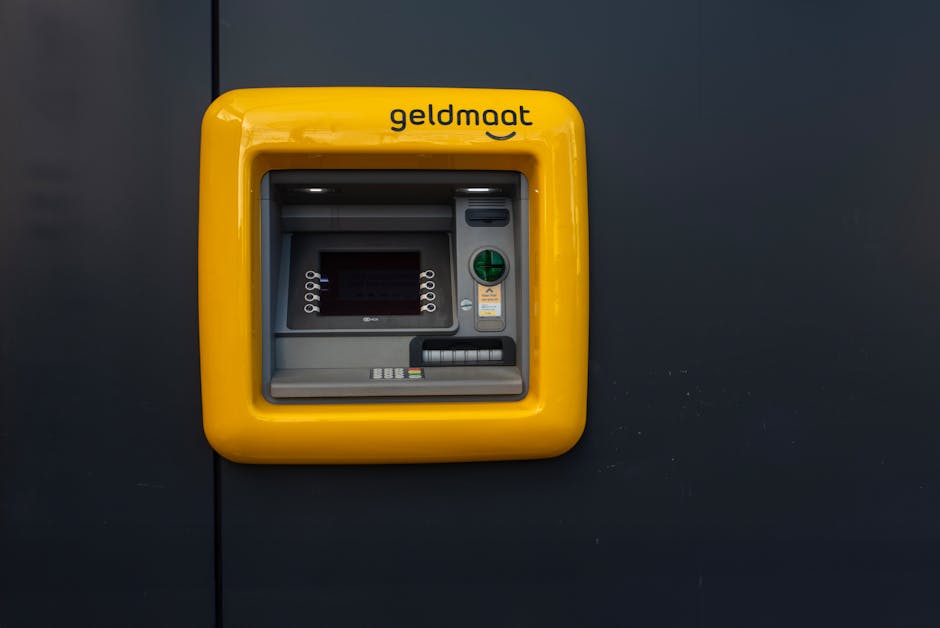
1. Please design an ATM for children aged 4-10.
- Assessment Point: User segmentation and situational empathy.
- Solution Approach: Do not just focus on the "withdraw cash" function. Children's needs might be depositing pocket money, understanding the concept of money, or simple financial education. The design needs to consider physical height (height adaptation), interaction interface (graphical rather than textual), safety (anti-card swallowing, parental supervision), and fun (such as animation feedback when depositing money).
2. If you were asked to improve Google Maps (or Baidu Maps), what features would you add?
- Assessment Point: Discovering Unmet Needs and data-driven decision-making ability.
- Solution Approach: Avoid arbitrarily piling up features. First, clarify the target user group (is it commuters, tourists, or delivery riders?). For example, for tourists, is there a lack of "indoor navigation" or "AR live-view directions"? For commuters, is there a need for "last mile" shared bike connection suggestions? Emphasize validating needs through data (such as user search failure rates).
3. Please design a bookshelf for visually impaired people (the blind).
- Assessment Point: Extreme empathy and Accessibility design.
- Solution Approach: The challenge lies in the fact that the essence of a "bookshelf" is display and access, while the blind cannot index visually. Solutions should focus on tactile (Braille labels, texture differentiation) and auditory (voice retrieval, spine scanning for sound) aspects. Also, consider safety (rounded corners, anti-tipping) and the convenience of returning items to their place.
4. You are in a desert, and a user says they need water. Please analyze this requirement and design a solution.
- Assessment Point: Excavating deep needs (Root Cause Analysis).
- Solution Approach: Product managers need to use the scenario analysis method to identify true and false needs. The user saying "I want water" is a surface request. If it is because of thirst, give water; if it is because of dehydration due to heat, they might need sun-protective clothing or a sunshade more; if it is to clean a wound, then a first aid kit is needed. Assess whether you can ask "why" a few more times to locate the pain point.
5. Design a smart alarm clock specifically for elderly people living alone.
- Assessment Point: Hardware interaction design for specific demographics.
- Solution Approach: The pain points of the elderly are usually hearing loss, slow operation, loneliness, or forgetfulness. The design focus should not be "waking up," but "reminding" and "caring." For example: use gradually increasing light to wake them up instead of harsh ringtones (to prevent shock), combine with medication reminders, or include voice message broadcasts from children, or even include an emergency call button.
6. The elevators in a building always have long queues during peak hours, and users are complaining. Please provide a solution.
- Assessment Point: Problem breakdown ability and awareness of non-technical solutions.
- Solution Approach: This is a typical resource scheduling problem.
- Low-cost solution: Install mirrors or screens in the waiting area (distract attention, reduce psychological waiting time).
- Operational solution: Staggered commuting hours, split-level stopping (odd/even floors).
- Product/Technical solution: Optimize elevator dispatch algorithms, introduce a destination floor reservation system.
- Interviewers value whether you can propose graded solutions from light to heavy.
7. What designs in current WeChat (or TikTok) do you find "anti-human" or unsatisfactory? How would you change them?
- Assessment Point: Critical thinking and understanding of product Trade-offs.
- Solution Approach: Be cautious when criticizing national-level apps. Don't just complain; analyze the logic behind it (could be for commercialization, restraining harassment, or technical limitations). For example, complaining about "WeChat file expiration cleanup mechanism," the improvement plan needs to consider the balance between server costs and user experience; or regarding the conflict between visual aesthetics and operational efficiency, propose optimization suggestions that balance design sense and usability.
8. Design a "Friend Finder/Locator" feature for a large music festival.
- Assessment Point: Usability design in extreme scenarios.
- Solution Approach: The characteristics of a music festival scenario are: poor signal, loud noise, dense crowds, and dim lighting. Relying on real-time GPS or voice calls may fail. Solutions might include: Bluetooth Mesh networking technology (communication without internet), turning the phone screen into a specific color/text flashing brightly (visual signal), or fuzzy positioning guidance based on landmarks (such as "left side of the main stage").
9. If you were to design a "Shared Umbrella" product, what core metrics would you focus on?
- Assessment Point: Business loop and core process design.
- Solution Approach: Besides the borrowing and returning process, the focus is on turnover rate and loss rate. Unlike shared bikes, umbrellas are low-frequency items that are easy to carry around. The design needs to consider: how to make users remember to return them (deposit mechanism or credit score), how to deal with the sudden drop in demand on sunny days (scenario expansion), and the durability cost of the umbrella itself.
10. Please design a meeting room booking system for a multinational company that solves time zone conflicts and resource contention issues.
- Assessment Point: B-side business rule logic and complexity management.
- Solution Approach: This question leans towards B-side logic. The focus is on how to design systems based on complex business rules. Considerations include:
- Visualization: Multi-time zone comparison view.
- Rules: Priority of recurring meetings, meeting room release rules (e.g., automatic release if check-in is 15 minutes late).
- Permissions: Approval flows for executive meeting rooms vs. instant booking for ordinary employees.
11-20: Logic Analysis and Fermi Estimation
This category of questions mainly tests the candidate's logical decomposition ability, data sensitivity, and modeling ability under conditions of insufficient information. For Fermi Problems, the interviewer does not care about the accuracy of the final number, but values how you break down a grand unknown problem into calculable known variables; for metric analysis, the core lies in the logical closed loop of "layered troubleshooting".
The following are 10 high-frequency questions and problem-solving ideas:
11. Estimate how many Starbucks stores are in Beijing? (Classic Fermi Estimation)
- Solution Approach: Use the "Supply and Demand Verification Method".
- Demand Side: Beijing permanent population (approx. 20 million) × Target user percentage (White-collar/Youth approx. 30%) × Consumption frequency (Weekly/Monthly) / Daily service capacity per store.
- Supply Side (Recommended): Divide Beijing into core business districts, office areas, and residential areas. Estimate the number of core business districts (e.g., Guomao, Xidan) × Stores per district + Number of office clusters × Density.
- Key Points: Do not break down unknowns into new unknowns; all assumption data must be based on common sense (e.g., daily output per store is 300-500 cups).
12. Estimate the sales volume of Coke in a large supermarket all day on Friday?
- Solution Approach: This is a typical funnel model estimation.
- Formula Decomposition: Sales Volume = Total location foot traffic × Store entry conversion rate × Beverage aisle reach rate × Probability of buying a beverage × Probability of choosing a carbonated beverage × Probability of choosing Coke.
- Scenario Correction: Consider the "Friday" and "Weather" variables (e.g., hot weather increases beverage purchase rates), as well as the supermarket's restocking mechanism (whether restocking occurs during business hours affects shelf stock).
13. An APP's DAU (Daily Active Users) suddenly dropped by 15% yesterday. Please provide a troubleshooting approach.
- Solution Approach: Apply the "Internal/External + Vertical/Horizontal" layered troubleshooting method.
- Step 1 (Data Accuracy): Confirm if it is a change in data statistical criteria or a log reporting failure.
- Step 2 (Dimension Decomposition):
- Horizontal: Break down by channel (iOS/Android), version, and region to see if the drop is concentrated in a specific group.
- Vertical: Combine with the user behavior funnel to locate whether the churn occurred at the launch page, login page, or homepage.
- Step 3 (Attribution): Internal factors (Release bugs, end of operations campaigns, server downtime) vs. External factors (Competitor promotions, holiday effects, policy regulations).
14. An e-commerce product page has a very high "Add-to-Cart Conversion Rate" but an extremely low "Order Conversion Rate". What could be the reason?
- Solution Approach: Focus on the conflict between "User Motivation" and "Transaction Friction".
- User Perspective: Adding to cart might be for price comparison or order pooling (discount thresholds), rather than immediate purchase.
- Experience Perspective: Are there obstacles in the checkout process? (e.g., excessive shipping costs, unsupported payment methods, cumbersome address entry).
- Competition Perspective: Did a competitor launch the same item at a lower price during the same period?
15. Estimate the total number of shared bike rides per day in Shanghai.
- Solution Approach:
- Vehicle Turnover Method: Total bike deployment (e.g., 1 million) × Daily turnover per bike (e.g., 3-5 times). Need to consider the depreciation coefficient for "zombie bikes" or damaged vehicles.
- Scenario Method: Morning/Evening peak commute demand (rigid demand) + Off-peak connection demand.
16. The video completion rate suddenly spiked. Is this a good thing or a bad thing?
- Solution Approach: Analyze dialectically and be wary of "Vanity Metrics".
- Possibility of Bad Thing: It could be machine brushing (Bot Traffic), videos being too short causing data distortion, or a player Bug (e.g., auto-looping counting as completion).
- Possibility of Good Thing: Recommendation algorithm precision improved, content quality explosion.
- Verification Method: Correlate analysis with "Interaction Rate" (Likes/Comments). If completion is high but interaction is extremely low, there is a high probability of abnormal traffic.
17. If you were to add a "Check-in" feature to an APP homepage, how would you estimate its effect on DAU lift?
- Solution Approach: Avoid guessing; use competitor data or small traffic tests.
- Reference Formula: DAU Increment = Low-activity users in stock who are activated + Increment brought by retention lift of new users.
- A/B Testing Mindset: Mention gray release (phased rollout), comparing the retention rate difference between the experimental group (with check-in) and the control group.
18. Your product's AI customer service feature has an answer accuracy of only 30%. How do you analyze and optimize it?
- Solution Approach: Distinguish between "Technical Issues" and "Experience Issues".
- Data Insight: Counter-intuitive insights often lie in the fact that user churn might not be because the answer is wrong, but because of "excessive wait time" or "not knowing how to ask".
- Optimization Strategy: Add preset question guidance (Prompt Engineering), shorten inference response time, and add "Thinking..." interaction feedback.
19. Estimate how many ping pong balls can fit inside a standard bus? (Spatial Estimation)
- Solution Approach: Tests volume calculation and space utilization.
- Core Logic: (Bus effective volume × Filling coefficient) / Ping pong ball volume.
- Detail Considerations: Deduct the volume of seats, handrails, and the driver's seat; gaps exist between ping pong balls (sphere packing density is usually about 74%).
20. After a feature launch, the Click-Through Rate (CTR) increased, but the next-day retention rate decreased. Should this feature be kept?
- Solution Approach: Tests the trade-off between short-term metrics and long-term value.
- Analysis: An increase in CTR indicates the entry point is attractive (possibly clickbait or induced clicks), but the drop in retention indicates the content did not meet user expectations, creating a sense of "deception".
- Decision: If the feature damages user trust (Long-term LTV), it should be taken offline or rectified even if the short-term CTR is high. Judgment must return to the product's North Star Metric.
Expert Tip: When answering such questions, it is recommended to draw your analysis framework diagram on a whiteboard (or verbally describe it). For example, when dealing with metric drops, first draw a "funnel chart"; when dealing with Fermi estimates, first list the "calculation formula". This allows the interviewer to intuitively see your logical structure.
21-30: Business Strategy and AI Scenarios
This section of interview questions mainly tests a product manager's decision-making ability in scenarios with limited resources, conflicting interests, or high technical uncertainty. Especially for AI products (such as large model applications), interviewers focus more on whether you understand the characteristics of "probabilistic products" and how to balance technical boundaries with user experience.
The following are 10 frequently appearing strategy and AI scenario questions:
21. Priority Decision-Making with Limited Resources
Question: "If development resources are only enough to build Feature A or Feature B, which one would you choose? Please explain your judgment logic."
- Solution Framework: Avoid answering based on gut feeling. It is recommended to use the RICE Model (Reach, Impact, Confidence, Effort) or ROI Analysis.
- Key Points: You must quantify expected returns. For example: "Although Feature A can bring a 20% conversion increase (High Impact), development takes 3 weeks (High Effort); Feature B can only increase it by 5%, but only takes 2 days. In the context of sprinting for short-term KPIs, I would prioritize B in exchange for agile iteration."
22. The Game Between Technical Debt and New Features
Question: "The R&D team proposes that it takes two weeks to refactor code (pay off technical debt), but this will delay the launch of new features. As a PM, how do you handle this?"
- Solution Framework: Value alignment.
- Key Points: Do not stand in opposition to R&D. First, assess the risks of not refactoring (such as downtime risk, reduced future development efficiency), translate technical risks into business risks (e.g., "If we don't refactor, the system might crash during the Double 11 promotion"), and then negotiate the schedule with business stakeholders to find a compromise (e.g., launch an MVP version first, then refactor immediately after the promotion).
23. Quick Entry into Unfamiliar Fields
Question: "The company decides to enter a new track you are completely unfamiliar with (e.g., switching from ToC to ToB). How do you formulate the initial product plan?"
- Solution Framework: Research -> Competitors -> MVP -> Iteration.
- Key Points: Emphasize "Minimum Viability." Refer to the ideas in Detailed Explanation of High-Frequency Product Manager Interview Questions: First establish a cognitive framework through industry reports and expert interviews, then look for the "minimum entry point." Do not attempt to build a large and comprehensive platform from the start; instead, find a core pain point (such as the settlement process in the supply chain) for a single-point breakthrough.
24. Resolving Conflicts with R&D/Design
Question: "If the time estimated by R&D far exceeds your expectations, or the designer insists on a solution that looks good but isn't usable, how do you persuade them?"
- Solution Framework: Strip away emotions, return to data and goals.
- Key Points:
- To R&D: Ask if the specific bottleneck is a technical difficulty or logical complexity. If it is logical complexity, the PM can simplify requirements or split the launch into stages; if it is a technical difficulty, explore if there are alternative solutions.
- To Design: Conduct A/B testing or gray release (canary release) to prove with data which design has a higher conversion rate, rather than arguing about aesthetics.
25. Merger and Migration of Existing Products
Question: "The company acquired another similar product, and now you are responsible for merging the two products. How would you plan this?"
- Solution Framework: Asset Inventory -> Account Integration -> Feature Fusion -> Data Migration.
- Key Points: This is a typical "deep to shallow" process. Prioritize solving the underlying account system (SSO) and data interoperability so users can log in with one account; next is the unification of the front-end UI. Avoid forcing users to change habits right away; provide a transition period and data migration tools.
26. Technical Selection and Scenario Matching for AI Products
Question: "In this scenario, why did you choose to use a Large Model (LLM) instead of traditional rules or a small model? How do you judge if a feature is worth doing with AI?"
- Solution Framework: Cost-Benefit-Experience Triangle Analysis.
- Key Points: Not all features are suitable for AI. Refer to the experience in ByteDance AI Product Interview Review: Large models are suitable for scenarios requiring long text summarization and high generalization capabilities, but they have high costs and high latency. If it is just simple keyword matching, traditional NLP or rule engines might be faster, more accurate, and cheaper. You need to demonstrate awareness of "technical boundaries."
27. Handling AI "Hallucinations" and Poor Experiences
Question: "If the content generated by AI is inaccurate (hallucinations) or the response time is too long, resulting in poor user experience, how would you optimize it as a PM?"
- Solution Framework: Technical Optimization + Product Experience Compensation.
- Key Points:
- Experience Compensation: When technology cannot break through in the short term, alleviate anxiety through product design. For example, the ByteDance AI Customer Service Case mentions that user churn is often not because the answer is inaccurate, but because "the waiting time is too long." Adding dynamic prompts like "AI is thinking" or pre-displaying common questions can significantly reduce churn rates.
- Fault Tolerance Mechanism: Provide a "Regenerate" button, or allow users to downvote results (RLHF feedback), and clearly inform users that this is AI-generated content to lower psychological expectations.
28. Evaluation Metric Design for AI Models
Question: "For a content moderation or recommendation AI model, what metrics do you focus on? If Precision and Recall conflict, how do you choose?"
- Solution Framework: Business goals determine technical metrics.
- Key Points:
- Content Safety Scenarios: Better to kill wrongly (High Recall) than to let one pass.
- Spam/User Disturbance Scenarios: Better to miss (High Precision) than to misreport (avoid treating important emails as spam).
- Explain the business background clearly in the interview. For example, in the Content Governance Link, online business metrics often value Precision more because it is difficult to calculate full Recall with massive data; usually, the F1 score is balanced through offline test sets.
29. Commercialization Strategy Design
Question: "This is a free tool product with one million DAU. The boss asks you to design a commercialization monetization plan. What would you do?"
- Solution Framework: Traffic Monetization (Advertising) vs. Value Monetization (Value-added Services/SaaS).
- Key Points: Distinguish user segmentation. Monetize price-sensitive users through advertising; provide "Ad-free + Advanced Features" membership services for feature-sensitive users (such as heavy users, enterprise users). You must mention how to avoid hurting core retention rates during this process (e.g., not doing forced splash screen pop-ups).
30. Definition of the Product's "North Star Metric"
Question: "What is the North Star Metric for the AI product you are responsible for? Why this one and not that one?"
- Solution Framework: Metric Breakdown (OSM Model: Objective -> Strategy -> Measurement).
- Key Points: Avoid vanity metrics (such as simple registration numbers). For AI conversational products, the North Star Metric might be "effective conversation turns" or "task completion rate"; for recommendation systems, it might be "total time spent" or "long-term retention." Be sure to explain the business value behind the metric, i.e., whether the growth of this metric truly reflects an increase in user value.