

Facing the ultimate question, "Can I go to Europe with poor English?", workplace reality is far more complex and cruel than agency depictions. In European job hunting discourse, the biggest misconception equates "no need for local languages (e.g., German, French)" with "low English requirements," causing countless applicants to waste energy on the wrong track. In fact, so-called all-English jobs in Europe—especially the highly touted European IT English positions—assume professional-level proficiency for barrier-free technical debate and teamwork; here, English is not just a threshold but a survival necessity. However, job hunting in Europe with poor English is not a dead end. For those with weak language skills, real opportunities lie in two other dimensions: first, leveraging the European Chinese recruitment ecosystem within Chinese enterprises expanding overseas, where "fluent Chinese" is the core competency and English is merely a living aid; second, entering the language-free European labor market, exchanging high-intensity physical labor (e.g., construction, catering) for legal residency. This article looks past European work visa language policies to analyze the feasibility and risks of these three paths, helping you cut through the "zero language threshold" marketing fog and pinpoint your European survival coordinates based on your actual language assets.
Conclusion First: Can You Really Work in Europe with Poor English?
For this core question, the answer is direct and brutal: "Yes, but it depends on how 'poor' your English is, and which path you take."
The vast majority of misunderstandings regarding "European working language requirements" stem from confusing two distinct concepts:
- "I don't speak the local language (German/French/Swedish), only English" — This is completely feasible in specific industries (such as IT, Academia).
- "My English is very poor (low vocabulary, difficulty listening/speaking), and I don't speak the local language" — This is almost a dead end in the formal white-collar workplace.
If these two concepts are not clarified, blindly applying for so-called "English positions" will only lead to a cycle of futile effort.
Which Category Do You Fall Into? (Feasibility Snapshot)
To help you quickly locate your survival space, we have categorized common European job-seeking scenarios into three types. Please check the table below to assess whether your "language assets" match market demands:
Scenario Type | Typical Roles | Hard Language Requirements | Can I go with poor English? | Difficulty Level |
|---|---|---|---|---|
Scenario A: High-Skill "English Island" | Programmers, Data Scientists, MNC Executives, Academic Researchers | Fluent English (B2/C1+)<br>Local Language: Not mandatory (0 basis acceptable) | No. English is the working language here; you must be able to hold meetings and debate without barriers. | ⭐⭐⭐ (Depends on tech skills) |
Scenario B: Overseas Chinese Enterprises | Expat Finance, Admin, Supply Chain Management, Specific Sales | Fluent Chinese<br>English/Local Language: Basic communication (A2/B1) | Possibly. This is the only white-collar opportunity for those with poor English; Chinese is the core competitiveness. | ⭐⭐ (Depends on opportunities) |
Scenario C: Blue Collar & Labor | Chefs, Construction Workers, Masseurs, Some Nursing | Very low language requirements<br>Relying on craft and physical strength | Yes. But there are huge challenges regarding visa compliance and labor intensity. | ⭐⭐⭐⭐⭐ (Depends on visa) |
Core Misconception: Mistaking "English Widely Spoken" for "Low English Requirements"
In the European workplace, so-called "English Speaking Jobs" usually refer to an English as a Lingua Franca (ELF) environment. This means English is not just a communication tool, but a carrier for demonstrating professional capabilities.
Many job seekers are prone to survivorship bias when seeing discussions about not needing the local language in Scandinavia. The reality is:
- For white-collar roles: If your English level is insufficient to support a 45-minute full-English technical interview, or if you cannot write professional business emails, then even if the company does not require you to speak German or Dutch, you will not pass the interview.
- For "multi-lingual" roles: Many positions labeled as "English jobs" (such as Customer Service) actually often require "Fluent English + another European native language (French/German/Spanish)". As Blu Selection's analysis points out, non-native speakers who only speak English not only have no advantage in the competition but are at a disadvantage.
Reality Check:
If your IELTS Speaking score is below 6.0, or if you cannot understand 70% of the content in an English work meeting without subtitles, please immediately give up the fantasy of "Scenario A". Instead, focus on "Chinese Enterprise Expat" roles or improve your language skills domestically first. In Europe, "poor English" usually equates directly to "unable to work", unless you are willing to engage in pure manual labor that requires no communication.
Path 1: High-Skilled Roles in All-English Environments (IT & MNCs)

For many job seekers aspiring to go to Europe, the biggest misconception lies in confusing the concepts of "Zero Local Language" and "Poor English." In Europe's high-skilled job market, there is indeed a "green channel" that does not require mastery of German, French, or Swedish, but this is usually built on one premise: your English must reach Professional Fluency.
This phenomenon is known as "English as a Lingua Franca." In the European business environment, to attract global talent, more and more multinational corporations and technology companies are designating English as their official working language. As pointed out in a BBC report, established German enterprises like Siemens and numerous multinational companies located in non-English speaking countries have shifted to an "all-English" internal communication strategy, which means that within these specific "workplace bubbles," you can survive and advance relying entirely on English.
Core Applicable Fields: IT is the Absolute Main Force
Not all industries possess this "English exemption." According to market data and recruitment trends, this path is highly concentrated in the following three fields:
- IT and Internet Development (Highest Probability):
This is currently the industry with the most relaxed language thresholds in Europe. Code is universal, technical documentation is in English, and teams are often composed of developers from all over the world. As seen in the list of tech jobs with relocation in Europe on GitHub, the vast majority of positions offering Visa Sponsorship are for backend developers, full-stack engineers, or data scientists. As long as your technical skills are solid, employers are usually willing to overlook your lack of local language skills. - High-End Engineering and R&D:
In automotive manufacturing, aerospace (such as Airbus), and precision manufacturing, due to the involvement of cross-border collaboration, English is often the default technical language. - Academic Research and Higher Education:
European universities and research institutes (especially in the Nordics and the Netherlands) offer a large number of English-taught programs, and the working environment for PhDs and postdoctoral researchers is almost entirely in English.
Key Threshold: English Must Be a "Strength," Not a "Weakness"
A brutal "Reality Check" is needed here. "English-universal roles" are by no means "Mute English roles."
Since you do not need to speak the local language, employers will have even higher requirements for your English communication skills (usually requiring B2 or C1 level). You not only need to understand instructions but also defend your points of view during intense technical discussions or clearly report progress in Scrum meetings.
Career Reality Check: Do You Possess the Following Abilities?
* Technical Interview: Can you fluently explain complex algorithm logic or system architecture in English, rather than just blurting out a few keywords?
* Soft Skills Interview: When the interviewer asks "How do you handle team conflicts," can you tell a specific story with a clear beginning, middle, and end in English?
* Social Integration: During lunch breaks, can you understand your colleagues' small talk and participate in it?
If your answer is "No" or "With great difficulty," then even if your code is excellent, this "all-English environment" path is closed to you. In this case, the so-called "English-universal role" is not only not a shortcut but a high-risk trap.
Which Countries Are Most Tolerant of "English-Only"?

When looking for "English-only jobs" in Europe, the choice of geographical location is often more decisive than the choice of industry. English proficiency and workplace culture vary hugely across European countries; we can roughly divide them into three tiers. This classification concerns not only whether you can get an Offer, but also the difficulty of survival after joining.
Tier 1: High Feasibility (Survival Possible with English)
In countries or regions of this tier, English is not only a common commercial language but also a highly prevalent social language. In these places, the main obstacles are usually not language, but visa thresholds or the cost of living.
- The Netherlands: The Netherlands is one of the most English-friendly countries on the European continent, especially in tech hubs like Amsterdam and Eindhoven. The official working language of many multinational corporations and startups (such as Booking.com, Adyen, ASML) is English. For highly skilled migrants, there are even specific visa policies, and you are not required to master Dutch immediately to start working.
- Ireland: As the only native English-speaking country currently in the EU (post-Brexit), this is home to the European headquarters of numerous US tech giants (Google, Meta, Apple). The language barrier is virtually zero, but the housing crisis and high cost of living are major challenges.
- Nordic Countries (Sweden, Denmark, Norway): English proficiency here is extremely high; almost everyone can converse fluently. However, there is an invisible "workplace glass ceiling." Although one can work in English in IT and engineering fields, as many who have experienced it pointed out in community discussions, unless you are an extremely scarce expert, not knowing the local language often means losing out to locals or EU citizens during the resume screening stage in SMEs.
Tier 2: Specific City "Bubbles" (International Hubs Only)
In these countries, you must strictly distinguish between the "country" and the "city." Once you leave specific international metropolises, the effectiveness of English drops precipitously.
- Germany (Berlin, Munich only): Germany generally has strict requirements for German, but in Berlin (startup hub) and Munich (industrial and tech giant hub), there are a large number of all-English positions. However, once it involves renting an apartment, dealing with the Foreigners' Authority (Ausländerbehörde), or seeing a doctor, not knowing German will make it extremely difficult to get anything done.
- Switzerland (Zurich, Geneva): Salaries are extremely high, attracting vast amounts of global talent. Zurich's finance and tech circles, and Geneva's international organization circles allow for working in English. But due to the very small quota for work visas for non-EU citizens, the competition here is usually hellish.
Tier 3: High Difficulty Zone (Local Language is a Must)
In these countries, unless you are an expatriate executive or in a very few core technical roles, "English-only" is almost an impossible mission.
- France, Italy, Spain: In these countries, the local language is a basic sign of respect and a hard threshold in the workplace. Although Barcelona or Madrid have some job opportunities for foreigners, one must be wary that such jobs are often “multilingual customer service” or sales roles. They usually require "English + another European language (such as German, Dutch)"; job seekers who only speak English and do not know the local language have almost no competitiveness in these markets.
Reality Check:
Even in Tier 1 countries, being able to work in English does not mean being able to smoothly integrate. Long-term career promotion (entering management) and social life ultimately require you to master the local language. For those who only plan to work short-term (1-3 years), Tier 1 is the first choice; but for those with long-term settlement plans, learning the local language is an unavoidable "hidden job" no matter where you go.
Path 2: Chinese Enterprises and "Chinese-Advantage" Roles
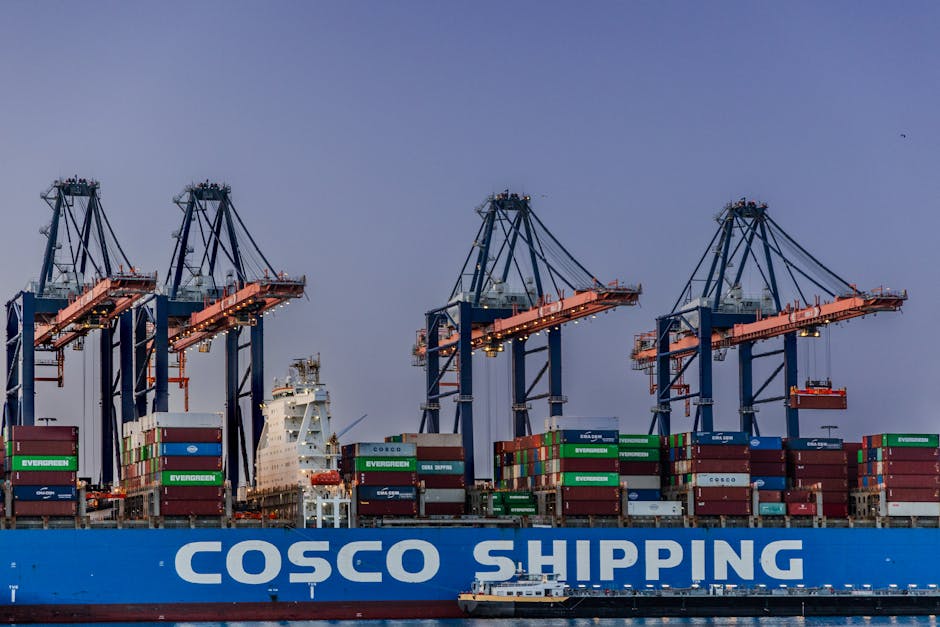
For job seekers with limited English proficiency but specific industry experience (such as finance, supply chain, IT operations), "Chinese enterprises going global" and the "local Chinese service industry" are currently the most pragmatic landing spots with the highest success rates. In these roles, your core competitiveness is not language ability, but communication efficiency—specifically, the ability to seamlessly connect with domestic headquarters or serve Chinese clients.
Who is Hiring? Locking in Three Core Areas
According to recent data from the European recruitment market, enterprises with the strongest demand for "Chinese as a working language" are mainly concentrated in the following three tracks:
- "Bridgehead" Departments of Chinese Enterprises Going Global
With the expansion of new energy vehicles, consumer electronics, and cross-border e-commerce, a large number of Chinese-funded enterprises have established branches in Germany (Düsseldorf, Munich), the Netherlands (Amsterdam), and France (Paris).
- Typical Roles: Finance Specialist (liaising with domestic tax authorities), Supply Chain Specialist (order tracking and logistics coordination), Expat Admin/HR.
- Language Requirements: Internal reporting is entirely in Chinese; English requirements are limited to understanding basic emails or simple business reception.
- Recruitment Channels: These positions are usually published through specialized overseas Chinese talent recruitment agencies. Companies value candidates' familiarity with Chinese management processes more than IELTS scores.
- Localized Sales and BD Teams
When companies like Xiaomi, DJI, or various cross-border logistics companies expand their business in Europe, they need a large number of talents who can understand product technical details and promote them to the local market (or the local Chinese community).
- Typical Roles: Channel Sales, Key Account Manager, Store Manager.
- Case Study: Sales positions for "Xiaomi France" or similar tech companies frequently appear on bilingual recruitment platforms like 88JOBS. These jobs often prioritize Chinese fluency to ensure accurate transmission of product knowledge.
- Chinese Service Ecosystem
In major cities like London, Paris, and Milan, there is a vast ecosystem serving Chinese immigrants and tourists.
- Typical Roles: Duty-free Shop Guide, High-end Real Estate Agent (liaising with domestic buyers), Study Abroad Consultant, Chinese Law Firm Assistant.
- Characteristics: This is a completely "closed-loop market" where your clients and colleagues are almost entirely Chinese, and English usage is extremely low.
"Hidden Costs" You Must Be Wary Of
While choosing this path can bypass language shortcomings, job seekers must have a clear understanding of the "work culture discount." This is not an easy shortcut, but a trade-off:
- The "Localization" Trap of Salary and Benefits:
Many Chinese enterprises going global, when recruiting local Chinese (Local Hire), often offer salaries based on the local minimum wage or slightly above, rather than the high compensation packages of expatriates (Expat). You might be earning a local European wage while enduring domestic KPI pressures. - Cultural Export of "996" Culture:
Although European labor laws are strict, within Chinese enterprises, implicit overtime and responding to WeChat group messages at any time are often regarded as "professionalism." Compared to the strict "Work-Life Balance" of local European companies, this cultural shock is the biggest pain point for many job seekers after joining. - The "Glass Ceiling" of Career Development:
If your English never improves, your career path will be strictly locked within the "Chinese circle." Once you leave this Chinese enterprise, you may find yourself lacking the competitiveness to enter the local mainstream labor market.
The Real Baseline for Language Ability
Do not mistakenly believe that "Chinese-advantage positions" mean English is completely unnecessary. "Chinese for work, English for life" is the norm for this demographic.
- Work Scenarios: You speak Chinese 90% of the time, but you need to understand local tax forms, logistics documents, or compliance files (usually manageable with translation software).
- Life Scenarios: This is the biggest challenge. Signing rental contracts, opening bank accounts, and renewing visas all require the use of the local language. If you cannot master even basic "survival English," you will have to rely on agents or friends for a long time, significantly increasing living costs and risks.
Summary and Advice: If your English level is at the "mute English" stage, it is recommended to prioritize vertical recruitment channels such as Zhilepin or 88JOBS. Use these positions as a "springboard" to first solve visa and survival issues, use the first year in Europe to strengthen your language skills, and then plan for opportunities to enter local enterprises.
Path 3: Language-Free Labor and Blue-Collar Jobs

For job seekers who possess neither fluent English skills nor high-end technical skills like IT or engineering, Europe's doors are not completely closed, but the nature of this path is distinctly different from "white-collar immigration." These jobs are commonly referred to as "language-free labor services," and their core lies in using high-intensity manual labor or specific crafts (such as cooking) to fill local labor shortages.
Although this path seems to have a low threshold, it is often accompanied by a closed living environment and extremely high legal risks.
Core Positions: Chinese Chefs and Specific Labor Services
Among all "language-free" European work visa programs, Chinese chefs represent the channel with the highest degree of legalization and the most stable approval rates.
- Chinese Chefs (Specialty Chef): Countries like Germany and the Netherlands have specific visa quotas for specialty cuisine chefs. According to the International Labour Organization (ILO) report on Chinese workers going to Europe, Germany and the Netherlands approve the entry of thousands of Chinese chefs every year to support the local Chinese restaurant industry. These visas usually require applicants to hold a domestic intermediate or senior chef certificate and provide proof of social security payments for several years.
- Construction and Factory Labor: Another common category of positions includes construction workers, renovation workers, or meat processing plant workers. These opportunities are usually provided by infrastructure projects of large Chinese-funded enterprises in Europe (such as the construction of Chinese-funded factories in Hungary, Serbia, etc.) or labor import programs in Eastern European countries.
"Language Islands" and Closed Management
Job seekers choosing this path must clearly realize: The price of "no English required" is "it is very hard to learn English."
The vast majority of such jobs exist within a "closed loop." You live in Chinese dormitories provided by the employer, eat Chinese food, speak only Chinese at work, and your social circle is limited to colleagues. While this environment solves initial language anxiety, it also results in being unable to independently visit a hospital or handle banking matters even after living in Europe for many years. You have not truly "entered" European society, but rather live inside a "Chinese bubble" in Europe.
Fatal Risks: Visa Binding and "Deeds of Sale"
Unlike flexible visas such as the EU Blue Card or the German "Opportunity Card," labor work visas usually have extremely strong employer-binding attributes.
- Inability to Change Jobs Freely: Your residence permit is usually directly linked to a specific employer. If you have a conflict with your boss due to excessive working hours (common "10 am to 10 pm" shifts in the catering industry) or treatment issues, once the contract is terminated, your legal residence status may immediately become invalid, and you must leave the country within a very short time. This places workers in an extremely weak position in labor-management negotiations.
- Difficulty in Changing Status: The difficulty of converting from a labor visa to local permanent residence ("Green Card") is far higher than for skilled migration. Due to the lack of language improvement and typically lower tax contribution levels, many people have no choice but to return to their home country after working for three to five years, making it difficult to achieve long-term immigration settlement.
Beware: Agency Fees and Fake Recruitment
This is the area with the highest incidence of fraud in "language-free" job seeking.
- Exorbitant Agency Fees: Legitimate labor export does involve service fees, but if an agency demands a "guaranteed visa fee" as high as over 100,000 RMB, please be vigilant. Formal European employer recruitment usually sees the employer bearing most of the administrative costs.
- "Illegal Labor" Traps: Any project promising to "convert a tourist visa to a work visa after entry" is 99% illegal. In most European countries, converting a tourist visa to a work visa is strictly prohibited by law. Once you work illegally through this method, not only are you prone to wage arrears due to a lack of legal protection, but you also face the risk of deportation and a permanent ban from entering the EU.
Summary for Avoiding Pitfalls: If you must take this path, please prioritize qualified foreign labor cooperation enterprises (possessing qualifications from the Ministry of Commerce of China) and confirm that your visa type is a dedicated work visa (such as Germany's D-Visa), rather than a short-term business or tourist visa.
Guide to Avoiding Pitfalls: How to Identify "No Language Required" Recruitment Traps
When looking for overseas job opportunities, especially for job seekers who lack confidence in their language abilities, the internet is flooded with targeted fake advertisements. These messages often exploit the psychology of being "eager to go abroad" and "language anxiety" to set traps that are hard to detect. Identifying these traps is not only about preventing financial loss but also concerns the safety of your legal status in a foreign country.
Below is a risk screening list and verification methods regarding "no language required" recruitment.
Beware of Three Major "Red Flags"
If a recruitment advertisement meets the following characteristics simultaneously, it is highly likely to be a scam or an illegal labor agency:
- The "Impossible Triangle" Promise: High Salary + No Language + No Skills
The European labor market is very mature; salaries are proportional to skills and language proficiency.
- The Truth: Jobs that require neither language nor special skills (such as basic farm work or cleaners) usually only offer the local minimum wage and involve high labor intensity.
- Warning: If someone promises "a monthly income of over 30,000 RMB, no English required, and no technical skills required," this is usually a typical scam or bait for illegal black market labor.
- Demanding High "Upfront Fees" Before the Interview
For legitimate European headhunting or recruitment services, fees are usually borne by the employer, or a percentage is taken from the job seeker's salary after successful employment.
- The Trap: Fraudulent agents will often ask for tens of thousands of RMB in advance payments while you are still in your home country, under the guise of "visa fees," "customs clearance fees," or "placement fees."
- Reference Case: In job search discussions regarding Germany, experienced individuals often warn job seekers absolutely do not pay out of pocket to participate in paid programs or bootcamps promising employment, because legitimate channels rarely require job seekers to prepay huge sums in exchange for a "potential" job opportunity. Once the money is in hand, these agents often make excuses like "visa rejected" or simply lose contact.
- The Illegal Path of "Converting Tourist Visa to Work Visa"
This is the most dangerous legal trap. Agents will suggest you enter with a tourist visa first, claiming they will help you "change status" once you arrive locally.
- Legal Red Line: In the vast majority of EU countries (such as Germany, France, and the Netherlands), holding a short-term tourist visa (Schengen Type C visa) is strictly prohibited from working, and it is usually impossible to convert directly to a work residence permit within the country.
- Consequences: Once caught working illegally, you face immediate deportation and will be blacklisted in the Schengen system, unable to re-enter Europe for several years.
Three-Step Official Verification Method (Verification Steps)
Do not trust screenshots or verbal promises sent by agents; please verify through the following independent channels:
Step 1: Verify Employer Authenticity
Do not just look at the fancy PPT provided by the agent.
- Action: Request the employer's exact full name and registration number.
- Tool: Visit the corporate registry official website of the target country (such as Companies House in the UK, Handelsregister in Germany). If the company cannot be found, or the company's business is completely inconsistent with the job description (e.g., a company registered as "Catering Consulting" recruiting "Construction Workers"), the legitimacy is extremely low.
Step 2: Cross-Check Reputation
Use public digital footprints to screen for shell companies.
- Action: Search for the company on LinkedIn or Glassdoor.
- Signal: A European enterprise legitimately recruiting foreigners will inevitably have profiles of current employees, a company homepage, and past recruitment records. If a company has no traces of "living humans" online, or only has promotional posts on Chinese forums, please remain highly vigilant.
Step 3: Consult Official Immigration Bureau Regulations
Regarding visa policies, only official sources count.
- Action: Directly visit the official website of the target country's immigration bureau or embassy/consulate in China (usually ending in
.govor.eu). - Verification Point: Look up the requirements for the corresponding visa category. For example, if an agent says "Chefs do not need language scores," please check the specific terms for that country's "Specialty Cuisine Chef Visa" on the official website. You will find that many countries (such as Sweden, Germany), even if they relax conditions for shortage occupations, often have strict requirements for employer qualifications, and it is by no means as casual as agents claim.
Safety Bottom Line: Do not pay any large fees or resign from your current job in your home country until you have obtained a legitimate work visa (Type D visa) with a sticker from the embassy. Real opportunities can withstand verification through official channels.