

In a hyper-competitive job market, a static PDF resume fails to capture the true value of tech and operations professionals. Most face the "invisible expert" dilemma: regardless of how elegant your code or brilliant your strategies, if they remain in private repositories or local drives, your bargaining power is trapped in an inefficient "apply-interview" loop. The key to breaking this deadlock lies in applying modern software architecture thinking to build a "Github + Xiaohongshu" dual-engine career asset system.
This does not require becoming a full-time entertainment influencer, but rather "productizing" your skills to build a solid technical side-hustle moat. Treat Github as your "backend" core to establish irrefutable proof of work and technical depth through open-source projects. Simultaneously, use Xiaohongshu as your market-facing "frontend" landing page, leveraging algorithms to transform dry terminology into commercially valuable solutions, enabling content reuse and precise traffic distribution.
Once you bridge the gap between "hardcore tech" and "public awareness," you gain "search-driven" influence. Instead of passively waiting to be screened, you build a 24/7 personal IP matrix that allows headhunters, founders, and partners to lock onto you directly when searching for solutions, achieving a true paradigm shift from "job seeking" to "being discovered."
Core Logic: Why "Code Repositories + Traffic Platforms" Are the Modern Career Moat?
In traditional career development paths, most technical and operational professionals face a common pain point: the "invisible expert" dilemma. No matter how elegant your code is or how exquisite your operational strategy is, if they only exist in the company's private repositories or PDF resumes on your hard drive, your market value is confined to the extremely limited "application-interview" closed loop.
The core of the modern career moat lies in breaking this passive situation and building a "dual-engine" career asset system. This does not require you to switch careers to become a full-time blogger, but rather to borrow ideas from modern software architecture and "productize" your personal capabilities:
The "Frontend + Backend" Dual-Engine Model
If you view your career as an internet product, then GitHub is your "Backend", and Xiaohongshu is your "Frontend".
- GitHub (Backend/Core Delivery): This stores your "Proof of Work". It demonstrates the depth of hard skills, code quality, and the ability to solve complex problems. It is the cornerstone of your career credit, solving the trust issue of "whether you can really do the work".
- Xiaohongshu (Frontend/Traffic Distribution): This is your market-facing "Landing Page". It is responsible for translating dry technical capabilities into language that users understand, reaching potential employers, partners, or clients through algorithmic distribution. It solves the discovery issue of "who knows you can do the work".
As mentioned in LYon's Blog, Xiaohongshu is becoming a "new oasis" for independent developers, where there are real user needs and strong feedback mechanisms. When "backend" hardcore technology is packaged through "frontend" soft skills (communication, aesthetics, scenario-based application), you possess the capability of "Search is What You Get"—when headhunters or founders search for a technical solution, what they see is not cold documentation, but your vivid practical cases.
Traditional Static Resumes vs. Dynamic Search Matrices
To understand this shift more intuitively, we can compare the differences between traditional resumes and the "GitHub + Xiaohongshu" matrix:
Dimension | Traditional PDF Resume | "Code + Traffic" Search Matrix |
|---|---|---|
Visibility | Private/Passive: Only visible when applied or downloaded by headhunters | Public/Active: Passively acquiring customers 24/7 in search engines and recommendation feeds |
Timeliness | Static Snapshot: Usually updated every six months or a year, lagging behind capability growth | Dynamic Flow: Real-time recording of the "Build in Public" process, showcasing lines of thought |
Verification Cost | High: Based solely on text descriptions, interviewers need multiple rounds to verify authenticity | Low: Code is runnable, documentation is readable, and comment section interactions directly reflect soft skills |
Target Audience | HR/Screening Systems: Easily filtered out or killed by keywords | Business Decision Makers/Founders: Establish connections directly through content resonance |
Asset Attribute | Consumable: Used once per application, cannot compound | Moat: Content has a long-tail effect, accumulating weight over time |
Say Goodbye to "Traffic Anxiety" and Embrace "Passive Discovery"
It must be clarified that the purpose of building this system is absolutely not to make you a full-time influencer chasing hot topics. Many technical professionals worry about needing to sing and dance or update daily like entertainment bloggers; this is a misunderstanding.
Your goal is to establish a "passive discovery mechanism". As stated by Wang Mazha in his review, the platform is merely a tool for acquiring traffic; the key lies in having a "business" to receive that traffic—for professionals, this business is your professional service capability.
You don't need to pursue a fan base of 100,000+; what you need are 100 precise industry connections. When you open-source a tool on GitHub that solves a specific pain point and share the thinking and application scenarios behind the development on Xiaohongshu, you have completed a high-value "pre-sale". The opportunities brought by this "technical showcase" are often of much higher quality than interviews obtained through mass resume submissions, because the other party already has a sufficient understanding and recognition of your capabilities before contacting you.
This is the essence of the modern career moat: Use GitHub to establish professional height, use Xiaohongshu to expand career breadth, and let opportunities come to you automatically.
Backend Construction: Turn GitHub into Your "Technical Showcase"

In the "Dual-Engine" career moat model, GitHub plays the role of the "backend"—it is direct evidence of your hard skills and the ballast stone of your professional credibility. However, for the vast majority of tech professionals, GitHub is merely a "code repository," piled high with abandoned Demos and meaningless Forks.
Recruiters or potential partners have only 10 seconds of patience when viewing your GitHub profile. If they see a sea of green "Forks," or a pile of empty projects without documentation, this not only fails to add points but serves as a huge red flag: it implies a lack of original ability or a tendency to leave things unfinished.
To build a moat, you need to switch your mindset from "developer" to "product manager," treating every Pinned Repository as an independent Landing Page. Your goal is not to show "how much code I wrote," but to demonstrate "what problems I can solve."
Reject the "Fork" Graveyard: Build a Curated Showroom
A high-conversion GitHub profile doesn't need hundreds of projects, just 3-5 carefully polished Curated Projects.
- Clear the noise: Hide or delete those repositories that were Forked purely to learn syntax and never modified.
- Pinning strategy: Use GitHub's Pinned feature to showcase projects that best reflect your technical depth. If you are a frontend developer, show component libraries or interactive pages; if you are a backend developer, show high-concurrency processing or toolchain scripts.
- Leverage GitHub Pages: For Web projects, be sure to deploy an online demo. As mentioned in the GitHub Pages Setup Tutorial, you can turn it into your "ID card" on the internet, allowing non-technical personnel (such as HR or operational partners) to directly experience your results without needing to download and run code.
Three Core Elements: Write Your Readme Like a Sales Letter
An excellent repository must have "sales conversion" capability. Don't just write git clone and npm install; those are for developers. To make your technical skills "searchable and perceptible," your main repository's README.md must contain the following three core elements:
- Clear Problem Statement
- Wrong way:
A Todo List based on React. - Right way:
A local-first task manager for heavy command-line users. Solves the problems of slow synchronization in weak network environments and insufficient shortcut support in Web tools; supports Vim mode operations. - Logic: Tell the visitor in one sentence what pain point this project solves, reflecting your product thinking.
- Wrong way:
- Tech Stack Visualization
- Don't make recruiters dig through
package.jsonto guess what you used. Use tools like Shields.io to generate badges that clearly list the core tech stack (e.g.,Vue 3,TypeScript,Rust,Docker). This allows headhunters searching for specific keywords (like "Rust developer") to instantly lock onto your compatibility.
- Don't make recruiters dig through
- Usage Demo
- This is the most critical link. Humans are visual creatures; a 5-second GIF or a clear architecture screenshot is worth a thousand lines of code.
- Frontend projects: Must have UI interaction GIFs showing the operational flow of core features.
- Backend/Tool projects: If it's a CLI tool, provide a terminal recording (you can use asciinema); if it's an API or library, provide comparison screenshots of input/output or architecture diagrams.
Don't spam Commits just to chase activity levels; "Curating Quality" is far more important than quantity. When you operate your GitHub repository as a product, you are no longer just a "coder," but an "engineer" with delivery capabilities.
More Than Just Code: How to Use Readme and Issues to Showcase Soft Skills
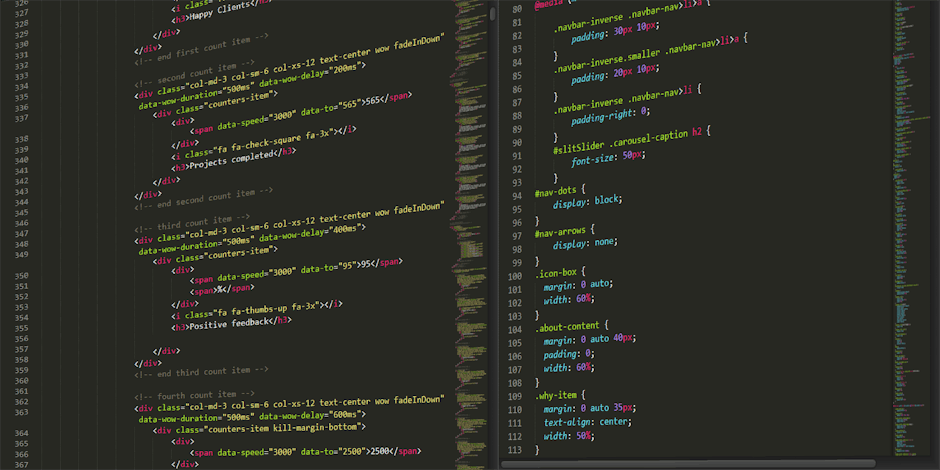
A common misconception many tech professionals fall into is: as long as the code is written beautifully, people will naturally appreciate it. However, in the eyes of recruiters or potential partners, documentation quality is directly equivalent to communication skills. A repository with no Readme or only a single line "Initial commit" often sends the signal: "I am not good at teamwork" or "I lack product thinking."
To turn GitHub into your career moat, you need to utilize the two text areas of Readme and Issue to display those "soft skills" that code cannot reflect.
1. Readme: Your Product Manual (Communication Skills)
The Readme is the first impression for strangers (including HR and non-technical founders) entering your repository. It shouldn't just be a dry installation guide, but a structured "sales copy."
Excellent documentation proves you have the ability to translate complex technology into easy-to-understand language. It is recommended to adopt the "What - Why - How" structure:
- What (What is it): Define the project in one sentence. Avoid obscure pure technical terms and focus on the problem it solves.
- Why (Value Proposition): Why build this? What pain points does it solve? This demonstrates your product thinking. As LYon's Blog states, the starting point of creation should be solving "concrete and meaningful" problems, and articulating this clearly in the documentation is crucial.
- How (Quick Start): Provide minimalist run commands. If you can let the other party run the Demo within 3 minutes, your technical credibility will multiply.
2. Issue and Discussions: Visualized Thinking Process (Management Skills)
The Issue list of most personal projects is empty, which is a huge waste. In team collaboration, how to define problems, plan schedules, and handle feedback is often more important than simply writing code.
You can demonstrate project management capabilities by actively managing Issues:
- Establish a Roadmap Issue: Create a pinned Issue listing the project's short-term plans and long-term vision. This shows you possess planning ability rather than developing randomly.
- Record RFC (Request for Comments): Before developing major features, write down the design ideas and trade-offs of the technical solution in an Issue or Discussions. This shows interviewers your architectural thinking and decision-making logic.
- Simulate Real Iteration: Even for personal projects, you can act as a user to report Bugs, then fix and close them as a developer. This complete closed-loop record simulates a real engineering environment.
HR-Friendly Readme Checklist
Before making your repository public, please conduct a "soft skill acceptance test" against the following checklist to ensure your repository is a recruiter-friendly "showcase":
Checklist Item | Key Points | Soft Skills Demonstrated |
|---|---|---|
One-sentence Intro | Clearly explain what specific problem the project solves, rather than piling up the tech stack | Summarization ability |
Visual Demo | Must include GIF animations or HD screenshots to intuitively show the running effect | User experience awareness |
Installation Steps | Ensure | Rigor and delivery ability |
Tech Stack Charts | Use Badges to list core technologies at a glance | Structured thinking |
About the Author | Briefly introduce yourself and leave contact info (or point to your Xiaohongshu homepage) | Openness and professionalism |
By carefully polishing these non-code elements, you are actually telling visitors: I can not only write good code but also clearly express ideas and orderly manage complex engineering. This sense of "reliability" is the important cornerstone of a career moat.
Frontend Distribution: Achieving a "Dimensionality Reduction Strike" with Technical Content on Xiaohongshu

If GitHub is the "backend repository" of your career, storing hardcore code, commit records, and technical documentation, then Xiaohongshu is your "frontend interface." A common mistake many tech professionals make when attempting personal branding is directly moving the "warehouse" to the "interface"—posting code screenshots or dry technical documents. This approach is often ill-suited for a mobile-first, visual-first platform.
To build a career moat on Xiaohongshu, the core lies in executing "The Translator Strategy": transforming the obscure technical depth of GitHub, through dimensionality reduction, into "high-value information" that is easy for the general public or industry peers to digest.
From "Product Thinking" to "User Thinking"
On GitHub, your commit records prove "what I wrote" (Product Thinking); but on Xiaohongshu, the traffic algorithms care more about "how is this useful to the user" (User Thinking).
According to an analysis of the operation system on "Everyone is a Product Manager", the real secret to traffic lies in shifting from "self-indulgent" recording to "altruistic" sharing. Tech professionals need to restrain the urge to show "code details" and instead showcase the results, efficiency improvements, or career insights brought by technology.
Reject "Code Screenshots," Embrace "Architecture Visualization"
Reading code on a mobile screen is a terrible experience. To achieve the "dimensionality reduction strike" of content, you should adopt the following high-dimensional display forms to replace code:
- Architecture Diagrams and Mind Maps (Architecture Diagrams): Do not show 50 lines of specific React code; instead, draw a clear component state flow diagram. This not only allows non-technical personnel to understand the logic but also demonstrates your macro-control ability over system design to peers.
- Outcome Showcases: Do not show "how I configured Webpack," but rather show "a comparison chart where build speed was reduced from 5 minutes to 30 seconds after configuration optimization." Results are always more attractive than the process.
- Career Insights: Transform open-source experiences on GitHub into workplace methodologies. For example, don't just say "I participated in an open-source project," but share "how I learned asynchronous collaboration and code review through participating in an open-source project, and how this helped my promotion."
Through this "frontend-ization of backend technology" approach, you can not only avoid the traffic disadvantage of technical content on pan-entertainment platforms but also build a composite expert persona (Dual Expertise) who "understands both underlying technology and business/product logic." This is precisely the key step in building a career moat.
Topic Selection Strategy: How to Transform "Boring Tech" into "Viral Notes"
The biggest misconception technical professionals face on Xiaohongshu (Little Red Book) is attempting to copy a Github README.md directly into a note. Algorithms do not care how elegantly your code is written; they only care if your content can provide emotional value or practical value to users. To break the curse of "no one watches technical content," you must shift from "Product Thinking" to "User Thinking": stop self-indulgently displaying "what code I wrote" and instead emphasize "what problem this can help you solve" or "what results it can bring."
Here are three proven content templates to help you transform hardcore technology into easily shareable viral notes:
1. The "Tech Detective" Narrative (The Bug Fix Story)
Pure code snippets are boring, but the process of "troubleshooting" is full of drama. Utilize the human instinct for listening to stories to package technical problems as a suspense story.
- Structure Formula: Sudden Incident (Cause) → Deadlock (Process) → Epiphany (Twist) → Solution + Pitfall Avoidance Guide (Result).
- Application Scenario: When you solve a tricky memory leak or concurrency Bug.
- Example: Do not post "Redis Cache Breakdown Solution"; instead, write "Server crashed at 3 AM because of this one line of code? A lesson learned through blood and tears after 4 hours of troubleshooting." Focus on describing the anxiety and the satisfaction after solving it, and attach the key takeaways at the end.
2. The "Productivity Arsenal" Reveal (Tool Stack Reveal)
For beginners and peers, an expert's "toolbox" is always attractive. This not only demonstrates your professionalism but also attracts saves through "altruistic" thinking via tool recommendations.
- Structure Formula: Final Result Display (A beautiful architecture diagram or product interface) + "How I did it" + Core Tool List (What I use).
- Application Scenario: Sharing your development environment, efficiency plugins, or independent development tech stack.
- Example: "How to handle full-stack development alone in a weekend? My 2025 Indie Dev 'Arsenal': Next.js (Frontend) + Supabase (Backend) + Vercel (Deployment)."
3. The "Nurturing" Devlog (Project Devlog)
Instead of waiting until the product is perfect to publish, try "Building in public". Show the process from 0 to 1 and let fans become "spiritual shareholders" of your project.
- Structure Formula: Current Progress (Day X) + Specific Challenges Encountered + This week's semi-finished product display (GIF/Video) + Next steps.
- Application Scenario: The cold start phase of a personal project.
- Example: "Day 7 of quitting to be an indie dev: The UI is ugly enough to make you cry, but finally got the first AI dialogue function running (demo video attached)." This authentic roughness often holds more credibility than polished images.
Title Refactoring: From "Programmer Perspective" to "User Perspective"
A good title determines whether a user will click. On Xiaohongshu, you need to translate "technical terms" into "user benefits." Please refer to the following comparison strategy:
Dimension | ❌ Programmer Perspective (Boring/Self-indulgent) | ✅ User/Traffic Perspective (Benefit/Curiosity/Pain Point) |
|---|---|---|
React Tips |
| Not just syntax: How I used this single Hook to boost page rendering speed by 50%? |
Career Dev | Guide to changing careers at 35 | Creating Anxiety & Hope: Not laid off at 35 but got a raise? My "Second Curve" survival rules |
Tool Recs | List of common VS Code plugins | Emphasize Result: Get off work an hour early! These 5 VS Code plugins are absolute slacking tools |
Study Notes | Python Crawler Basic Syntax | Scenario Application: Stop copying manually! 3 lines of Python code to automatically download HD wallpapers from the whole web |
Core Philosophy: Never just show Syntax, show Value. Users don't care what complex algorithms you used; they care whether this algorithm helps them save money, save time, or avoid working overtime.
Closed-Loop Practice: Building a "Write Once, Reuse Many" Content Pipeline

The fundamental reason many technical professionals and operations experts give up on personal branding is not a "lack of ability," but a "lack of time." If you view Xiaohongshu (Little Red Book) as a "second career" that requires creation from scratch, failure is almost inevitable. The core of an efficient career moat building strategy lies in reuse—converting the high-value assets you have already produced on GitHub or in your daily work into social currency through a standardized pipeline.
We need to establish a content supply chain where "GitHub is the backend warehouse, and Xiaohongshu is the frontend showroom," achieving "write once, distribute multiple times, and a two-way closed loop."
1. Core Workflow: The Four-Step Method from Code to Traffic
Do not specifically "think up" a topic just for the sake of posting on Xiaohongshu. Your topics should come directly from the technical challenges you are currently solving or the projects you are building.
Step 1: Source Asset Sedimentation (GitHub - The Source)
Everything starts with code or documentation. When committing code on GitHub, don't just write a simple fix bug. You need to refine the README.md or Wiki with a "Product Manager" mindset.
- Action: Ensure your project includes clear architecture diagrams, feature lists, and a description of "what problem it solves." This is your repository for "trust endorsement."
- Key Point: This step is a natural extension of your daily work; it incurs no extra time cost but establishes the professional depth of the content.
Step 2: Visual Extraction (Visual Extraction)
Xiaohongshu is a visual-first platform; directly screenshotting code is a major taboo. You need to extract "visual milestones."
- Action:
- Architecture/Flowcharts: Screenshot the Mermaid or Excalidraw flowcharts you drew; these demonstrate high-level technical understanding better than code.
- Outcome Showcase: Record a 15-second GIF or video showing the final effect of the function running (Before/After).
- Errors & Solutions: Screenshot the red error text that gave you a headache for three days (triggers empathy), followed immediately by the green Success state after the solution.
Step 3: Teaser-style Distribution (Xiaohongshu - The Teaser)
When publishing notes on Xiaohongshu, adopt a "teaser" strategy. Do not attempt to explain all technical details within 1000 words; instead, focus on "pain points" and "results."
- Action: Write a "Note" rather than a "Tutorial." The title should hit the pain point directly (e.g., "Solve CORS issues in 3 lines of code"), the body should briefly outline the approach, and leave a hook at the end: "Full source code and configuration details have been uploaded to GitHub."
- Tooling Efficiency: High-frequency publishers can use automation tools to reduce friction costs. For example, the open-source project xiaohongshu-mcp provides an interface based on the MCP protocol, which can assist in checking login status or even publishing image-text content, standardizing the tedious upload steps.
Step 4: Traffic Reflux and Value Closed Loop (The Loop)
This is the most critical step to solve the "platform fragmentation" issue. Likes alone have no career value; you need to guide traffic back to GitHub to generate Stars and Forks, or direct it to your personal blog.
- Action:
- Pinned Comment Guidance: "Link to full code in bio" or "Reply 'Source' to get the GitHub address."
- Bio: Place a short link or GitHub ID.
- Closed-Loop Effect: Traffic from Xiaohongshu drives GitHub Star growth, and high-Star projects conversely become strong "Social Proof" for your "Tech Guru" persona on Xiaohongshu.
2. Efficiency Advanced: Automation and Matrix Thinking
Once you have successfully run through the manual process above, you can introduce technical means to further lower marginal costs.
Readers with development skills can refer to mature automation solutions in the community. For example, by deploying the Xiaohongshu API service via Docker and combining it with n8n automation workflows, you can achieve a link where "GitHub Release Publish -> Automatically triggers Xiaohongshu draft generation." This not only saves time but also allows for a multi-account matrix (e.g., one focused on frontend, one on architecture) to hedge against the risk of single-point traffic fluctuations.
Career Moat Formula:
GitHub (Hard Skills/Verifiable Assets) + Xiaohongshu (Soft Skills/Traffic Amplifier) = Search-is-what-you-get Personal Brand
In this system, GitHub is responsible for being "main," and Xiaohongshu is responsible for "mainly being seen." You are not doing an extra job; you are simply monetizing the value of one job twice.
Pitfall Guide: Three "Don'ts" for Tech Bloggers
Building a "search-is-what-you-get" career moat is a double-edged sword: if the search results showcase your professional depth, it is an accelerator; but if they expose superficiality or falsehoods, it is a "rejection letter" for your career. In the process of connecting Github with Xiaohongshu, tech professionals and operators are most likely to fall into the following three traps.
1. Do not fabricate an "Expert" persona, but record the "Growth Path"
Driven by traffic anxiety, many junior developers easily fall into the trap of "pretending to be a guru," trying to gain attention by copying theories or using exaggerated titles (such as "Mastering Architecture," "Million Annual Salary"). This not only violates professional integrity but is also high-risk behavior today with increasingly strict platform regulation. Xiaohongshu has established a special team to crack down on false marketing and "fake amateur" accounts. Once identified as a fake persona or homogenized copying, the account will face traffic restrictions or even banning.
Suggested Practice: If you are still a junior engineer, do not try to teach others "how to do architecture," but honestly record "what pitfalls I encountered and how I climbed out." This authenticity of "Learning in Public" often builds Trust better than condescending preaching, and aligns better with the tech circle's value of "Talk is cheap, show me the code."
2. Do not obsess over "Vanity Metrics," code quality is the trump card
Xiaohongshu's likes and collection data are highly addictive, easily creating the illusion that "I am already very skilled." But please remember, for career monetization, Xiaohongshu is just the "funnel entrance," and Github is the "conversion core." Recruiters or potential partners will eventually click the Github link on your homepage. If they see an empty repository with only a README but no substantive code, or messy code style and lack of test cases, then all the halos you created on social media will instantly collapse.
Suggested Practice: Always maintain a "delivery mindset." Do not ignore project maintenance just because a note went viral. Even if data is poor, there is no need to be overly anxious, because account data is a consumable, while the accumulated high-quality code base and technical problem-solving ability are your long-term assets.
3. Do not fall into the "Low Quality, High Frequency" update trap
In order to maintain visibility, many people force themselves to update daily, resulting in watered-down content, publishing a large number of unnutritious "fluff posts" or simple screenshots. This strategy may maintain activity in the short term, but in the long run, it will dilute your personal brand value. For tech bloggers, scarcity is far more important than activity. Headhunters and tech leads are looking for experts who can solve complex problems, not just a "reposter" who merely knows how to post.
Suggested Practice: Adopt a rhythm of "Monthly Big Project + Weekly Small Review." It is better to publish only one well-thought-out, code-detailed, logically closed-loop practical project (Big Ship) a month, than to send low-quality fragmented information every day.
Summary:
Github and Xiaohongshu are not your entertainment accounts, but your second resume. A resume emphasizes authenticity, strength, and irreplaceability. Only by holding the bottom line of "authenticity" and polishing the core of "technology" can your career moat stand firm in the wave of algorithms.