
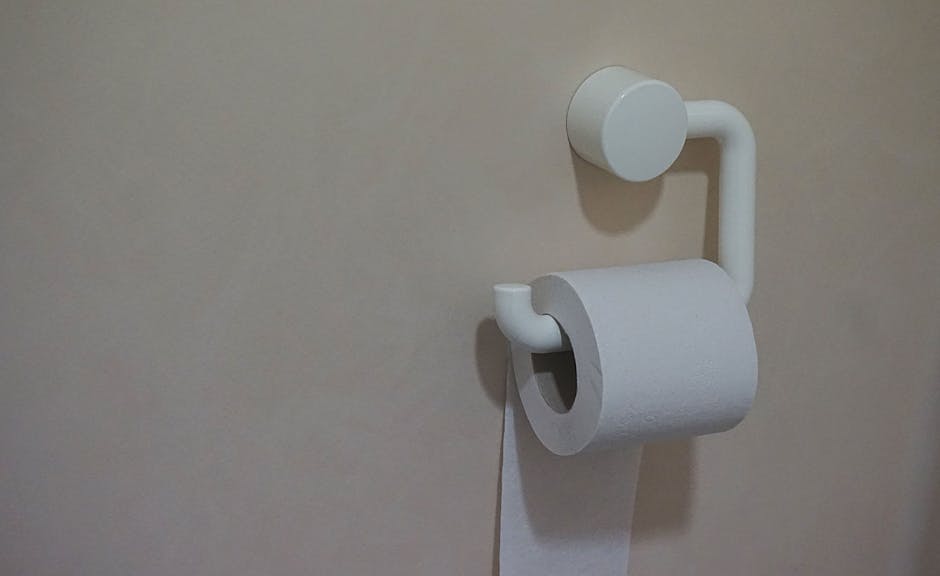
Job interviews are not merely a stage to showcase ability but also an on-site due diligence of potential employers; the most accurate insights often lie not in polished conference rooms, but in easily overlooked back-end areas. While HR and managers paint grand visions, the state of the restroom—the so-called "Toilet Paper Index"—often reflects financial health more honestly than embellished quarterly reports. Luxury lobby decor represents early sunk costs, whereas consumables like toilet paper and soap are high-frequency operational expenses—the most sensitive nerve endings of cash flow. In financial management logic, when cash flow tightens, rigid core costs are hard to cut, making administrative "discretionary costs" the first casualties of cost-cutting. Downgrading from branded paper towels to cheap rolls, or diluting soap, signals a strained capital chain and desperate attempts to squeeze profit from operational costs. For astute candidates, identifying these hidden financial indicators is crucial: if a company scrimps on basic office upkeep, promised salaries and bonuses face high default risks. Viewing these details through the lens of office environmental psychology helps pierce the facade, allowing you to identify "invisibly impoverished" companies nearing bankruptcy or financial distress before joining, ensuring a more rational career choice.
What Is the "Toilet Paper Index"? Why It Is a Barometer of Corporate Finance
The "Toilet Paper Index" is an informal but highly valuable economic indicator in workplace observation. It refers to the fact that: the quality and supply stability of company restroom consumables (such as toilet rolls, paper towels, and hand soap) can often reflect a company's cash flow status earlier and more truthfully than quarterly financial reports.
From the perspectives of financial auditing and corporate sociology, this phenomenon is not a coincidence, but an inevitable physical projection of corporate cost control logic.
Consumables Are the First Casualty of "Discretionary Costs"
When a company faces tight or unstable cash flow, management must rapidly cut expenses. However, a company's cost structure is typically divided into two categories:
- Fixed Costs: Rent, basic employee salaries, server fees, etc. These expenditures are protected by contracts; cutting them is difficult and prone to triggering legal disputes or halting core operations.
- Discretionary Expenses: Office supplies, travel expenses, cleaning service fees, employee benefits, etc.
Restroom consumables belong to the bottom tier of "discretionary costs." Cutting this part of the budget (e.g., switching from branded rolls to cheap jumbo rolls, or stopping the supply of paper towels) usually does not require complex approval processes, nor does it immediately lead to employee resignations or business interruptions. Therefore, the administrative department is often the first transmission point for financial tightening pressure, and the restroom is the most intuitive display window of this pressure.
The Contrast Between "Invisible Maintenance" and "Visible Downgrading"
By observing the restroom, job seekers can roughly categorize companies into two financial states:
- High-margin/Healthy Companies: Maintain a state of "invisible maintenance." Consumable quality is above average, supply is ample, and cleaning is timely. As economic research points out, high-quality facility amenities are often positively correlated with high-paying firms and serve as a non-monetary means for companies to attract talent. In this environment, employees barely perceive the existence of administrative operations because an ample budget supports smooth daily maintenance.
- Cash-strapped Companies: Exhibit characteristics of "visible downgrading." You will see obvious traces of cost struggles—for example, expensive automatic paper dispensers sitting idle with cheap toilet rolls placed next to them; or hand soap being excessively diluted. This is not just about saving expenses; it is a signal of micromanaging expenditures, indicating that the company is attempting to "squeeze" profit out of every penny of operating costs.
For interviewees, understanding this logic is crucial: If a company needs to penny-pinch on a consumable budget of a few dollars a day, its core business capital chain is likely stretched to the limit.
Practical Interview Assessment: Three "Invisible Financial Indicators" in the Restroom
During the interview process, while HR and hiring managers pitch the company's "vision" and "future" inside the conference room, the restroom outside often reveals the company's most authentic "cash flow" and "present."
For job seekers, asking to "use the restroom" is not just about freshening up; it is a highly valuable piece of on-site Due Diligence. Unlike the carefully polished office lobby or rehearsed interview scripts, the restroom belongs to the back-end operational area. The level of maintenance here directly reflects the actual budget availability in the hands of the Administrative Department (Admin).
When a company's finances become strained, the budget for core business operations might still be barely maintained, but administrative and logistics costs—regarded as "non-productive expenditures"—are often the first to be cut. This cutting is usually not announced with fanfare but is quietly manifested in the downgrading of daily consumables and facility maintenance. In the following section, we will break down three specific dimensions of observation to help you deduce the company's financial health through environmental details, like a detective, during your brief "break time."
Consumables Downgrade: From Branded Tissues to "See-Through" Rolls

During the interview process, candidates are often attracted by the grand decoration of the company lobby or the high-end equipment in the meeting rooms, but these usually belong to "Sunk Costs," representing one-time investments made when the company had ample funds in earlier years. In contrast, restroom consumables belong to daily operating expenses (OPEX); they best reflect the company's current cash flow status.
When a company's financial situation begins to tighten, the administrative department is usually the first back-office department to receive instructions to "cut costs and increase efficiency." Since they cannot immediately lay off staff or default on leases, compressing non-core consumables often becomes the entry point with the least resistance. Every detail change you see in the restroom is actually a compromise of administrative procurement strategy under financial pressure.
1. The "Downgrade Ladder" of Paper Towels
Observing the brand and texture of paper towels can help you roughly judge the company's current cost control stage:
- Healthy Stage (Healthy): Provides well-known brands of pop-up paper towels (such as Vinda, Qingfeng, or other commercial series); the paper is thick, and the supply is sufficient. This indicates that the company has a stable administrative budget and does not care about these tiny operating costs.
- Warning Stage (Warning): Branded box tissues disappear, replaced by unbranded large rolls of industrial paper towels. Although still usable, the paper is obviously thinner, feels rough, and may require multiple sheets to dry hands.
- Distress Stage (Distress): "See-through" rolls appear. This paper is extremely thin, not only tearing easily but even allowing light to pass through to reveal outlines on the other side. A worse situation is that paper towels disappear completely, replaced by an old dryer with weak airflow, or simply leaving an empty dispenser.
2. The "Physical Dilution" of Hand Soap
Another classic red flag is watered-down hand soap. If the texture of the soap you pump out is as thin as water, or the foaming amount is extremely low, this is not merely the cleaning staff's personal behavior, but often a hidden metric issued by the administrative department to extend the procurement cycle.
3. Why Are These Details Crucial?
These seemingly insignificant downgrades are actually early warning signals of corporate cash flow management. As financial experts point out, when businesses face financial pressure, managers often start to Micromanage Your Spending, trying to squeeze profit margins out of every controllable variable.
For job seekers, this means:
- The administrative department is "counting rice to cook": Having to sacrifice employee experience to save a few cents in costs indicates that the company's working capital may have reached a stretched point.
- A precursor to broader austerity: This extreme compression of Variable Costs usually happens before layoffs or hiring freezes. If a company needs to calculate carefully even for a box of tissues costing a few dozen yuan, then the risk of delays or deductions due to insufficient cash flow when issuing year-end bonuses or approving reimbursements will increase significantly.
Maintenance Lag: Long-Term Broken Facilities and Cleaning Frequency

During an on-site interview, the maintenance status of restroom facilities often reflects a company's cash flow health better than the luxury of its decoration. Facility malfunctions are hard to avoid in any office building, but the duration of the malfunction and the efficiency of the repair are barometers of the enterprise's operating capital chain.
The Logic Behind "Out of Order" Signs
When you see a sign saying "Under Repair" or "Out of Order" on a stall or sink in the restroom, please observe the condition of the sign carefully.
- Short-term malfunction: The paper is smooth and the date is recent, usually implying this is just a normal, sudden facility failure, and the administrative department is processing the repair request.
- Long-term stagnation: If the paper has turned yellow, the edges are curled, or there is even a layer of dust on it, this is definitely not just the laziness of the administrative staff.
In commercial real estate management, facility maintenance usually relies on third-party vendors. When a company starts delaying bill payments or its relationship with suppliers deteriorates, non-core maintenance services (such as pipe unclogging or sensor replacement) are often the first to be halted. A faucet that remains unrepaired for a long time may suggest that the company has frozen related operating expenses (OpEx), or has been placed on a "low priority" list by the property management/vendor due to overdue payments.
Cleaning Frequency and Service Provider Downgrading
In addition to hardware failures, cleaning frequency is also a hidden financial indicator. Mature enterprises usually sign fixed cleaning service contracts based on the number of employees. If you interview in the afternoon but find overflowing trash cans, empty soap dispensers, or obviously dirty floors, this may mean the company has downgraded cleaning frequency from "multiple times a day" to "once a day" or even "every other day" to cut costs.
This phenomenon of poor asset maintenance often appears before layoffs or wage arrears. Because it belongs to "soft expenses," cutting it will not immediately cause panic among employees, but it tangibly exposes management's anxiety about cash flow.
Diagnostic Key: Distinguishing Between "Frugality" and "Crisis"
As a job seeker, you need the diagnostic ability to distinguish between "old" and "dilapidated" to avoid misjudgment:
Observed Phenomenon | Potential Implication | Financial Health Judgment |
|---|---|---|
Facilities are old but clean | Decor style is outdated, tiles look aged, but functions are intact, no odors, and supplies are sufficient. | Healthy (Robust): The company may advocate a culture of frugality, focusing on practicality rather than vanity projects. |
Facilities are luxurious but stalled | High-end marble countertops, but sensor faucets don't dispense water, and hand dryers have been broken for months. | High Risk (Crisis Type): The company had large initial investment but later suffered a cash flow break, unable to maintain existing operational standards. |
Advice from an Interviewer's Perspective: Do not reject a company just because the office environment isn't "fancy" enough, but be wary of "respectable" office buildings that cannot even maintain basic hygiene and repairs. A company that requires layers of approval or even shelves the purchase of repair parts costing only a few dozen dollars will likely face the same procedural gridlock when approving your reimbursements or year-end bonuses.
Administrative Slogans: "Emotional Management" and Micromanagement on the Wall

In the private space of the restroom, the communication style between a company and its employees often sheds the disguise of "external PR," exposing the management's most authentic psychological state. When you close the stall door, the slogans posted on the wall are not just administrative notices, but a barometer of company culture and financial anxiety.
The Tone Disparity from "Reminders" to "Reprimands"
In a company with healthy operations and a respectful culture, administrative slogans are usually neutral and functional (e.g., "Please keep clean," "Conserve water"). However, in companies with tight finances or chaotic management, these slogans often evolve into emotionally charged "denunciations."
You need to be wary of notices containing Passive-Aggressive or humiliating wording. For example:
- Absurdly specific restrictions: "Waste is strictly prohibited. Limit toilet paper to 3 squares for bowel movements and 1 square for urination."
- Threats and fines: "Anyone found wasting water/paper will be fined 100 yuan and subject to circulated criticism."
- Guilt-tripping: "Every blade of grass and tree in the company is a cost; waste is shameful."
This shift in tone is often a red flag in "office environment psychology": management can no longer drive employees through normal incentive mechanisms and instead resorts to Micromanagement and punitive measures.
"Scapegoat Culture" Under a Scarcity Mindset
Why do restroom slogans become so harsh? Usually, this is a symptom of a company falling into "survival mode." According to Deloitte's research on financial distress, when companies face liquidity issues, management is often distracted by the minutiae of maintaining operations, leading to a communications crisis.
When senior management feels powerless regarding macro revenue growth, anxiety is transmitted downward, ultimately manifesting in pathological control over administrative costs. This micromanagement reflects a toxic "Blame Culture":
- Employees are viewed as liabilities: The company no longer sees employees as assets that create value, but as cost burdens that need to be guarded against at all times and who will "steal" company resources (even if just toilet paper).
- Bankruptcy of trust: Harsh fine slogans imply that management assumes employees lack self-discipline. This profound lack of trust usually extends to business approvals, reimbursement processes, and daily attendance.
If you see such slogans during an interview break, you need to realize that this is not just a matter of the administrative department's style, but a microcosm of the entire company's distorted behavior under financial pressure. In an environment where even a few sheets of toilet paper are haggled over, you can hardly expect the company to invest generously in employee training, compensation and benefits, or innovation projects.
Warning Against Misjudgment: How to Distinguish Between "Frugal Startups" and "Companies in Financial Crisis"
When judging a company's status through details of the office environment, the easiest mistake for job seekers to make is applying a "one size fits all" approach. Not all shabby restrooms predict that a company is about to close. In reality, an early-stage startup and a mature enterprise experiencing a financial crisis often have only a fine line between them regarding facility performance, but the underlying business logic is completely different.
To avoid missing out on high-potential opportunities due to misjudgment, you need to combine the company's development stage and office location for a comprehensive analysis.
Core Differences: Strategic Frugality vs. Passive Austerity
The shabbiness of startups is usually "strategic"—they follow the principle of Minimum Viable Budget, actively choosing to concentrate funds on product R&D or market expansion rather than administrative comforts. Conversely, the deterioration of facilities in mature enterprises is usually "passive"—this means cash flow problems have occurred, causing them to be unable to maintain their original operating standards.
You can refer to the following comparison dimensions to distinguish between the two:
Observation Dimension | Frugal Startup (Healthy Startup) | Financial Crisis Company (Distressed Company) |
|---|---|---|
Office Location | Incubators, co-working spaces, or low-rent residential/factory buildings. | High-end office buildings in the Core Business District (CBD) with grand facades. |
Facility Status | Equipment may be cheap or old, but functions perfectly, and cleanliness meets standards. | Equipment was originally expensive (e.g., TOTO, Dyson), but remains unrepaired long after breaking, with "Out of Order" notes attached. |
Consumables | Provides basic jumbo roll tissue or supermarket discount hand soap; supply is stable. | Even in high-end office buildings, supply interruptions occur, or there is a sudden downgrade to extremely inferior single-ply paper. |
Management Signals | Walls feature passionate slogans or simple functional guides. | Walls feature notices regarding Micromanagement targeting employees, such as harsh fine warnings. |
Beware of "False Positives": Matching Environment with Expectations
The key to judgment lies in "alignment".
If a startup claiming to have just completed Series A financing is located in a garage or a simple Loft, and the restroom has only basic configurations, this perfectly fits its entrepreneurial spirit of "spending money where it counts". This "shabbiness" might actually be a signal of healthy financial discipline.
However, if a company is located in an expensive Grade A office building with a luxurious reception, but the restroom frequently lacks paper, sensor taps remain broken for a long time, or the cleaning frequency is obviously lower than the building standard, this constitutes a serious violation of expectations. This usually hints that the company has started delaying property fees or supplier payments, which is an early warning of financial distress. As pointed out in business observations, when an enterprise starts "saving money" on necessary operational maintenance, it is often because its credit options have dried up.
Look for a Chain of Evidence: Don't Rely on a Single Signal
To ensure the accuracy of your judgment (E-E-A-T), do not draw conclusions based solely on the isolated indicator of the "toilet". You need to look for chains of evidence (Patterns), cross-validating environmental clues with other interview observations.
It is recommended to pay attention to whether the following "chain reactions" exist:
- Facilities: Downgrade of restroom consumables or stagnation of maintenance.
- Personnel: The reception is unattended, or you hear employees complaining in the waiting area about reimbursements (Reimbursement) not arriving on time.
- Atmosphere: The office atmosphere is oppressive, or there are a large number of empty workstations that have not been cleared in time.
Only when these phenomena appear simultaneously can you infer with high confidence that the company faces the risk of a broken cash flow. During the interview, maintain keen observation and use these inconspicuous corners as part of your due diligence (Due Diligence), rather than the sole verdict.
Besides the Restroom, What Other "Corners" Reveal Administrative Management Details?

Restrooms are often the most hidden "inner lining" of a company, but the path from the front desk to the interview room represents the company's "face." If even the public areas displayed to the outside show signs of a lack of maintenance, this is usually not an aesthetic issue, but a result of frozen administrative budgets due to tight cash flow.
On your way to the interview location, you can observe the following three easily overlooked physical indicators like a sharp auditor; they often directly reflect the company's financial health and its true attitude towards employees.
1. "Facade Maintenance" of the Front Desk and Reception Area
The front desk is the first line of defense for corporate image and is usually the part most prioritized in the administrative budget. If there is a distinct sense of dilapidation here, such as an unattended front desk, peeling wall paint, or wobbly guest chairs, this is a very strong warning signal.
According to Front Desk Office Furniture's analysis, quality office furniture is not just for comfort, but also to establish a professional first impression. If a company is unable to maintain the "facade" used to receive clients and candidates, it indicates that its financial situation may be dire enough to neglect brand image, or that management has given up on maintaining a decent external presentation.
2. The Life and Death State of Office Plants (Supplier Contract Index)
Pay attention to the potted plants in hallways or corners. Are they lush and shiny-leaved, or are the leaves withered and yellow, or are there only empty pots left?
- Withered plants: In most medium to large companies, plants are leased and maintained by third-party suppliers. Withered plants often mean that to cut operating expenses (OPEX), the administrative department has not only stopped the plant leasing contract but even cut the hours of cleaning staff responsible for watering.
- Missing plants: If the pots are still there but the plants are gone, this is usually a typical measure of "freezing non-essential expenses."
3. Supply Availability in the Pantry and Rest Areas
If you have the chance to pass by the pantry or rest area, take a quick glance. This is the most direct place to reflect employee care.
- Coffee machines and snacks: Is there an "Out of Order" note on the coffee machine? Are the snack shelves empty? Circles' research points out that amenities and break spaces are key factors in boosting employee retention. When a company starts penny-pinching on a budget of a few hundred yuan for coffee beans or snacks, it usually means that more significant benefit cuts (such as year-end bonuses, salary adjustments) are brewing.
- Equipment condition: Is the microwave greasy and old? Is the refrigerator stuffed with expired food that no one cleans out? This reflects a lack of administrative management and low internal morale.
4. Existing Employees' Office Equipment (Ergonomic Risks)
Secretly observe employees who are working, especially their chairs and monitors.
- Ergonomic chairs vs. ordinary folding chairs: Logitech's report emphasizes that poor ergonomic environments (such as non-adjustable desks and chairs) are one of the main physical causes leading to employee burnout.
- Equipment refresh rate: If you see developers still using yellowing small-sized monitors, or designers' computers covered in dust, this indicates that the company's investment in productivity tools is extremely low. A company unwilling to invest in employees' "money-making tools" will hardly provide you with sufficient resource support in the future.
Summary: The dilapidation of the physical environment is usually the shadow of financial distress. When you hear the interviewer painting a grand vision of an IPO during the interview, but see a withered money tree plant and a broken coffee machine, please trust your eyes, not your ears.
Conclusion: An Interview Is Not Just About Being Selected, It's Also an "On-Site Audit"
Many job seekers are accustomed to viewing an interview as a one-way "scrutiny," spending all their energy on how to please the interviewer and showcase their skills, yet often overlooking the other essential side of the interview: this is also an excellent opportunity for you to conduct Due Diligence on a potential employer.
From the moment you walk through the company doors, an informal "on-site audit" has already begun. The so-called "Toilet Paper Index" or "Front Desk Potted Plant Effect" is not about teaching you how to be a picky employee, but to help you deduce the company's cash flow status and management priorities through environmental details and the degree of maintenance of the physical environment. This is a necessary form of career risk management.
Seeing the Big Picture from Small Details: Judging Financial Health from the Physical Environment
If a company is aggressively compressing low-cost consumables (such as toilet paper and hand soap) that maintain basic employee dignity and hygiene, or turns a blind eye to damaged facilities in public areas, this is usually not just administrative negligence, but an early warning of tight cash flow.
According to Contractor Accelerator's analysis on company financial crises, aggressive cost-cutting is often one of the clear signs that a business is in trouble. When management starts penny-pinching over daily necessities worth a few dollars, it is hard to imagine they will be generous when facing year-end bonuses, annual salary adjustments, or expensive training budgets.
This deterioration of the micro-environment is often positively correlated with macro financial performance. Research by Oxford University and McKinsey shows that companies with higher employee well-being scores typically have higher profits and returns on assets. Conversely, an environment that ignores the basic work experience of employees often implies that the company lacks the willingness or ability to invest in talent in the long term.
Trust Your Intuition and Observations
When making your final decision, please take the results of these "on-site audits" into consideration:
- Do not ignore intuitive discomfort: If you feel the environment is oppressive, facilities are dilapidated, or hygiene is worrying during the interview process, this is likely a shadow cast by the corporate culture or financial status onto the physical space.
- Assess your risk tolerance: If you are in the rising phase of your career and pursuing stable growth and skill accumulation, a company that struggles to sustain basic operations and maintenance may not be able to provide you with a long-term sense of security.
- Turn observations into questions: If you discover certain environmental suspicious points (such as a large number of vacant workstations or deactivated equipment), you can tactfully ask about the company's recent business adjustments or administrative budget policies during the Q&A session to see how they respond.
An interview is not just about finding a job, but finding a platform worth investing your time in. By observing these inconspicuous corners, you are actually assessing whether this company possesses the financial foundation for long-term survival and development. If a company cannot afford basic decency, it likely cannot afford your future either.