

Mastering programming was once considered a "guaranteed pass" to the middle class, but amidst rapid algorithmic iteration, a counter-intuitive anxiety now pervades office cubicles. We stand at a turning point where "mediocre cognitive labor" is being drastically re-evaluated: abstract symbol processing, once a marker of high intelligence, is becoming AI's primary target due to its standardization and detachment from physical reality. Conversely, concrete labor requiring physical presence and navigating real-world complexities demonstrates a robustness difficult for algorithms to replace. This inversion of security stems not only from market dynamics but from the alienation of labor itself—as programmers succumb to "code nihilism" and lose control over outcomes amidst endless digital shuffling, the immediate physical feedback of unclogging a sewer unexpectedly becomes a rare spiritual cure. This is not a blind romanticization of blue-collar work, but a cold reckoning of the "Kong Yiji's long gown" balance sheet: when the moat of academic credentials is leveled by technology, true job security lies not in prestigious titles, but in mastering the "artisan's moat"—skills that cannot be digitally transmitted and require solving concrete problems by hand.
Core Phenomenon: Why Is the Anxiety of "Writing Code" Surpassing That of "Unclogging Sewers"?
For a long time, "writing code" was seen as the ultimate amulet for social climbing and career safety. However, a counter-intuitive phenomenon of "safety inversion" is spreading in the workplace: white-collar workers debugging Python scripts in air-conditioned rooms often feel more intense anxiety than repairmen visiting homes with toolkits. This is not a romanticization of manual labor, but the result of a drastic change in the underlying logic of the labor market—we are experiencing a revaluation of "mediocre mental labor."
The core of this anxiety lies in the shift of "The Security Gap". In the past, mental labor built a moat through education and professional knowledge; today, with the popularity of AI and the globalization of remote work, the moat of low-to-mid-end mental labor is being filled up. In contrast, those skills requiring "presence" and handling the complexity of the physical world have shown unprecedented robustness due to their characteristics of being impossible to transmit digitally or generate by AI.
Defining the New Dimension of "Security": From Abstract to Concrete
To understand this shift, we need to redefine what "irreplaceability" is. The cruel truth of the modern workplace is: the more abstract and standardized the mental work, the easier it is to be swallowed by the system; while the more concrete and non-standardized the physical labor, the harder it is to be stripped away.
The following is a comparison of the survival status of these two forms of labor today:
Core Comparison: Mediocre Mental Labor vs. Concrete Physical Labor
* Mediocre Mental Labor
* Typical Scenarios: Writing standard CRUD code, organizing Excel reports, making PPTs, junior data analysis.
* Vulnerability: Extremely high. Work outputs are purely digital, which can be generated by AI in seconds or replaced remotely by labor in low-cost regions.
* Feedback Loop: Long and vague. You might fix a bug but cannot see its actual impact on the end user, falling into the sense of nihilism of "moving electronic documents".
* Concrete Labor
* Typical Scenarios: Unclogging complex piping systems, precision equipment repair, dental surgery, custom carpentry.
* Antifragility: Strong. Must be "physically present," not only needing to solve the problem but also needing to handle the chaos of the physical environment (such as rusty screws, narrow spaces), which is a domain currently untouchable by AI and remote outsourcing.
* Feedback Loop: Instant and real. If the pipe is unclogged, it's unclogged; if the light is on, it's on. This "sense of completion" provides scarce security confirmation for the brain.
"Kong Yiji's Long Gown": The Sunk Cost Crisis Brought by Education
This loss of security is concretized culturally as "Kong Yiji's Long Gown". The reason this metaphor triggers huge social resonance is not only because it touches on the issue of face, but also because it reveals a mismatch of the balance sheet.
For many urban white-collar workers, higher education was once seen as a high-return investment; a degree is their "high platform they cannot step down from". They paid huge time costs (sunk costs) for this, so even when facing the extreme involution and replaceability crisis of "writing code," it is psychologically hard to accept switching to jobs like "unclogging sewers" that seem to have a low barrier to entry but actually possess high moats.
The "Long Gown" no longer just represents dignity; it has become a high-risk single asset. When the division of labor begins to reward those who solve actual physical problems while punishing those who produce homogenized digital content, people wearing long gowns find themselves standing on the edge of a crumbling cliff—the skills they possess (abstract symbol processing) are depreciating, while the skills they lack (handling the complexity of the physical world) are appreciating. This cognitive dissonance is exactly the root of the deep-seated anxiety of contemporary professionals.
The Dilemma of Mediocre Mental Labor: Code Nihilism and the Crisis of Replaceability

Beneath the surface glamour of modern technology roles, an emotion known as "Code Nihilism" is spreading. This is not merely professional burnout, but a profound suspicion regarding the essence of work: the systems we spend hours building every day are essentially often just "moving data from the left to the right." This abstract labor, lacking physical form, makes many practitioners feel that what they produce are not tangible results, but rather some kind of digital dust that can be discarded at any time.
The core of this nihilism lies in the high replaceability of "mediocre mental labor." Unlike manual labor that requires dealing with complex physical environments (such as old pipes or specific terrains), standardized mental labor—such as writing basic CRUD (Create, Read, Update, Delete) interfaces or generating routine reports—is facing an unprecedented crisis. As pointed out by a report from Caijing Mobile, generative AI is accelerating the replacement of entry-level and repetitive cognitive roles, leading to a significant decline in the volume of junior job postings. When a skill (such as writing Python scripts) becomes as ubiquitous as driving, or can even be infinitely replicated by AI at a lower cost, it is no longer a moat for career security, but instead becomes a cost center most susceptible to optimization.
This sense of crisis is particularly stinging in specific work scenarios. Consider a typical "micro-case":
- Scenario A (Junior Developer): A junior programmer spends a whole week fixing a CSS style misalignment or adjusting an API field. At the end of the task, the only feedback he gets is a single commit record in the code repository; due to changing requirements, this line of code might even be deleted next week. His work results are invisible, fluid, and liable to become meaningless at any moment.
- Scenario B (Concrete Laborer): In contrast, a plumber faces a clear physical problem. The moment the blockage is cleared and the water flows again, the "completed" status of the task is absolute and visible, and it directly solves the customer's urgent need.
This contrast reveals the deep-seated anxiety of current mental laborers: we not only face the risk of being replaced by algorithms but, in the day-to-day manipulation of abstract symbols, have also lost the sense of control and certainty over the fruits of our labor.
"Alienated" Mental Labor: When the Brain Becomes a Component on the Assembly Line
During the Industrial Revolution, Chaplin showed in Modern Times how workers were alienated into cogs on an assembly line; in the digital economy era, this "alienation" has quietly spread to the cubicles of office buildings. For many white-collar workers engaged in basic programming or data processing, the brain is no longer the source of creativity, but has become a standard component on an invisible "mental assembly line."
The Fragmentation and Loss of Meaning in Mental Labor
The high degree of division of labor in modern software engineering makes it difficult for the vast majority of junior and mid-level programmers to see the full picture of the product. Just as the alienated labor described by Marx in the Economic and Philosophic Manuscripts of 1844, workers are separated from the products of their labor—you are no longer the person "building a cathedral," you are merely constantly moving bricks named "JSON," or maintaining a legacy system that you neither understand nor care about.
This work mode creates a unique sense of "code nihilism":
- Atomization of tasks: Work is sliced into fragmented JIRA tickets. A programmer's daily routine is moving data from the left to the right, or fixing a trivial style Bug.
- Instrumental attribute: In the massive architecture of big tech companies, an individual is like a readily replaceable API interface. If AI can complete the function of this interface at a lower cost, human value instantly drops to zero.
"Labor produces marvels for the rich, but it produces stupidity and cretinism for the worker." — This critique of physical labor from a century ago is now shockingly applicable to mechanized mental labor.
The Trap of "Infinite Optimization" and the Feedback Black Hole
Compared to physical labor such as "unclogging sewers" or "repairing circuits," the most torturous aspect of mediocre mental labor lies in the lack of a sense of completion (Definition of Done).
When a blue-collar worker unclogs a blocked sewer, the moment the water flows smoothly, they receive immediate, clear physical feedback; the task is declared finished, and the brain releases dopamine. But in the digital world, work is often "infinite":
- No finish line: Finishing the code is just the beginning, followed by endless Code Reviews, testing, bug fixing, version iterations, and technical debt refactoring.
- Sisyphean futility: The feature you optimize today might be entirely scrapped tomorrow due to business adjustments. This process of "building to be discarded" greatly wears down one's sense of professional security.
In this context of alienated mental labor, anxiety does not stem from the intensity of the work, but from the illusory nature of the work. When the brain is locked in these logic loops that cannot be closed and can be replaced by AI at any time, people naturally begin to envy those jobs that can tangibly "change the physical world"—even if it is just tightening a real screw, it feels more real and secure than moving fictional pixels on a screen.
The Healing Sense of Concrete Labor: Where is the Artisan's Moat?

In the current era of rapid iteration of algorithms and artificial intelligence, many white-collar workers engaged in "mediocre mental labor" are gradually falling into an indescribable anxiety: the documents, meetings, and code processed every day seem to produce no definite "entity," and work results often vanish into a digital black hole the moment "send" is clicked. In contrast, Concrete Labor is demonstrating a long-lost psychological healing power and a sense of economic security.
The Healing Power of the "Concrete": Regaining a Sense of Control from Alienation
The core healing sense of concrete labor stems from the instant dopamine feedback brought by "seeing changes." When you clean up a messy room, repair a leaking circuit, or polish a cabinet with your own hands, this process of ordering in the physical world is irreplaceable by any virtual KPI.
In the Economic and Philosophic Manuscripts of 1844, Marx deeply explored the concept of alienated labor: under the capitalist system of high division of labor, labor is no longer a "free and conscious activity" of humans, but becomes a coercive force that causes "mortification of the body and ruin of the mind." Modern office work often exacerbates this alienation—workers are completely separated from the products of their labor, often not even knowing whom the code they write ultimately serves. The work of artisans is, to some extent, a reversal of this alienation: the worker regains mastery over the labor process and the object of labor; this direct control over physical entities can effectively repair a fragmented sense of self-efficacy.
"The Moat of the Hand": Why is Manual Labor Harder to Replace by AI than Mental Labor?
From the perspective of economic security, concrete labor possesses a natural "physical moat." Although generative AI (such as GitHub Copilot or ChatGPT) can generate Python scripts in seconds, and even surpass junior programmers in certain standardized programming tasks, it still cannot control a mechanical hand to tighten a rusty screw in a grease-filled, cramped, and irregularly laid-out bathroom.
This is the famous "Moravec's paradox": for computers, realizing high-level mental functions like logical reasoning requires very little computational power, but realizing low-level physical skills like perception and mobility requires enormous computational resources.
For "mediocre mental laborers," if your work is limited to processing standardized information flows (such as basic translation, junior code writing, data organization), you are at the bullseye of AI automation strikes. For skilled artisans, the non-standardized environment of their work (every clogged sewer is unique) constitutes a solid line of defense against automation. As pointed out in 36Kr's analysis on blue-collar talent, with the digital transformation of manufacturing and urban service industries, there is a huge gap for "sharp blue-collar" talent capable of operating complex equipment and solving practical problems; this inversion of supply and demand is precisely the source of security.
Structural Advantages: Three Dimensions of Security in Artisan Labor
Setting aside the romanticized imagination of manual labor, we must acknowledge the risk of physical wear and tear in manual labor. However, in the current workplace environment, skilled concrete labor possesses three significant structural advantages compared to "suspended" office work:
- Duality and Certainty of Results
In office politics, outcomes are often vague—whether a PPT is good or not depends on the boss's mood. In concrete labor, results are binary: Did the light turn on? Did the water stop leaking? This objective evaluation standard eliminates a vast amount of internal friction and interpersonal gaming. As stated in a discussion on Reddit, society's dependence on blue-collar work is absolute and direct; this certainty of "being needed" is lacking in many vacuous white-collar jobs. - Clear Physical Boundaries
The greatest curse of mental labor is "infinite permeation"; smartphones allow work to happen anytime, anywhere. Concrete labor is usually limited to a physical field—once leaving the construction site or the client's home, the work physically terminates. This mandatory "offline" status actually protects the worker's mental space. - Anti-Involution Skill Accumulation
In the programming field, the technology stack may undergo a complete blood transfusion every 5 years; a 35-year-old programmer needs to compete with a 22-year-old graduate on learning speed. In fields like plumbing, electrical work, carpentry, or precision repair, experience is a linearly accumulating asset. A master who has handled 1,000 different types of leakage situations holds experience far more valuable than a novice, and this experience does not easily depreciate with technological trends.
Feedback Loop: Why "Fixing Pipes" Is More Reassuring Than "Running Code"
In discussions of modern professional burnout, a core psychological mechanism is often overlooked: the clarity of the Feedback Loop. For many shifting from "screen labor" to "concrete labor," the source of security is not merely the stability of income, but a fundamental shift in the way the brain processes task completion signals.
Vague Digital Black Holes vs. Definite Physical Closed Loops
In "mediocre mental labor," feedback is often delayed and full of noise. A mid-level white-collar worker might spend weeks preparing a PPT or electronic document, yet remain unable to determine if it generated actual value or merely satisfied some bureaucratic formalism. Even for programmers, what they face is not always creative coding, but "technical debt" full of uncertainty—code runs today but might error out tomorrow due to a dependency library update; fixing one Bug might trigger two new Bugs at the other end of the system. This state of being "never truly finished" keeps the brain in long-term standby anxiety, unable to obtain the dopamine reward brought by task Closure.
In contrast, physical labor and craftsmanship offer immediate and Binary feedback.
- Fixing pipes: The leak stopped, or it didn't. The ground is dry, the problem is solved.
- Installing circuits: The light turned on, or it didn't.
- Driving a truck: Cargo was transported from Point A to Point B, and the task is physically finished.
This honesty of the physical world eliminates the breeding ground for "Imposter Syndrome." As Marx predicted in the Economic and Philosophic Manuscripts of 1844, when laborers cannot see themselves in the product (alienation), the spirit suffers; whereas when a craftsman sees chaotic wires become neat or broken pipes restore function with their own eyes, this process of "objectification" directly confirms the laborer's subjectivity and value.
Regaining a Sense of "Control": From System Cog to Independent Agent
In complex corporate architectures, individual control is infinitely diluted. Your work results often depend on cross-departmental cooperation, superior approval, or vague market feedback. This sense of powerlessness is a primary source of modern workplace anxiety—you paddle desperately, yet feel no movement in the boat.
Concrete labor rebuilds the linear relationship of "Input-Output." When you hold a wrench facing a physical malfunction, variables are limited to a controllable range: your skills, your tools, your judgment. This right to directly manipulate physical objects allows laborers to recover a long-lost sense of Agency. This sense of control is not only a psychological comfort but also an antidote to the "replacement anxiety" of the AI era—because the complexity and non-standardization of the physical world are far more resistant to the erosion of automation than the logic of the digital world.
Psychological State Comparison: Before vs. After
To understand this healing sense more intuitively, we can compare the psychological states in two typical scenarios:
Dimension | Typical "Mediocre Mental Labor" Scenario | Skilled "Concrete Labor" Scenario |
|---|---|---|
Task Boundaries | No Boundaries: Still thinking about Slack messages after work, worrying that code deployed on Friday will crash over the weekend. | Clear Boundaries: The moment the toolbox is packed, work is completely over; the psychological burden is taken off along with the gloves. |
Result Validation | Defined by Others: Need to wait for KPI assessments, the boss's mood, or data reports to prove value. | Self-Validation: Looking at newly laid tiles or a repaired engine, the senses directly confirm "I did it." |
Source of Frustration | Interpersonal & Political: Scope creep, passing the buck, meaningless meetings. | Physical Reality: Rusted screws, mismatched parts (these are concrete, solvable technical problems, not emotional drains). |
This transition from "abstract anxiety" to "concrete challenges" explains why more and more white-collar workers, tired of endless meetings behind screens, are beginning to envy those blue-collar workers who can see the fruits of their labor. In the physical world, effort is visible, results are honest, and this certainty has become a scarce psychological asset in these variable times.
In-Depth Comparison: Dimensions of Security in Mental vs. Physical Labor
When discussing career choices, we often fall into the stereotypical binary opposition of "tapping keyboards in an air-conditioned room" versus "moving bricks under the scorching sun." However, in the current era of rapid AI iteration, this traditional classification has become invalid. The real dividing line is no longer the color of the collar (white-collar vs. blue-collar), but the irreplaceability of skills and the degree of intervention in the physical world.
To break the "besieged fortress" mentality, we need to introduce a key modifier—"mediocre." Top-tier mental laborers (such as system architects and complex litigation lawyers) remain secure, but "mediocre mental labor" in the middle layer is facing an unprecedented crisis; conversely, "Skilled Concrete Labor" with professional thresholds is building a new moat of security.
Core Dimensions Comparison Table: When "Junior White-Collar" Meets "Skilled Technician"
The following table compares standardizable mental work (such as basic code writing, administrative document processing) with skilled work requiring on-site problem solving (such as precision equipment repair, home plumbing and electrical modification) across five key dimensions:
Dimension | Mediocre Mental Labor | Skilled Concrete Labor |
|---|---|---|
AI Replacement Risk | Extremely High. Generative AI excels at processing repetitive, data-intensive tasks, and the volume of entry-level job postings has shown a significant decline. | Extremely Low. Physical operations in non-standard environments (such as tightening a screw in a narrow pipe) rely heavily on hand-eye coordination and on-site judgment; AI robots are currently difficult to popularize at low cost. |
Income Stability | Increased Volatility. Vulnerable to macro layoffs, outsourcing, and technological iteration; premiums for junior positions are quickly erased. | Extremely Resilient. Regardless of the economy, infrastructure maintenance (leaks, power outages) is a rigid demand, and skilled technical trades have long been in a state of undersupply. |
Competition Barrier | Degree Inflation, Rapid Skill Depreciation. University degrees are no longer scarce, and software tools mastered three years ago may be obsolete today. | Experience Compounding. Craftsmanship improves with tenure; body memory and on-site experience are difficult to quickly replicate or "download." |
Physical & Mental Toll | Hidden Internal Friction. Facing a lack of meaning (Bullshit Jobs), sub-health caused by sedentary habits, and the invisible overtime of being on call at all times. | Visible Wear and Tear. Facing physical exhaustion, occupational diseases, and injury risks; labor intensity is high, and social security coverage is often insufficient. |
Social Evaluation | Inflated Respectability. Enjoying "glamorous" labels but often trapped in "Kong Yiji" style status anxiety, finding it difficult to lower one's stance. | Lagging Prejudice. Although economic returns may exceed those of average white-collar workers, they still face the reality of low social status recognition and a lack of professional respect. |
1. "Mediocrity" is the Biggest Risk Source for Mental Labor
The loss of security mainly stems from the collapse of the "middle layer." In the past, an ordinary white-collar job (organizing reports, writing basic CRUD code) was enough to provide a middle-class livelihood. But now, the moat for this part of work has been filled in.
According to research data from Harvard and Goldman Sachs, generative AI has the greatest impact on junior and entry-level employees, and the demand for some positions not requiring deep experience is shrinking. This means that if you only master "standard answer" style skills and lack the ability to solve complex, ambiguous problems, your competitor is no longer a cheaper fresh graduate, but AI with near-zero marginal cost. In contrast, although "mediocrity" in physical labor yields limited income, due to the complexity of the physical world, the cost of automating it remains far higher than hiring humans.
2. Supply-Demand Inversion: Degree Oversupply and Skill Shortage
The labor market is undergoing a brutal supply and demand adjustment. On one hand, a large number of young people with higher education are flooding into offices, leading to "involution" in junior mental labor positions; on the other hand, there is a huge gap for high-level skilled talent in manufacturing and service industries.
This inversion creates a new economic reality: an ordinary PPT presenter may be replaced at any time, while a technician who can independently troubleshoot CNC machine faults possesses extremely high bargaining power. Security no longer comes from "which building I work in," but from "how much the market needs my skill."
3. The Lag in Social Status and the "Long Gown" Dilemma
Although the cost-performance ratio of skilled labor is rising in terms of supply, demand, and income, we cannot ignore the inertia of the social evaluation system. As pointed out in Labor Info ZH's discussion on "Kong Yiji", society's prejudice against physical labor remains deep-rooted, and laborers often face a lack of respect and insufficient protection.
This constitutes the biggest current contradiction: economic security (good income, no fear of unemployment) and psychological security (social respect, professional identity) are misaligned. Choosing to "unclog sewers" rather than "write Python" is essentially trading a short-term drop in social status for the long-term right to survive against technological change. This is not a romantic regression, but an extremely rational risk hedging.
A Cold Hard Look at Reality: The Price You Need to Know Before Taking Off the "Long Gown"
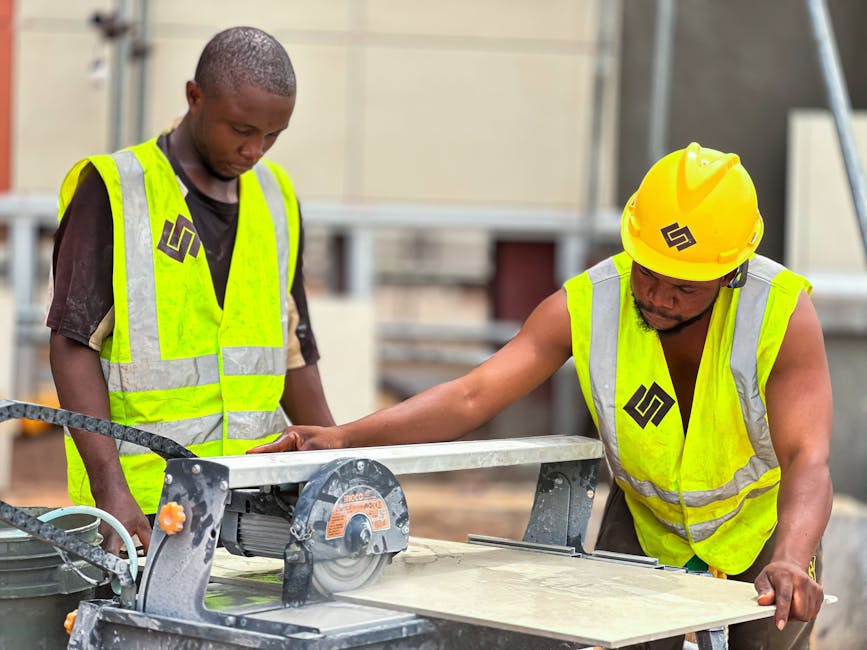
When "fleeing big tech" and "selling grilled sausages" become traffic magnets on social media, it is easy to fall into a misconception: romanticizing manual labor as a panacea for curing mental burnout. However, when you are truly ready to take off the "long gown" symbolizing education and status, you must clearly see that beneath the long gown is often not a wilderness covered in flowers, but a hard and gritty reality.
The Overlooked "Invisible Depreciation Cost"
The "sense of security" in blue-collar work often comes from the fact that it requires not just brainpower, but high-intensity physical investment. But this investment comes with irreversible physiological wear and tear and institutional risks, which are usually not within the scope of white-collar considerations.
- Physical Limits and Risk of Injury: A programmer's occupational disease might be lumbar disc herniation or dry eye syndrome, but the risk for manual laborers is more direct physical injury. As mentioned in the discussion on the value of blue-collar workers, while white-collar workers handle documents in air-conditioned rooms, blue-collar workers might be performing high-risk operations under scorching heat. The fatigue in this environment is not just being "tired," but includes heatstroke, falls, or even more serious hidden dangers of work-related injuries.
- Gaps in Social Security: Many flexible employment positions seen as a "fallback" (such as ride-hailing, food delivery) often exist in a gray area regarding labor relation recognition. According to Labor Info's analysis, many pragmatic jobs have high labor intensity but insufficient social security coverage, and actual income is often skimmed by layers of outsourcing. Once an accident happens or physical strength declines due to age, the vulnerability of lacking the safety net of "social insurance and housing fund" becomes fully exposed.
- The Tedium of Mechanical Labor: Although "unclogging sewers" sounds more concrete than "writing Python," when specific actions are repeated a thousand or ten thousand times, it also brings huge mental wear. This repetitive labor is often accompanied by low autonomy; workers may lack a voice in their work and face another form of "alienation."
The "Fortress Besieged" Effect: Displacement of Pressure, Not Disappearance
Many people yearn for manual labor because they are tired of complex workplace relationships and endless PPT presentations. But it must be admitted that this is not the disappearance of pressure, but merely a displacement of pressure.
- From "Mental Burnout" to "Survival Anxiety": The anxiety of mental labor is often abstract (KPIs, promotion, industry prospects), while the anxiety of manual labor is concrete and immediate (Is the order volume enough today? Can I work on a rainy day? Will a customer's bad review result in a pay deduction?).
- The Gap in Social Evaluation Systems: Although we call for occupational equality, implicit bias against manual laborers still exists in society. As sociological research points out, the problem is not that young people are unwilling to bend down, but that after bending down, they find only broken glass on the ground. When you walk out of an office building and into the streets, you must not only face a change in income models but also be prepared to endure a temporary "downgrade" in social identity and the psychological gap that comes with it.
A Self-Examination Checklist Before Transitioning
Before deciding to launch a "dimensionality reduction attack" to enter the blue-collar market, it is recommended to use this checklist to conduct a ruthless stress test on yourself, rather than relying solely on momentary emotional impulses:
- Physical Endurance Test: Do you have the physical reserve to stand continuously or engage in high-intensity activity for more than 8 hours? (It is recommended to try a part-time job on weekends first, rather than quitting your job immediately.)
- Risk Resistance Assessment: If your income in the first three months is only 1/3 of your original salary, and there is no paid sick leave or supplementary medical insurance, can your savings support you?
- Social Mindset Preparation: When former classmates post photos of big tech badges or industry summits in their social media feeds, can you calmly accept that you are doing a job that "doesn't look that decent" but is grounded?
- Irreplaceability Reflection: Is the manual labor you choose purely simple repetition (easily replaced by younger, cheaper labor), or a "craft" with a technical threshold (such as precision equipment maintenance, advanced electrician work)?
A sense of security never comes from escape, but from a full recognition and acceptance of the costs. Only by seeing the "broken glass" on the ground clearly can you put on the right shoes and walk on steadily.
The Middle Path: Combining Technical Thinking with Concrete Labor

Between "taking off the long gown" to deliver food and "sticking to the cubicle" to write code, there actually exists a third path. Instead of opposing mental labor against physical labor, it is better to view them as complementary assets. True security is often born at the intersection of "technical thinking" and "concrete labor"—a place that possesses both the irreplaceability (Tangibility) of traditional blue-collar work and the systematic advantage (Systematic Thinking) of knowledge workers.
1. The Rise of "Grey Collar": When Code Meets the Screwdriver
With the popularity of the Internet of Things (IoT), smart homes, and precision manufacturing, the market demand for "tech-savvy blue-collar workers" has surged. These jobs are usually referred to as "grey collar" or "technical blue-collar," and they perfectly utilize a programmer's logical abilities while avoiding the intense competition of pure mental labor.
- Smart Homes and Low-Voltage Integration: Traditional electricians may be proficient in high-voltage wiring, but they often struggle when facing complex home servers (HomeLab), smart control debugging, or network topology planning. A person who knows Python or Linux, if willing to pick up a power drill and a multimeter, can form a crushing competitive advantage in the field of smart home installation and maintenance.
- Precision Equipment Repair: From high-end medical devices to fault diagnosis in new energy vehicles, simple "part swapping" can no longer meet demands. These jobs require reading English technical documentation, understanding circuit diagrams, and even analyzing log data—exactly the strong suit of those with higher education.
- Modern Agriculture and Drone Operators: Agriculture is undergoing a digital transformation. Operating crop protection drones requires not only the physical stamina to withstand wind and sun but also the ability to program flight parameters and troubleshoot faults.
This combination is not simply "manual labor," but the conversion of your learning ability into productivity in the physical world.
2. Reconstructing Craftsmanship with Systematic Thinking
Even if you enter a traditional physical industry, your original "long gown"—that is, logical thinking and information retrieval capabilities—remains your invisible moat.
- Process Optimization: Programmers are accustomed to "cause-from-effect" Debug thinking. In logistics, warehousing, or renovation sites, this thinking can help you quickly identify process bottlenecks. For example, using Excel or simple scripts to automate order data processing is several times more efficient than a traditional foreman relying purely on memory and handwriting.
- Information Arbitrage: The level of digitization in the blue-collar market is generally low. Making good use of search engines and digital tools allows you to be one step ahead of old masters when taking orders, purchasing parts, or learning new technologies (such as new heat pump technologies or Tesla repair manuals).
As pointed out in a discussion on Reddit about society undervaluing blue-collar workers, society relies heavily on this concrete labor, but the competitiveness of modern blue-collar workers lies in who can solve problems more smartly, not just who works harder.
3. The Essence of Security: Scarcity and Grounding
Why does "unclogging sewers" feel more secure now than "writing Python"? Because AI can generate code, but it cannot generate a hand to unscrew a rusty P-trap.
However, the ultimate security comes from "scarcity."
- Pure Physical Labor: Low threshold, easily replaced by younger, cheaper labor (as shown in the dilemma of Kong Yiji after taking off his long gown, competition in simple low-end physical labor is equally cruel).
- Pure Mental Labor: Low marginal cost, easily replaced by AI or outsourcing.
- Technology + Labor: Requires both the "sense of presence" of hands-on work and the "brainpower" of complex logic. This composite skill set constitutes an extremely high competitive barrier.
For confused professionals, the way out for the future may not be to completely abandon past accumulations, but to inject abstract "technical thinking" into specific "real labor." The "long gown" should not be a burden that binds your hands and feet, but should become the most useful piece of workwear when you work.