In traditional internet technology interviews, candidates often focus on throughput improvement under high concurrency or algorithmic time complexity analysis, but in the brutal arena of C++ High-Frequency Trading interviews, evaluation criteria shift fundamentally. When interviewers ask the classic question "how to implement a low-latency trading system," they expect not generic performance optimization tactics, but a profound insight into and mastery of hardware limits. In this field where victory is decided in microseconds or even nanoseconds, C++ low-latency optimization is no longer merely code-level tweaking, but requires developers to possess strong "mechanical sympathy," capable of piercing through language abstraction layers to interact directly with CPU caches, memory models, and the OS kernel. The core of real C++ quant development interview insights lies in understanding the dialectical relationship between "speed" and "determinism": because market opportunities are fleeting, systems must sacrifice throughput for extreme response speed, utilizing kernel bypass technology to bypass redundant OS scheduling, and eliminating thread suspension overhead through Lock-free programming. Interviewers attempt to uncover whether you understand atomic operation ordering in the C++ memory model, whether you know how to manually manage memory layout to fit CPU Cache Lines to avoid false sharing, and whether you can control system P99 latency within a strict deterministic range. Mastering the hardcore technical details behind building a C++ matching engine is not only key to handling technical interrogation, but also the necessary path to transforming from a mere software developer into a low-latency architect capable of harnessing hardware performance, thereby building an irreplaceable technical barrier in fierce quant recruitment.
Core Definition: What is "Low Latency" in the Context of HFT?
In general software development, "high performance" usually means the system can remain stable under high concurrency, or keep Response Time within a few hundred milliseconds. However, in the interview context of High Frequency Trading (HFT), "low latency" has a distinctly different definition. The latency race here is not measured in seconds or milliseconds, but with microseconds (µs) or even nanoseconds (ns) as the yardstick.
When interviewers ask about "low latency systems," they are not just examining whether the code runs "fast," but whether you understand the distinctions across the following three core dimensions:
1. The Order of Magnitude Difference in Time Scales
In internet applications, network Round Trip Time (RTT) is usually between 20ms and 100ms. But in HFT systems, through Kernel Bypass technology, the processing latency of network packets from the network card to the application can be compressed to 1-5 microseconds. This means any unnecessary Context Switch or System Call could cause latency to double.
For example, a standard Mutex wake-up might take 15 microseconds, while a well-optimized Spinlock takes only about 300 nanoseconds. Interviewers expect candidates to have an extremely sensitive intuition for the time overhead of these low-level operations, capable of distinguishing between "Fast" and "Real-time."
2. Determinism and Tail Latency
In quantitative trading, Average Latency is often meaningless. If your system's average response time is 2 microseconds, but once every 100 trades it spikes to 500 microseconds due to Garbage Collection (GC) or a Cache Miss, you will lose money during critical moments when the market fluctuates violently and opportunities are fleeting.
Therefore, low latency in the HFT context is essentially a pursuit of determinism. High-scoring answers in interviews often focus on how to optimize P99 (99th Percentile) or even P99.99 latency data. This means you need to use C++ for fine-grained control over hardware to eliminate Jitter caused by operating system scheduling, memory allocation, or CPU frequency fluctuations.
3. Throughput vs. Latency
This is a classic interview trap. General high-concurrency systems (like Web servers) usually sacrifice the latency of individual requests to improve throughput (the total number of requests processed per unit of time), for example by using Batching or complex pipelines.
But in low-latency trading systems, the goal is often the opposite: to reduce the latency of a single trade, we are willing to sacrifice throughput.
- General System Mindset: Keep the CPU working at full load and minimize idle time.
- HFT System Mindset: To ensure a critical thread can respond immediately the moment market data is received, we might keep the CPU core in a state of Busy Spinning, even if this looks like a "waste" of computing resources.
In summary, when we discuss low latency in C++ interviews, we are discussing a programming paradigm that is extremely close to hardware: bypassing the OS kernel, manually managing memory layout to adapt to CPU Cache Lines, and using Lock-free data structures to avoid thread suspension. This is exactly why C++ is irreplaceable in this field—it allows developers to find the ultimate balance point between abstraction and hardware control.
Key Technical Point 1: Memory Model and Hardware Affinity (Memory & Hardware)
In general software development, we usually focus on algorithmic time complexity (Big O Notation) and code maintainability; however, in the low-latency context of High-Frequency Trading (HFT), the focus must shift down to the hardware level. The core of what interviewers examine is often no longer advanced C++ syntax features (such as std::shared_ptr or complex class inheritance), but whether the candidate possesses "Mechanical Sympathy"—that is, understanding how code runs on physical hardware.
The biggest performance bottleneck facing HFT systems is usually not the CPU's computing power, but the "Von Neumann bottleneck" or, more specifically, the "Memory Wall". The instruction execution speed of modern CPUs far exceeds the data access speed of main memory (RAM). According to the analysis in Advanced C++ Optimization Techniques, fetching data from RAM is several orders of magnitude slower than performing calculations in CPU registers. If the program frequently experiences cache misses, the CPU is forced into an idle wait state, which directly leads to unacceptable jitter in the trading system's latency.
Therefore, the interview focus in this section is on examining how you manage memory layout with extreme precision using C++ to ensure continuous Data Locality. Interviewers hope to see you look beyond the surface of language features and deeply understand CPU cache hierarchies (L1/L2/L3), memory alignment, and the interaction of hardware instructions. The following content will delve into how to eliminate microsecond-level latency overhead by optimizing the memory model.
Cache Friendliness and False Sharing
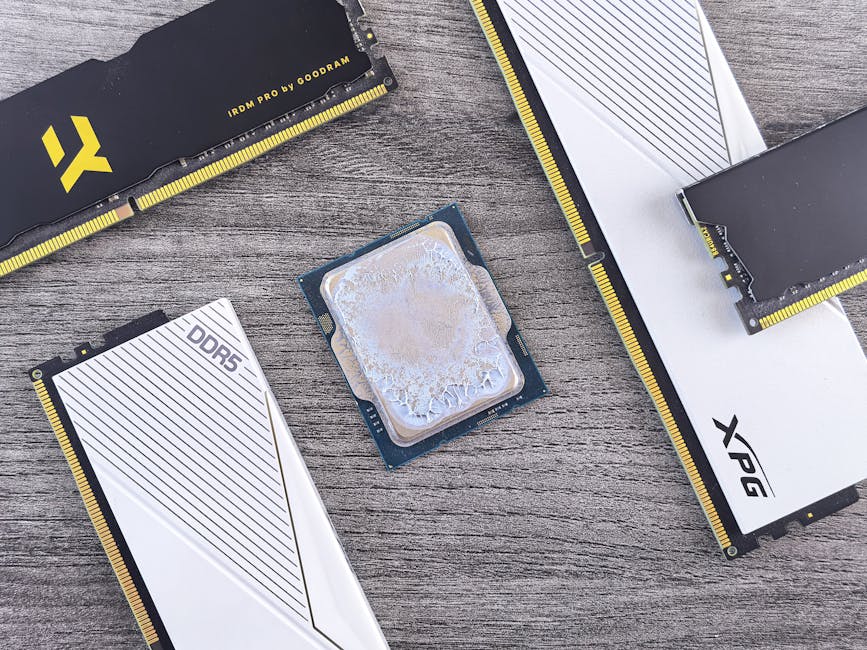
In HFT (High-Frequency Trading) interviews, when interviewers ask about "performance optimization," they are usually not looking for some clever algorithm, but rather assessing your understanding of computer architecture—specifically CPU cache mechanisms. In nanosecond-level competition, Memory Access Patterns often determine the system's final latency more than the number of instructions.
1. The Cost of Cache Misses
Modern CPU calculation speeds far exceed memory reading speeds. Understanding this "speed gap" is a prerequisite for writing low-latency code. In an interview, you can cite the following orders of magnitude to demonstrate professionalism:
- L1 Cache: ~3-4 CPU cycles (~1ns)
- L2 Cache: ~10-12 CPU cycles (~3-4ns)
- L3 Cache: ~30-70 CPU cycles (~10-20ns)
- Main RAM: ~300+ CPU cycles (~60-100ns)
This means that the cost of a single L3 cache miss or main memory access is enough for the CPU to execute hundreds of instructions. Therefore, one of the core goals of low-latency systems is to keep data in the L1/L2 cache as much as possible.
Interview Strategy: If asked "Why not usestd::listorstd::map?", do not just answer "it's slow." Explain that Pointer Chasing destroys Spatial Locality, causing the Prefetcher to fail, thereby triggering frequent Cache Misses. In contrast,std::vectoror flat arrays guarantee memory continuity.
2. False Sharing: The Invisible Performance Killer
In multi-threaded programming, the most insidious performance trap is "False Sharing." Even if two threads modify completely independent variables, if these two variables reside on the same Cache Line (usually 64 bytes), conflicts in cache coherence protocols (such as MESI) will occur between CPU cores.
When Core A modifies variable X, it invalidates the entire cache line containing X; if Core B subsequently attempts to read or modify variable Y on the same line, it must forcibly reload the data from Core A's cache or main memory. This cache line "ping-pong effect" leads to a drastic drop in performance, sometimes making it even slower than a single thread.
You can refer to this technical discussion on LinkedIn, which points out that false sharing is "hidden but deadly" and must be resolved through appropriate memory layout.
3. Solution: alignas and Padding
In C++, the standard method to resolve false sharing is to ensure that independently contended variables are located on different cache lines.
Error Example (Prone to False Sharing):
struct SharedData {
    std::atomic<int> head; // Thread A writes here
    std::atomic<int> tail; // Thread B writes here
};
// head and tail are very likely to be in the same 64-byte cache line
Optimization Example (Using Padding):
#include <new> // for std::hardwaredestructiveinterference_size

struct AlignedData {
    alignas(64) std::atomic<int> head;
    // Manual padding or use alignas to force alignment
    alignas(64) std::atomic<int> tail;
};
In C++17, the standard library introduced std::hardwaredestructiveinterference_size, which automatically returns the minimum offset required to avoid destructive interference based on the target hardware (usually 64 or 128 bytes). When writing code by hand in an interview, using alignas(64) or this standard constant clearly conveys your profound understanding of Hardware Affinity to the interviewer.
NUMA Architecture and CPU Pinning
In interviews at top quantitative funds, when the topic deepens to "ultra-low latency," interviewers often step away from pure C++ syntax and turn to underlying hardware architecture. A classic question is: "Your code logic has been optimized to the extreme, why does the system's Tail Latency still occasionally jitter?" This usually points to issues with operating system scheduling and hardware Topology, specifically the impact of NUMA (Non-Uniform Memory Access) architecture.
The NUMA Trap: Local Memory vs. Remote Memory
In modern dual-socket or multi-socket servers, memory is not uniformly distributed. Each CPU Socket has local memory that it manages directly. When a thread running on Socket 0 attempts to access memory connected to Socket 1, the data must pass through the CPU interconnect channel (such as Intel's UPI or AMD's Infinity Fabric).
This "remote access" brings two fatal consequences:
- Increased Latency: The physical distance and protocol overhead of cross-socket access are significantly higher than local access.
- Bandwidth Contention: The bandwidth of the interconnect channel is limited; if large amounts of data are frequently transmitted across cores, congestion will occur.
In an interview, you need to clearly state: High-performance trading threads must ensure "computation and state co-location". That is, the CPU core where the thread runs must be located on the same NUMA node as the memory it accesses (such as order book data structures, network card buffers).
CPU Pinning and Core Isolation
To solve the above problems and eliminate the uncontrollability brought by operating system scheduling, CPU Pinning is a standard technology in HFT systems.
- Eliminating Context Switches:
The operating system scheduler defaults to migrating threads between different cores to balance the load. But in high-frequency trading, this migration is catastrophic. Not only does the migration itself consume time, but more seriously, it causes CPU L1/L2 cache invalidation (Cache Pollution). Once the cache becomes cold, subsequent instruction execution and data reading will directly face a latency penalty of hundreds of cycles. - Specific Implementation Scheme:
In a Linux environment, an "Isolation + Binding" strategy is usually adopted:
- Isolation: Remove a specific set of physical cores from the OS's general scheduling pool via kernel boot parameters (such as
isolcpus). This means the operating system will not automatically schedule unrelated processes (such as SSH sessions, system log services) onto these cores. - Affinity: When the C++ program starts, explicitly bind critical trading threads (Hot Path Threads) to these isolated cores.
- Isolation: Remove a specific set of physical cores from the OS's general scheduling pool via kernel boot parameters (such as
Implementation in C++
Although the C++ standard library's std::thread provides cross-platform abstraction, in the low-latency field, we usually need to call underlying system APIs via native_handle().
For example, using pthreadsetaffinitynp on Linux:
// Pseudo-code example: Bind current thread to Core 2
cpusett cpuset;
CPUZERO(&cpuset);
CPUSET(2, &cpuset);

pthreadt currentthread = pthreadself();
int result = pthreadsetaffinitynp(currentthread, sizeof(cpusett), &cpuset);

if (result != 0) {
    // Handle error: Binding failure means latency determinism cannot be guaranteed
}
Interview Bonus Points
When answering such questions, mentioning the following details will significantly enhance your professionalism:
- Physical Cores vs. Logical Cores: Under high-load strategies, it is usually recommended to disable Hyper-Threading, or ensure that two logical cores do not run highly competitive tasks, to avoid resource conflicts caused by sharing L1 cache and execution units.
- NIC Affinity: Not only memory, but the Network Interface Card (NIC) is also plugged into a specific PCIe slot, which is physically connected to a certain CPU Socket. Trading threads must not only bind to a CPU but also ensure that the CPU is on the same NUMA node as the network card to achieve the shortest I/O path.
Essential Technical Point 2: Lock-free Programming
In quantitative trading system interviews, if NUMA and core binding are the "entry tickets," then Lock-free Programming is often the watershed that determines the salary ceiling. The interviewer's core motivation for examining this is very direct: on the "Hot Path" of a trading system, traditional mutexes (Mutex) are absolute performance killers.
Why is the use of std::mutex strictly prohibited on the Hot Path?
Many candidates know that "locks are slow," but cannot accurately quantify where they are slow. In low-latency systems, the biggest risk of using std::mutex or pthread_mutex lies not in the instruction overhead of locking itself, but in the Context Switch triggered by Contention.
When a thread attempts to acquire a lock that is already held, the operating system suspends (Sleeps) the thread, yielding the CPU to other processes. This process involves switching from user space to kernel space, which is not only expensive (usually at the microsecond level) but, more critically, leads to CPU Cache (L1/L2 Cache) pollution. When you are woken up again, the originally "hot" data has long been evicted, and the CPU must reload data from memory. This is unacceptable for HFT systems pursuing extreme nanosecond-level response times.
Data Evidence: In certain Linux kernel benchmarks, tail latency (99th percentile) caused by lock contention can reach as high as 1.4ms, while a lock-free implementation is only 0.07ms. A difference of this order of magnitude is enough to cause a strategy to fail during intense market matching.
The Difference Between Lock-free and Wait-free
Another theoretical trap often tested in interviews is confusing "Lock-free" and "Wait-free." This is not just about terminology definitions, but guiding principles for system design:
- Lock-free: Guarantees that at least one thread in the overall system is making progress at any given moment. It allows certain threads to starve under high contention, but the system will not deadlock.
- Wait-free: A stricter standard guaranteeing that every thread can complete its operation within a finite number of steps. This is the "gold standard" for low-latency systems because it eliminates uncontrollable latency jitter.
The vast majority of interview questions (such as designing a lock-free queue) require you to at least meet the Lock-free standard, while excellent answers will further discuss how to approach Wait-free.
In practical engineering, we usually achieve these goals through atomic operations (Atomics) and memory barriers (Memory Barriers). However, this introduces the most obscure and error-prone area in C++ interviews: Memory Order. If you simply memorize the std::atomic API without understanding the underlying hardware consistency model, it is easy to write code that runs on x86 but crashes on other architectures, or code that appears lock-free but actually performs worse. Next, we will delve into this core difficulty.
Memory Order and the Pitfalls of std::atomic
In quantitative finance interviews, when the topic delves into Lock-free data structures, interviewers often test your understanding of the C++ Memory Model. Merely knowing that std::atomic guarantees atomicity is not enough; you must clearly understand how different Memory Orders affect Instruction Reordering and cache coherence. This is the key watershed distinguishing those who "can use C++" from those who "understand high-performance systems."
1. The Default Cost: Sequentially Consistent (seq_cst)
The default memory order for all atomic operations in C++ is std::memoryorderseq_cst. It provides the strongest guarantee: it ensures not only atomicity but also that the order of operations seen by all threads is globally consistent.
- Trap: Many candidates use the default value in all atomic operations to "play it safe."
- Consequence: On x86 architectures, a
seq_cstStore operation typically generates anMFENCEorLOCKprefix instruction, which forces a flush of the Store Buffer, resulting in an overhead of dozens of CPU cycles. On weak memory model architectures like ARM, the overhead is even more significant. - Interview Strategy: Explicitly state that abusing
seq_cstin Hot Paths should be avoided unless a global total order is truly required (e.g., scenarios with multiple producers requiring strict ordering).
2. The Golden Pair: Acquire / Release
This is the most common semantics for implementing Single-Producer Single-Consumer (SPSC) queues or Spinlocks. They establish a Happens-Before relationship, ensuring data visibility.
-
std::memoryorderrelease: Used for Store operations. Guarantees that all memory read/write instructions before this operation will never be reordered to after this operation. Typically used to "publish" data. -
std::memoryorderacquire: Used for Load operations. Guarantees that all memory read/write instructions after this operation will never be reordered to before this operation. Typically used to "acquire" signals.
Typical Error Case:
If a producer uses memoryorderrelaxed to update the ready flag, the consumer might read the payload data before it is written to the cache when it sees ready as true (because the compiler or CPU reordered the instructions).
The correct synchronization pattern should look like this:
```cpp
// Producer
payload = 42;
// Release semantics guarantee that the write to payload happens before flag becomes true
flag.store(true, std::memoryorderrelease);
// Consumer
// Acquire semantics guarantee that reading payload starts only after seeing flag as true
while (!flag.load(std::memoryorderacquire));
assert(payload == 42);
```
Source: Applying Memory Model to Lock-Free Data Structures
3. Fast but Dangerous: Relaxed
std::memoryorderrelaxed only guarantees the atomicity of the operation itself and provides no ordering guarantees.
- Applicable Scenarios: Only used for atomic operations that have no dependencies on other variables, such as global counters (incrementing the reference count of a
shared_ptris usually Relaxed). - Interview Trap: In a CAS (Compare-And-Swap) loop, the interviewer might ask what memory order should be used when
compareexchangeweakfails. - Answer: It can usually be
relaxed. Because if the CAS fails, it means we did not obtain the lock or write permission; at this point, there is no need to establish a Happens-Before relationship, and we just need to retry. - Example:
head.compareexchangeweak(oldhead, newhead, std::memoryorderrelease, std::memoryorderrelaxed);
- Answer: It can usually be
4. The Specifics of x86 Architecture and Compiler Misconceptions
This is an advanced topic. The interviewer might ask: "x86 is a strong memory model (TSO), and the hardware itself guarantees that Load-Load and Store-Store are not reordered. So, can we ignore memory order when writing code?"
Absolutely not.
Even if the hardware does not reorder, the Compiler may still reorder instructions to optimize performance.
- Key Point: Using
std::memoryorderacquire/releaseis not just for the CPU, but also for the compiler, telling it "do not move instructions across this line of code." - E-E-A-T Hint: Mentioning the distinction between "Compiler Reordering" and "Runtime Reordering" in your answer will greatly demonstrate your professionalism. Consulting C++ Reference on memory_order definition can help you describe these behaviors more accurately.
In summary, in interviews for low-latency trading systems, demonstrating your understanding of memory order is not just about reciting definitions, but showing your ability to find the balance between Correctness (avoiding data races) and Performance (avoiding unnecessary memory barriers) through fine-grained control.
Design and Implementation of Lock-free Queues
In quantitative interviews, when an interviewer asks "how to implement a lock-free queue," they are usually not looking for a generic MPMC (Multiple Producer Multiple Consumer) solution, but rather expect you to describe the core data structure in HFT systems: the SPSC (Single Producer Single Consumer) Ring Buffer.
This is because in low-latency architectures, we typically adopt a "Share-nothing" threading model (as described in Electronic Trading for Programmers), where each core exclusively occupies one thread, and inter-thread communication is one-to-one.
1. Core Architecture Design (Whiteboard Design)
When designing on a whiteboard, you should draw a fixed-size array (Buffer) and two index pointers:
- Head (Write Index): Modified only by the producer, read-only for the consumer.
- Tail (Read Index): Modified only by the consumer, read-only for the producer.
The key to this design lies in separation of ownership. Unlike MPMC queues that require expensive CAS (Compare-And-Swap) instructions to resolve contention, there are no write conflicts in SPSC queues. The producer only needs to check Head + 1 != Tail to write, and the consumer only needs to check Tail != Head to read. This allows us to use lighter atomic operations (Atomic Load/Store) instead of locks or CAS loops, thereby achieving true Wait-free behavior.
2. Performance Killer: False Sharing
This is a "must-know pitfall" in interviews. If your head and tail pointers are adjacent in memory (e.g., defined within a struct), they are likely to reside on the same Cache Line (typically 64 bytes).
- Scenario: When the producer core updates
head, it marks that cache line as "Dirty" and invalidates it; when the consumer core attempts to readtail, it must forcibly reload the entire cache line from L3 or main memory. - Consequence: The two cores frequently "ping-pong" on the same cache line, causing severe latency jitter.
- Solution: Explicitly add padding in the code.
struct RingBuffer {
    alignas(64) std::atomic<sizet> head; // Exclusively occupies one Cache Line
    char padding1[64 - sizeof(std::atomic<sizet>)]; // Padding to prevent interference from adjacent variables

alignas(64) std::atomic<sizet> tail; // Exclusively occupies another line
    char padding2[64 - sizeof(std::atomic<sizet>)];

Element buffer[CAPACITY];
};
Note: Modern C++17 can use std::hardwaredestructiveinterference_size to determine the optimal alignment size.
3. Choice of Memory Ordering
For extreme low latency, relying solely on the default behavior of std::atomic (memoryorderseq_cst) is insufficient, as it inserts unnecessary memory barriers, hindering the CPU's out-of-order execution optimizations.
In SPSC ring queues, we typically use Acquire-Release semantics:
- Producer (Enqueue):
- Write data to the Buffer.
head.store(newhead, std::memoryorder_release). This guarantees that when the consumer sees theheadupdate, the data has definitely finished writing.
- Consumer (Dequeue):
head.load(std::memoryorderacquire). This guarantees that reading data happens after seeing theheadupdate.- Read data.
- Update
tail.
This design ensures that data races do not occur while reducing synchronization overhead to the minimum allowed by hardware. Interviewers often follow up with: "What happens if you change Release to Relaxed?" The answer is: The consumer might see the head update first but read dirty data that has not yet been written to memory.
Essential Technical Point 3: System Architecture and Network Optimization (System & Network)
In interviews for quantitative trading systems, the phase purely examining C++ syntax and algorithmic complexity usually only lasts until the midpoint. Once the interviewer confirms that you possess a solid programming foundation, the topic often shifts rapidly to the more macroscopic system architecture. This is because, in practice, even if you have written an extremely optimized lock-free queue or O(1) matching logic, if the Network Stack itself introduces tens of microseconds of latency, all code optimizations will become meaningless.
The core of this section lies in assessing whether the candidate possesses "end-to-end" latency sensitivity. Interviewers will typically focus on whether you understand the concept of the Hot Path—that is, the complete lifecycle of a data packet entering from the network card (NIC), passing through the PCIe bus, CPU processing, and risk control checks, and finally being sent out through the network card again.
At this level, the battlefield of optimization has expanded from the "instruction level" to the "system level." We need to look beyond the C++ code itself to examine the overhead introduced by the operating system kernel, network drivers, and hardware interactions. The following content will delve into how to eliminate the jitter caused by context switches and interrupt handling by bypassing the operating system kernel (Kernel Bypass), thereby achieving the leap from the microsecond level to the nanosecond level.
Kernel Bypass and Zero-copy
In building low-latency trading systems, C++ code optimization is only half the battle. If your program still receives data through the standard OS Network Stack, no matter how fast your algorithm is, tens of microseconds will be lost before data reaches the application layer. This is unacceptable in the HFT (High-Frequency Trading) field.
When an interviewer asks "how to handle network latency" or "why standard Sockets are slow," the core testing point usually points to Kernel Bypass technology.
Performance Bottlenecks of the Standard Network Stack
To understand the value of Kernel Bypass, one must first be clear about the "slow path" of the standard TCP/IP stack when processing packets:
- Interrupts: After the Network Interface Card (NIC) receives a packet, it triggers a hardware interrupt, and the CPU pauses its current work to handle the interrupt request.
- Context Switches: The CPU switches from User Space to Kernel Space to process driver logic.
- Memory Copy: The kernel copies the packet from the NIC buffer to the kernel protocol stack buffer. After processing the TCP/IP header, it copies the payload to the application's user space buffer via
recv().
This process, while friendly to general server throughput, introduces 20-50 microseconds of latency and is accompanied by unpredictable Jitter.
Working Principle of Kernel Bypass
Kernel Bypass technology allows applications to directly access NIC hardware, bypassing the operating system's kernel protocol stack. Its core mechanism usually relies on DMA (Direct Memory Access), where the NIC writes data packets directly into user-mode memory pre-allocated by the application, thereby achieving "Zero-copy".
In an interview, you should be able to mention the differences between the following two mainstream solutions:
- Solarflare OpenOnload: This is the most common commercial solution in the HFT field. It provides a user-mode library compatible with BSD Sockets. You don't even need to modify a single line of C++ code; just load the library via
LD_PRELOADto intercept standard TCP/IP calls and translate them into instructions that directly access the NIC. This solution can usually reduce latency to the microsecond level. - DPDK (Data Plane Development Kit): This is an open-source, more general framework that provides a set of user-mode drivers (Poll Mode Drivers, PMDs). Unlike OpenOnload, DPDK requires developers to rewrite network processing logic, no longer using the standard Socket API, but directly manipulating the packet's Ring Buffer. According to Nadcab's architecture analysis, using DPDK or OpenOnload can reduce the network Round Trip Time (RTT) to 1-5 microseconds.
Key Mechanism: Busy Spinning vs. Interrupts
This is a high-frequency detail question in interviews: "Since the kernel is bypassed, how does your program know data has arrived?"
Traditional network programming uses "interrupt-driven" or epoll_wait, which means if there is no data, the thread suspends (Sleeps) and CPU resources are released. However, waking up a thread itself takes time.
In low-latency systems, we adopt Busy Spinning.
- Implementation: The trading thread constantly checks the NIC's receive queue (RX Queue) for new data in an infinite loop.
- Cost: This consumes 100% of a single CPU core's resources, even if no market data is coming in.
- Benefit: Once the electronic signal reaches the NIC, the CPU can read the data in nanoseconds, completely eliminating the overhead of interrupt handling and thread wake-up.
Interview Script Suggestion:
When asked about CPU usage, you can confidently answer: "In a production environment, the CPU usage of our core trading threads is always 100%. If it's not 100%, it means we are waiting for kernel scheduling, which usually implies a design flaw in HFT."
Furthermore, for extreme performance, CPU Affinity (CPU Pinning/Isolcpus) is combined to isolate specific CPU cores dedicated to running this busy-polling trading thread, preventing the operating system from scheduling it to other tasks, thereby avoiding cache pollution caused by context switches.
Core Data Structures of the Matching Engine
In quantitative interviews, designing an Order Book is a classic question to test if a candidate possesses "system-level intuition". Textbook standard answers often suggest using std::map to maintain price levels because Red-Black Trees offer lookup and insertion complexity and are naturally ordered. However, in High-Frequency Trading (HFT) scenarios pursuing microsecond or even nanosecond latency, directly using STL containers is often a "fatal" mistake.
What interviewers really want to hear is your profound understanding of Cache Friendliness and Memory Layout.
1. Why is std::map a Trap for Low-Latency Systems?
Although std::map<Price, OrderQueue> logically fits the "Price Priority" requirement perfectly, it has two serious problems at the physical memory level:
- Pointer Chasing and Cache Misses:
std::mapis a node-based structure; each node is usually allocated independently on the Heap. Traversing such a tree structure means the CPU must constantly jump to random memory addresses via pointers. As pointed out in Advanced C++ Optimization Techniques, memory access speed is far slower than CPU calculation; frequent Cache Misses cause CPU pipeline stalls, resulting in huge latency jitter. - Dynamic Memory Allocation: Every time a new price appears,
std::mapneeds tonewa node. This not only involves expensive system calls (syscalls) but also leads to memory fragmentation.
2. HFT-Style Alternatives: Flat Maps and Pre-allocated Arrays
To solve the above problems, HFT systems usually adopt strategies of "trading space for time" or "contiguous memory layout":
- Pre-allocated Array / Direct Indexing:
If the price range of the trading instrument is finite and dense (e.g., certain futures contracts), the most extreme approach is to directly allocate a huge arrayOrderQueue book[MAX_PRICE]. - Advantages: Lookup time complexity for price levels is absolute , with no hash collisions or tree traversal overhead.
- Disadvantages: High memory consumption; unfriendly to sparse price distributions.
- Flat Map (Sorted Map based on
std::vector):
For scenarios with sparse price distributions, one can usestd::vector<PriceLevel>and keep it ordered. - Logic: Although insertion involves
memmove, given limited order book depth (e.g., only maintaining Top 10 or Top 50), the Sequential Scan of linear memory is often faster than jumping through linked structures because modern CPU Prefetchers can load contiguous data extremely efficiently. - Implementation Details: Usually combined with
std::lower_boundfor binary search.
- Logic: Although insertion involves
3. Order Queues and Object Pools
Inside price levels, we need to maintain order queues that follow "Time Priority".
- Avoid
std::list: Standard linked lists also suffer from serious cache locality issues. - Use Intrusive Lists with Object Pools:
Usually, a large block of contiguous memory is pre-allocated at system startup (e.g.,std::vector<Order> order_pool), and all order objects reside there. Logical links between orders are implemented via indices rather than pointers. - Benefits: When deleting an order, one only needs to find the position via ID index () and mark it for deletion or unbind it from the linked list, without releasing memory, thus serving as the cornerstone of Zero-copy and lock-free designs.
4. Matching Logic: Price-Time Priority
Based on the determined data structures, the matching logic is the process of traversing the buy and sell queues:
- When a new Buy Order arrives, the system checks the lowest price (Best Ask) in the Ask Book.
- Price Priority: If
Buy Price >= Best Ask, a trade can occur. - Time Priority: Start matching from the head of the Best Ask queue until liquidity at that price level is exhausted or the buy order is fully filled.
- If the buy order still has a remainder, it is posted as a Maker into the corresponding price position in the Bid Book.
In an interview, demonstrating how you optimize every memory access in the above process through custom memory allocators or compact data structures will impress the interviewer more than simply reciting algorithm complexity.
Modern C++ & Compile-time Optimization (Modern C++ & Compiler)
In quantitative interviews, a common misconception is that High-Frequency Trading (HFT) systems stick to the C++98 or C++03 era for the sake of extreme stability. The reality is quite the opposite; modern C++ (C++17/20 or even C++23) is extremely popular in the low-latency domain. This is not for the sake of syntax sugar, but because modern standards provide powerful Zero-overhead Abstractions, allowing developers to shift computational loads from Runtime to Compile-time on a large scale.
When interviewers assess modern C++ features, they usually focus on the following core dimensions, and you need to demonstrate a profound understanding of "code execution timing."
1. Moving Computation to Compile-time: constexpr & consteval
On microsecond-level trading paths, any runtime computation is expensive. constexpr introduced in C++11 and its subsequent enhancements (especially consteval in C++20) allow us to complete complex logic during the compilation phase, directly hardcoding the results into the binary file.
- Application Scenarios: When parsing the FIX protocol or binary market data protocols,
constevalcan be used to precompute lookup tables or masks for protocol Tags. - Interview Answering Strategy: Do not just say "I know
constexpris a constant expression." Explain how you utilize it to eliminate runtime initialization overhead. For example, building a perfect hash map via compile-time calculation, making runtime lookup complexity not only O(1) but also devoid of branch jumps for hash collision handling.
2. Template Metaprogramming (TMP) & Static Polymorphism
Traditional Object-Oriented Programming (OOP) relies on Virtual Functions to implement polymorphism, but this is a clear performance killer in HFT. Virtual function calls require indirect addressing via the vtable, which not only adds a memory access but, more seriously, disrupts the CPU pipeline and causes Instruction Cache (I-Cache) misses.
- Alternatives: Modern HFT systems widely use the Curiously Recurring Template Pattern (CRTP) to implement "static polymorphism." Through template deduction, the compiler can determine specific function calls at compile-time, thereby performing Inline optimization.
- Key Points: In an interview, demonstrate how you use
std::enable_if(before C++17) or C++20Conceptsto constrain template parameters, generating highly optimized specialized code paths while maintaining code readability and type safety.
3. Branch Prediction Hints: [[likely]] & [[unlikely]]
The CPU's Branch Predictor is usually very intelligent, but in certain extreme latency-sensitive scenarios, the assembly code layout generated by the compiler is crucial.
- Optimization Logic: The
[[likely]]and[[unlikely]]attributes introduced in C++20 are not just hints for readers; they guide the compiler in optimizing the layout of Basic Blocks. The compiler will place[[likely]]branch code immediately adjacent to the judgment instruction to maintain instruction flow continuity and maximize instruction cache hit rates; meanwhile, it moves[[unlikely]]exception handling code (such as error logging) to "cold" regions. - Deep Reading: For the profound impact of branch prediction on performance, and how to optimize cache locality through code structure, refer to the discussion on Advanced C++ Optimization Techniques, which analyzes the relationship between instruction caches and branch prediction in detail.
4. Avoiding Implicit Overhead
Modern C++ also provides tools like std::string_view and std::span, which avoid unnecessary memory allocation and copying. When processing network packets or log strings, using these view types can achieve "zero-copy" operations. An interviewer might ask: "When parsing a TCP data packet, how do you avoid copying the payload into a new buffer using C++20 features?" The answer is to utilize std::span to directly operate on memory fragments of the receive buffer.
Summary Advice: When asked about new C++ features, always elaborate around the two core logics of "trading compile time for run time" and "trading the type system for runtime checks." This demonstrates that you not only understand syntax but also understand the ROI (Return on Investment) of system design.
Summary: High-Frequency Trading Interview Knowledge Graph
When preparing for million-dollar quantitative development interviews, candidates often fall into the trap of focusing on fragmented C++ details while ignoring the big picture of system design. The core of High-Frequency Trading (HFT) interviews is not just testing syntax, but testing your understanding of the "hardware cost of every line of code."
To help everyone review systematically, we have organized the core topics into a knowledge graph covering the following four major dimensions. This graph aims to connect the complete stack from underlying hardware to upper-layer algorithms and is recommended as a final checklist before the interview.
Category | Key Concepts | Focus Area (Interview Questions) |
|---|---|---|
Hardware & Arch | Cache Coherence (MESI)<br>False Sharing<br>NUMA (Non-Uniform Memory Access)<br>Branch Prediction | How to avoid False Sharing in multi-threading?<br>Why are Linked Lists unfriendly to CPU caches?<br>Explain memory allocation strategies under NUMA architecture. |
OS & Network | Kernel Bypass (Solarflare/DPDK)<br>CPU Pinning (Core Affinity)<br>Context Switches<br>System Jitter | Why is the traditional TCP stack too slow, and how to implement Kernel Bypass?<br>How to use |
Modern C++ | Memory Model ( | Explain the difference between |
Algorithms | Order Book (Matching Engine)<br>Ring Buffer (Disruptor)<br>Object Pools (Memory Layout)<br>O(1) Lookup & Cancel | Design an In-memory Order Matching Engine requiring O(1) cancellation complexity.<br>Why do high-frequency systems prefer pre-allocated Memory Pools over dynamic |
Final Advice for Candidates
Do not rote memorize the "textbook versions" of the definitions above. In an interview, every technical decision must boil down to two core metrics: Latency and Determinism.
- Understand the cost of instructions: When you write
std::map, don't just think of it as a Red-Black Tree, but think of the multiple Pointer Chasings and inevitable Cache Misses it brings. - Focus on data layout: The time complexity (Big O) of algorithms is just the foundation in HFT; the physical layout of data in memory often determines the system's real-world performance.
- Hardware Affinity: The best code "accommodates" the hardware. Whether it is binding threads via CPU Pinning or aligning data structures to fit Cache Lines, demonstrating these details proves that you possess the practical mindset to build production-grade low-latency systems.