

When a career gap meets the tech world's exponential explosion, facing screens filled with RAG, Transformer, and AI Agent, the anxiety known as "Tech Rot" is often more suffocating than unemployment itself; however, please immediately stop the misconception that you "cannot handle AI jobs due to a lack of calculus knowledge." In fact, the current AI wave is undergoing a drastic paradigm shift from "model training" to "engineering implementation." The market's most in-demand role is not the scientist delving into backpropagation, but the Applied AI Engineer capable of harnessing LLMs to build complex systems. For senior developers, this is not a crisis but a massive window of opportunity: the core barriers to building AI Agent are actually system architecture, API integration, and engineering stability, which are the most valuable assets from your past career. With just a mindset tweak from "deterministic programming" to "probabilistic interaction," you can seamlessly map old skills to this new domain. This article breaks down a custom AI Agent Developer Roadmap for "career returners," discarding lengthy mathematical theories and vague AI Engineering Without Math discussions to dive directly into practical areas like LangChain Learning Path, Function Calling, and AI Product Manager Skills. Through this 4-week MVP learning path, you will learn to use Building AI Agents projects to fill resume gaps, proving you are not obsolete but possess the scarce ability to perfectly fuse traditional engineering experience with AI Career Re-entry. This will enable a magnificent transformation from "tech dinosaur" to "full-stack AI expert" during your Tech Career Transition, proving with code that your engineering foundation remains an irreplaceable moat in the AI era.
Anxiety Crusher: AI Agents Are Not as Far Away as You Think
Returning to the tech scene after a two-year gap feels like suddenly time-traveling from the feature phone era to the smartphone era. Opening Twitter or GitHub, the screen is full of RAG, LangChain, Agent, Transformer—the panic caused by this "Tech Rot" is real. You might feel like you've become a "tech dinosaur," worrying that if you don't go back to get a PhD in Mathematics, you won't be able to understand current workflows.
But take a deep breath first. This anxiety largely stems from confusing the concepts of "AI Research" and "AI Application." In reality, 80% of the core capabilities required to build AI Agents are engineering experiences you have accumulated over the past few years; they just have a new set of names now.
Core AI vs. Applied AI: You Don't Need a PhD in Math
First, we need to eliminate fear through "demystification." The current AI field is clearly divided into two tracks:
- Core AI (Scientist Track): Focuses on model architecture, loss functions, and backpropagation. This indeed requires a deep foundation in linear algebra and calculus, typically the work of a Research Scientist.
- Applied AI (Engineer Track): Focuses on how to integrate existing Large Language Models (LLMs) as components into software systems to solve actual business problems.
For the vast majority of career returners, your goal is to become an Applied AI Engineer. In this role, you don't need to train models from scratch, just as you don't need to understand semiconductor physics to write excellent Java code. Your job is to understand the model's input and output (I/O) and build robust systems to harness it.
As industry observations point out, the Applied AI Engineer is the bridge between research and production, focusing on scalability, deployment, and system integration rather than algorithm invention.
Skill Mapping: Old Wine in New Bottles
AI Agent sounds mysterious, but stripping away the "anthropomorphic" guise, it is essentially "Software Engineering + LLM Brain." If you are familiar with traditional backend development, you will find a surprising correspondence between Agent architecture components and concepts you already know.
You can map your "rusty" skills directly to the AI field using the table below:
Traditional Backend Concepts (Old Concepts) | AI Agent New Terms (New Terms) | Essential Explanation |
|---|---|---|
API Integration / SDKs | Tools / Function Calling | Previously, you wrote code to call APIs; now, you write API definitions (JSON Schema) and let the AI decide when to call and what parameters to pass. |
Database / Redis / Session | Memory / Context | Previously, structured data was stored; now, conversation history or vector data (Vector) is stored to let the program "remember" previous states. |
Cron Jobs / State Machines | Orchestration / Planning | Previously, flow was controlled by hard-coded |
Parsing / Regex | Structured Output | Previously, regex was used to extract text; now, the LLM is required to output standard JSON, making unstructured data programmable. |
Logs / Error Handling | Observability / Evals | Previously, logs were checked to find bugs; now, evaluation sets (Evals) are used to monitor the accuracy and hallucinations of AI responses. |
The Real Challenge: From "Deterministic" to "Probabilistic"
The biggest technical threshold you face is actually not the code, but the shift in mindset. Traditional software engineering is deterministic (Input A + Code B = 100% Output C), whereas AI engineering is probabilistic.
As analyzed by Philschmid, senior engineers often find it harder to adapt to Agent development than junior engineers because we are used to "controlling everything." In Agent development, "Text is the New State," and your role changes from a "traffic commander" (forcibly controlling the route of every car) to a "dispatcher" (giving instructions to drivers, but drivers might take shortcuts or get lost).
Conclusion: You are not falling behind. On the contrary, while novices are still excited that AI can write poetry, the experience you possess as a senior engineer in system stability, exception handling, and architectural decoupling is precisely the scarcest capability needed for AI applications to move from Demo to Production. You only need to spend a few weeks learning how to communicate with this "probabilistic brain," and the rest remains your familiar home turf.
4-Step Crash Course Roadmap: Designed Specifically for "Career Returners"
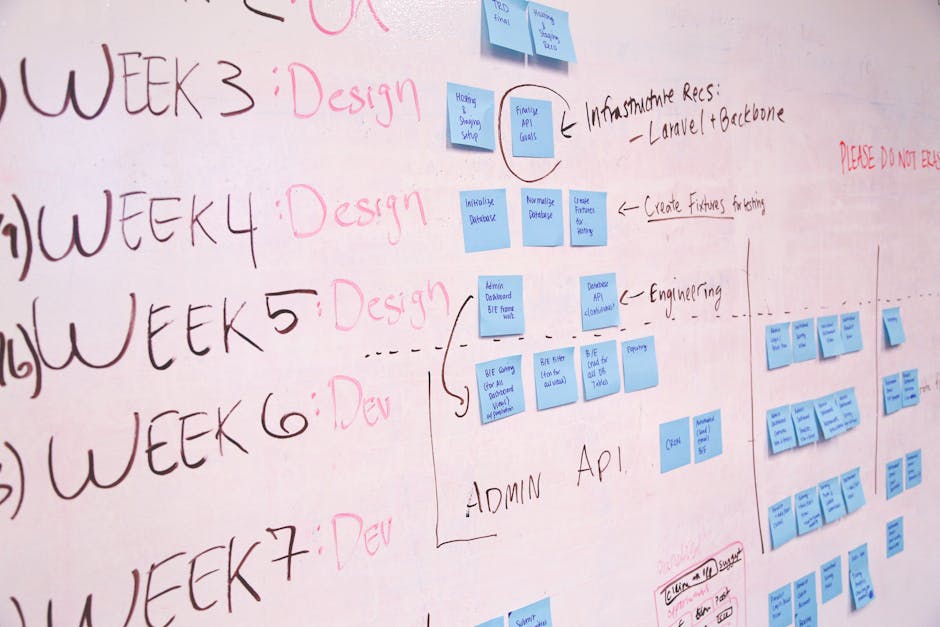
For "career returners" with traditional development experience who have been temporarily away from frontline technology, the biggest trap is not "being unable to learn," but "learning too much." New papers and new architectures (such as various Transformer variants) are born every day in the AI field. If you try to catch up starting from underlying mathematical principles, you might still be unable to produce any practical applications six months later.
To regain workplace competitiveness in a short time, we need to discard the "academic" learning path and instead adopt the "engineering" Minimum Viable Knowledge strategy. Your goal is not to become an ML Engineer capable of training large models from scratch, but an AI Agent Engineer capable of using existing models to solve complex problems.
This "4-Week MVP" roadmap is designed specifically for developers with a coding foundation, aiming to use your existing engineering mindset (logic, architecture, debugging skills) as leverage to quickly bridge the technology gap:
- Week 1: Foundation Recovery (The Foundation)
- Goal: Regain your touch and understand the interaction paradigm of LLMs.
- Core Actions: Switch from traditional "imperative programming" to "prompt engineering + API calls." Focus on mastering modern Python syntax and JSON Schema, which are the cornerstones of an Agent's interaction with the outside world.
- Week 2: Orchestration and Tools (The Orchestration)
- Goal: Make AI not just chat, but actually "do work."
- Core Actions: Learn mainstream Agent frameworks. As pointed out in LangChain vs. CrewAI vs. AutoGen: A Practical Guide, different frameworks are suitable for different scenarios—CrewAI is suitable for role-playing and process collaboration, while LangChain provides a rich toolchain. In this stage, you need to master how to let the model call tools (Tools) and manage memory (Memory).
- Week 3: The "Bridge" Project (The Bridge Project)
- Goal: Graft AI capabilities onto your past industry experience.
- Core Actions: This is the key that distinguishes you from fresh graduates. Do not build a generic "chatbot," but build an Agent that can solve pain points from your previous job (e.g., an automated supply chain report analyst, a financial compliance review assistant). This proves that you not only understand AI but also understand business implementation.
- Week 4: Deployment and Showcase (The Visibility)
- Goal: Make code accessible and build trust assets.
- Core Actions: Convert locally running scripts into Streamlit or FastAPI services and deploy them to the cloud. What interviewers need to see is not a code repository on GitHub, but a link that can actually be interacted with.
In the following chapters, we will break down these four stages in depth, starting from the most basic environment setup, taking you step-by-step through the transformation from "technology gap" to "Full Stack AI Engineer."
Phase 1: Basic Rehabilitation (Python & LLM API)

For developers who have just ended a career gap, the biggest misconception is often trying to catch up starting from "underlying principles"—such as spending weeks slogging through the mathematical derivations of Transformers or PyTorch tensor operations. Please stop this practice immediately. As an Applied AI Engineer, your core competitiveness lies in composition and engineering, not model training.
The goal of this phase is very simple: get the code running, and understand how LLMs interact with the external world via APIs.
1. Master "Modern" Python and JSON Schema
If your previous tech stack was Java, C++, or early Python 2.x, you need to immediately update your understanding of Python. In AI Agent development, Python is not just a scripting language; it is the glue connecting large models to the real world.
Focus on the following two technical points, which are the cornerstones of implementing "Function Calling" for Agents:
- Type Hints: Modern Python relies heavily on type annotations. This is not just for code readability, but also to allow libraries to automatically generate data structure descriptions.
- Pydantic and JSON Schema: This is currently the most important middleware skill. LLMs output unstructured text, but your program needs structured data. Pydantic can convert Python classes into JSON Schema, telling the LLM: "Please give me data in this format." If you don't understand JSON Schema, you cannot teach an Agent to use tools.
2. Complete the First API Call: From "Hello World" to "Hello LLM"
Do not get obsessed with locally deploying open-source models (like Llama 3), as hardware configuration and environment debugging will consume a lot of your energy. Apply for an OpenAI or Anthropic API Key directly and complete the first interaction with a few lines of code.
The significance of this step lies in understanding the logic of "consuming models":
- Input is no longer just parameters, but includes Context and instructions (System Prompt).
- Output is no longer a deterministic return value, but a probabilistic text stream.
As mentioned in the CodePath course introduction, you don't need a degree in advanced mathematics or statistics; your goal is to gain enough "AI literacy" to command models to work via APIs, not to build neural networks.
3. Redefining Prompt Engineering: It's Programming, Not Magic
Many articles describe Prompt Engineering as an "art" or "incantation," which is misleading for engineers. In engineering practice, Prompt Engineering is actually Structured Communication.
You need to design your Prompt just like designing API interface documentation:
- Role Definition (Role): You are a senior Python architect.
- Task Boundaries (Constraints): Output code only, do not explain, do not use markdown code blocks to wrap.
- Context: Answer questions based on the following database Schema...
This shift in mindset is crucial. Traditional software engineering aims to eliminate ambiguity, while Agent engineering is about managing probabilities. You need to get used to the concept of "Text is the New State," using structured Prompts to constrain the divergence of the LLM, making it behave like a deterministic function.
⚠️ Pitfall Avoidance Guide: Strictly Forbidden to Reinvent the Wheel
In the first week of rehabilitation, please strictly adhere to the principle of "using existing tools." Do not attempt to train models yourself, and do not spend time researching how to optimize CUDA operators. Your task is to become a skilled Dispatcher, learning how to break down complex business logic into API requests that LLMs can understand. This is the key battlefield for career returners to use their past engineering experience to "outclass" junior developers.
Phase 2: Mastering Agent Orchestration Frameworks (LangChain vs. CrewAI)

When attempting to bridge technical gaps, the easiest trap to fall into is getting overwhelmed by the dazzling array of tool libraries. New frameworks emerge daily, but as an experienced developer, you need to look beyond the surface: Don't just learn tools, learn patterns.
1. Don't rush to pip install: Manually implement a ReAct Loop
Before diving into frameworks, I strongly suggest you hand-code a minimal Agent using native Python and the OpenAI API. Many senior engineers struggle to adapt to the non-determinism of Agents when using frameworks because the frameworks encapsulate too many details.
Manually writing a while loop to implement the classic ReAct (Reasoning + Acting) pattern will help you thoroughly understand the Agent's thought process:
- Input: Give the LLM a question and a set of tool definitions (Function Calling).
- Reasoning: The LLM decides whether it needs to use a tool, and which tool to use.
- Acting: Code executes the tool (e.g., querying a weather API) and obtains the result.
- Observation: Feed the tool result back to the LLM.
- Loop: Based on the feedback, the LLM decides whether to continue calling tools or output the final answer.
Only by understanding this "Think-Act-Observe" closed loop can you handle debugging complex frameworks with ease later on.
2. Framework Selection: LangChain vs. CrewAI vs. AutoGen
Once you understand the underlying logic, you need a framework to handle the tedious "glue code" (such as token counting, error retries, context management). Current mainstream frameworks have their own pros and cons, and which one to choose depends on your goals:
Feature | LangChain / LangGraph | CrewAI / AutoGen |
|---|---|---|
Positioning | Industrial standard, Swiss Army Knife | Multi-Agent Collaboration |
Flexibility | Extremely High. You can control every Prompt and execution step. | Medium. More about "configuring" roles and tasks. |
Learning Curve | Steep. Many concepts (LCEL, Runnables), documentation sometimes lags. | Lower. The code is more like writing a script or organizational chart. |
Use Cases | Production-grade applications requiring fine-grained logic control, or complex single Agents. | Simulating team collaboration, such as "Product Manager + Developer + QA" talking to each other to complete tasks. |
My Advice:
- Job-seeking oriented: Tackle LangChain first. Although it is criticized for being bloated, it currently has the highest market share and the richest ecosystem, making it the "lingua franca" in interviews.
- Rapid Validation/Demo: Use CrewAI. It allows you to build a cool-looking Multi-Agent collaboration Demo in minutes, which is perfect for showcasing your architectural thinking in interviews or Hackathons.
3. Core Concepts Checklist
Regardless of which framework you choose, the following four concepts are the cornerstones of building Agents and must be fully mastered at the code level:
- Chains: How to link multiple operations together (e.g., first summarize the user question, then search for the answer). This is the foundation of workflows.
- Tools: The "hands and feet" of the Agent. You need to learn how to define custom tools (not just search, but querying databases, sending emails, or calling internal APIs) and handle exceptions in tool calls.
- Memory: The LLM itself is stateless. You need to understand the difference between Short-term Memory (conversation history) and Long-term Memory (vector databases), and how to manage Token window limits.
- RAG (Retrieval-Augmented Generation): This is currently the most widely used pattern in enterprise applications. Don't just stop at "Chat with PDF"; you need to deeply understand strategies for Chunking, Embedding, and Hybrid Search.
Mastering these means you are not just calling APIs, but orchestrating intelligence.
Stage 3: Building Your "Frankenstein" Project (The Bridge Project)

The biggest anxiety for many tech professionals in a Career Gap is: "I only have past industry experience, but no practical AI experience."
The vast majority of tutorials on the market will teach you to make a "Chat with PDF" or a simple "Personal Assistant." If you put these projects on your resume, interviewers will only see that "you know how to call APIs," and nothing else. In a job market full of AI Agents, this won't help you stand out.
To fill this two-year technical gap, you need to build a work that I call a "Frankenstein" project (The Bridge Project). Its core logic is not to "showcase AI technology," but to "use AI technology to solve the business problem that gave you the biggest headache in your previous job."
This project is the strategic anchor on your resume: it transforms your "outdated" industry experience into "scarce" Domain Knowledge, and proves that you possess the ability to translate this knowledge into AI Agent orchestration.
1. Why is a "Bridge Project" More Valuable Than a "Pure Tech Demo"?
Junior engineers are usually good at getting the latest frameworks running, but often lack an understanding of business complexity. The advantage of senior engineers lies in knowing exactly how software fails in the real world.
As Index.dev's analysis points out, traditional software relies on predefined rules; once it encounters situations outside these rules (such as sudden traffic jams or new types of fraud), it requires human intervention or recoding. The core value of AI Agents lies in their Goal-Driven nature and adaptability.
Your "Bridge Project" should demonstrate this distinction:
- Generic Demo: Upload a PDF and ask it "What does the article say?" (This is RAG, not an Agent).
- Bridge Project: Give the Agent a vague business goal (e.g., "Optimize next week's inventory replenishment plan"), and let it autonomously query sales data, compare weather forecast APIs, analyze historical loss rates, and finally provide a decision recommendation.
2. How to Unearth Your "Bridge Project" Topic?
Don't go to Kaggle to find datasets; go back to your previous work experience to look for them.
- Review Friction Points: In your previous work, which processes had to be done by humans because the rules were too complex or flexible, making hard-coding impossible?
- Seek "Judgment" Instead of "Calculation": Traditional programs excel at calculation, while Agents excel at fuzzy judgment.
Practical Case Conversion Table:
Your Old Background | Previous Pain Points | Your Bridge Project (Agent) | Core Competency Display |
|---|---|---|---|
Supply Chain/Logistics | Sudden traffic conditions cause delivery delays, requiring manual rescheduling. | Dynamic Logistics Dispatch Agent: Real-time monitoring of traffic APIs, automatically triggering replanning (ReAct Loop) upon detecting delays, and notifying affected customers. | Tool Calling (Tools) + Real-time Decision Making |
Finance/Compliance | Every contract requires manual review of risk clauses by legal counsel. | Compliance Audit Agent: Reads contract PDFs, compares them against the company's latest "Compliance Manual," automatically flags high-risk clauses, and generates modification suggestions. | RAG + Structured Output |
Backend Development | Online troubleshooting is time-consuming, requiring looking through multiple log systems. | DevOps Diagnostic Agent: Receives alert information, automatically queries Logs, Metrics, and recent code commit records to preliminarily determine the root cause. | Multi-source Information Integration + Reasoning Ability |
3. Key Mindset: Shifting from "Controller" to "Dispatcher"
When building this project, the most common pitfall for senior engineers is trying to control everything. According to Phil Schmid's view, traditional engineering is deterministic, where we are used to defining strict inputs and outputs; whereas Agent engineering is probabilistic, where we are more like a dispatcher, giving a goal and tolerating ambiguity in the process.
In your code, do not try to cover all edge cases with if-else. Instead, you should focus on designing clear Prompts and Tools, letting the LLM decide for itself when to call which tool.
4. Implementation Advice
- Don't Aim for "Big and Complete": Solve only one specific vertical scenario problem. A "Contract Auditor" that can complete a closed loop is more persuasive than a "Super Assistant" that can chat about anything.
- Emphasize the "Reasoning Process": In your Demo interface (Streamlit or Chainlit are recommended), be sure to display the Agent's thinking process (Thinking Process / Trace). What interviewers want to see is not the final answer, but how the Agent breaks down the problem, calls tools, and corrects errors step by step.
- Leverage Old Resources: If you are switching from a non-technical background (such as PM or Operations), your "Requirements Documents" and "Business Logic Diagrams" are themselves the best material for building the Agent System Prompt.
Through this project, you are no longer an "unemployed middle-aged person wanting to switch to AI," but a "senior expert who knows how to use AI to reconstruct traditional business processes." This is the best combination of "Experience" and "Expertise" in E-E-A-T.
Phase 4: From Demo to Production

Many beginners (and even experienced developers) often stop at Jupyter Notebooks when learning about AI Agents. Seeing the code run successfully—with the Agent making a Google Search API call and returning a result—they believe the project is complete.
However, in the eyes of hiring managers, there is a massive chasm between a Demo in a Notebook and an Application in a production environment. For senior engineers looking to bridge gaps in their resumes, crossing this "last mile" is crucial for demonstrating your engineering capabilities.
1. Say No to "Localhost": Let Your Agent Live in the Cloud
During an interview, instead of sending a GitHub repository link that requires the interviewer to clone the repo, configure the environment, apply for an API Key, and run it themselves, it is better to simply provide an accessible URL. This not only lowers the barrier to entry for them but also directly proves your full-stack delivery capabilities.
For personal projects, you don't need to struggle with Kubernetes or complex AWS architectures. It is recommended to use the following lightweight tech stack for a quick launch:
- Frontend and Interaction Layer: Use Streamlit or Gradio. These two Python libraries allow you to build frontend interfaces entirely in Python, making them ideal for displaying the Agent's Chain of Thought and intermediate steps.
- Hosting Platforms:
- Streamlit Community Cloud: One-click deployment for Streamlit apps; it is free and supports GitHub integration.
- Vercel / Railway: If you have built a more complex architecture with separate frontend and backend (e.g., Next.js + FastAPI), these platforms offer an excellent developer experience.
2. Introduce Observability and Evaluation
This is the watershed moment that distinguishes "toy projects" from "engineering projects." Traditional software engineering is deterministic—Input A inevitably leads to Output B; whereas Agent engineering is probabilistic. Your Agent might execute a task perfectly today, but tomorrow, due to the randomness of LLMs, it might "spout nonsense" or fall into an infinite loop.
In your project, you must demonstrate how you handle this uncertainty. Simply saying "it works" is not enough; you need to show how it is monitored and optimized.
- Tracing: Integrate LangSmith (created by the LangChain team) or Arize Phoenix. These tools allow you to visualize every step of the Agent's internal thought process: What tools did it call? What parameters were passed? How long did it take?
- Evaluation: Establish a small test set (e.g., 20 typical user queries). Do not rely solely on visual inspection; instead, write scripts to automatically run these queries and use the LLM itself as a judge (LLM-as-a-judge) to score the Agent's responses.
Resume Bonus: Mentioning in your project description that you "used LangSmith to trace token consumption and optimize prompts, reducing average response costs by 30%" is far more compelling than simply listing "Proficient in LangChain."
3. The Resume "Killer Move": Live Link > GitHub Repo
Once you have completed the steps above, your resume will no longer be just a cold pile of technical jargon. In your project experience section, prominently display your Live Demo Link.
This link sends three strong signals:
- Full-Stack Capability: You not only understand prompts but can also handle APIs, deployment, and environment configuration.
- Confidence: You are confident enough in your code to allow anyone to test it publicly.
- User-Centric: You know how to think from the user's (interviewer's) perspective, greatly reducing the effort required for them to get to know you.
For job seekers currently in a career gap, an Agent application that can be opened and demonstrated on a mobile phone often serves as the best icebreaker at the start of an interview, allowing you to take control of the conversation.
Resume Repair: How to Translate "Old Experience" into "New Skills"
For senior developers returning to the workforce, the biggest psychological barrier is often not the technology itself, but how to explain gaps in their resumes and prove that their past experience remains valuable in the AI era. In fact, current AI Agent development is not just about writing Prompts; it is a complex systems engineering endeavor.
As described in IBM's distinction between AI Developers and AI Engineers, the core responsibilities of an AI Engineer include building scalable architectures, managing cloud infrastructure, and ensuring the smooth integration of models within enterprise environments. This is exactly where your accumulated "old experience" comes into play. Do not view past skills as "legacy debt"; they are actually the "infrastructure assets" for building high-reliability Agents.
Build Your "Skill Translation Table"
Recruiters are not just looking for people who understand LLM principles, but for those who can constrain uncertain LLM behavior within deterministic business logic. You need to map your traditional backend, architecture, or management experience onto the AI Agent technology stack.
Below is a skill refactoring comparison table to help you rewrite your resume using the native language of AI:
Traditional Skill (Legacy Skill) | AI Agent Capability (AI Engineering Skill) | Resume/Interview Phrasing Example |
|---|---|---|
Backend API Design <br> (RESTful/gRPC Interface Design) | Tool / Function Calling Design <br> (Tool & Function Calling Design) | "Designed an Agent interface layer with 20+ tools, defined strict JSON Schemas to ensure the LLM accurately calls external APIs without hallucinations." |
Database Management <br> (SQL/NoSQL Optimization) | RAG / Vector Store Management <br> (Retrieval-Augmented Generation & Vector Store Management) | "Built a RAG system based on hybrid retrieval (keyword + vector), optimized knowledge Chunking strategies, and improved context recall accuracy." |
Message Queues / Async Tasks <br> (Kafka/RabbitMQ) | Agent State & Orchestration <br> (Agent State Management & Orchestration) | "Utilized LangGraph to implement stateful Agent workflows, handling context persistence and task distribution in multi-turn conversations." |
Unit Testing / QA <br> (Unit Testing) | Evals & Observability <br> (Automated Evaluation & Observability) | "Established an automated evaluation pipeline based on LLM-as-a-Judge to monitor Agent response quality and Token consumption across different scenarios." |
Project Management <br> (Requirements Breakdown & Scheduling) | Planning & Decomposition <br> (Task Planning & Decomposition) | "Designed ReAct planning logic for the Agent, enabling it to automatically decompose complex, ambiguous instructions into executable sequences of sub-tasks." |
This "translation" is not merely a word game; it conveys a core message to the interviewer: You are not learning from scratch, but empowering your deep engineering foundation with AI. Senior engineers often demonstrate a pursuit of certainty when building Agents, which complements the probabilistic nature of Agent Engineering—you understand how to use the certainty of code to constrain the probability of models.
Rewrite Personal Summary: Define "Gap Period" as "Transition Period"
Do not hide a two-year gap on your resume, and do not use vague reasons to gloss over it. The most confident approach is to define this time as an active, structured Upskilling Sabbatical.
In the Summary section of your resume, you can use the following template:
Senior Software Engineer | AI Engineering Transition
With 8 years of backend architecture experience, focusing on high-concurrency system design. Over the past 24 months, undertook a Structured Sabbatical to deeply research Applied AI and Agentic Workflows. During this period, independently built [Project Name] (see portfolio), successfully combining traditional business logic with LLM orchestration. Now dedicated to bringing engineering best practices to AI application implementation.
Use "Bridge Projects" to Take Control in Interviews
In an interview, when you are asked about the gap, the best answer is not explaining "why you took a break," but demonstrating "what you did." You need a "Bridge Project"—using your past industry domain knowledge combined with the current AI tech stack to solve a specific problem.
For example, if you were previously a developer in the e-commerce sector, do not write a generic "chatbot"; instead, build an "Intelligent After-Sales Ticket Routing Agent."
According to an analysis of high-value AI projects on GitHub, a project that impresses hiring managers typically possesses the following characteristics:
- Solves a specific problem: e.g., "Automated support ticket routing" instead of "Chatting with AI".
- Showcases tech stack: Explicitly uses RAG (retrieving documents), Tool Calling (querying order status), and Guardrails (preventing non-compliant responses).
- Quantifiable results: Even for personal projects, run simulation tests, e.g., "In 100 test conversations, achieved a 92% correct classification rate and reduced average response time to 2 seconds."
By showcasing such a project, you are effectively telling the interviewer: "I have not only bridged the technical gap, but I also bring what junior engineers on your team lack—a profound understanding of business scenarios."
Pitfall Guide: Three Mistakes Returners Make Most Easily
For technical professionals with a "career gap" of more than two years, the biggest enemy of returning to the workplace is often not the speed of technological updates, but the "distorted actions" caused by "eagerness for quick success." After coaching many developers returning from a gap, we found the following three traps to be the most frequent "resume killers." If not paid attention to, the large amount of review time you invest may only translate into anxiety rather than competitiveness.
Trap 1: Falling into "Tutorial Hell"
Many returners, worrying about "falling too far behind," start a frantic cramming mode: grinding certificates on Coursera, bookmarking dozens of hours of Agent development tutorials on Bilibili, and even reading OpenAI's documentation from start to finish. However, this "passive input" creates a false sense of fulfillment—you think you understand, but when an interviewer asks you to hand-write a simple Tool Calling logic, you don't know where to start.
Antidote: The 24-Hour "Input-Output" Principle
Establish a mandatory learning discipline: Any technical input must be transformed into code output within 24 hours.
If you watch a 30-minute video about LangChain, you must reproduce it without watching the video before the day ends, or modify it into a different feature based on it. Don't be a "Prompt Collector" who only bookmarks tutorials; become an engineer who can deliver code. Hiring managers value whether you can build end-to-end AI projects, not how many course hours you have grinded.
Trap 2: Over-Engineering
To prove they "still got it," senior engineers easily fall into another extreme: trying to launch a "big move" right away. For example, attempting to use multi-agent frameworks (like AutoGen or CrewAI) to build an "all-powerful system" that automatically writes code, deploys, and tests. The result is often getting bogged down in a configuration quagmire, or the system being extremely unstable and impossible to demo.
Antidote: MVP Mindset (Minimum Viable Product)
The uncertainty of AI Agents is high; the more complex the system, the harder it is to debug.
- Simplify first: Don't start with multi-agent collaboration. First, run through the flow with the most basic Prompt and simple Function Calling.
- Start small: A stable, running RAG search application that can accurately answer PDF document questions is far more convincing than a grandly architected but frequently hallucinating "fully automated company."
- Iterate and upgrade: Get the Agent running first, then consider adding Memory, Routing, or graph orchestration (LangGraph).
Trap 3: Ignoring the Product
This is the most painful realization for technical returners. You might have built something using the latest vector database and the trendiest Agent framework, but what problem does it actually solve? If your project is just "another chatbot" or a "weather query assistant," it fails to reflect your industry insight as a senior professional.
Antidote: Finding "New Solutions" for "Old Industries"
The core value of an Applied AI Engineer lies in solving actual problems, not just stacking technology stacks.
- Review your past: If you worked in e-commerce before, can you build a "Competitor Price Automatic Monitoring and Analysis Agent"? If you worked in Ops, can you build a "Server Log Automatic Diagnosis Agent"?
- Scenario is King: Interviewers want to hear how you used AI to optimize a specific process (even if it's a fictional scenario, as long as the logic holds together), rather than how proficiently you use a framework's API.
Remember, your goal is not to show off how many new buzzwords you've learned, but to prove that you still possess the ability to solve complex problems with technology—this is the bridge for you to cross the two-year gap and regain trust.