

In job hunting discourse, "be yourself" is a deeply misunderstood golden rule. It leads candidates to treat interviews as therapy sessions, unreservedly exposing emotions, anxiety, and grievances. However, such boundary-less "sincerity" is often the root cause of failure. The cruel reality is that interviewers do not score based on how "real" or "likable" you are, but on whether you are a "safe" and "controllable" variable. An interview is not a chat; it is a calculated commercial roadshow and a high-stakes professional role-play. Attempting to win trust by "pouring your heart out" ignores the importance of persona management and triggers corporate risk control red lines. True professionals distinguish between "sincerity" and "oversharing." They master role-playing techniques, filtering and restructuring real experiences to project an emotionally stable, predictable "professional persona." This is not lying, but advanced professional literacy: precisely delivering desired information based on job requirements. Whether facing high-pressure sales simulations or standard behavioral interviews, blindly pursuing "authenticity" only makes you appear unprofessional. Only by mastering role-play scripts and restructuring logic without lying can you transform from a passive "subject" to a "professional actor" in control, precisely hitting the "fit" criteria to secure victory.
Core Misconception: Why "Be Yourself" Is the Biggest Trap in Interviews
Among the countless pieces of advice regarding interviews, "Be Yourself" is perhaps the most widely circulated yet most misleading phrase. Many job seekers interpret it as "complete candor"—displaying their personality, anxieties, and even weaknesses to the interviewer without reservation. However, this understanding often leads to disastrous consequences. The essence of an interview is not a counseling session seeking psychological comfort, but a high-stakes professional role-play.
The Boundary Between "Sincerity" and "Oversharing"
Many candidates feel confused because they cannot distinguish between "Professional Authenticity" and "Unfiltered Sharing."
- Professional Authenticity: This means the skills, experiences, and values you state must be real. You cannot fabricate projects you never participated in, nor can you invent non-existent data.
- Unfiltered Sharing: This involves dumping your private emotions, living habits, or unprocessed negative thoughts directly onto the interviewer. For example, admitting that you are "often late because you have trouble getting out of bed" might be the real you, but it is definitely not the you that the workplace needs.
As pointed out in the Interview Skills Mind Map Template, communication requires grasping the "scope" and "degree." The interviewer is not concerned with how real your "worst side" is, but whether your "best side" is competent for the job. Blind sincerity not only fails to build trust but also exposes your lack of Professional Boundaries.
Interviewers Are Looking for a "Professional Persona"
Companies are not hiring a flesh-and-blood friend who cries and laughs, but a "Professional Persona" that can solve problems, remains emotionally stable, and is predictable.
This does not require you to lie, but rather to perform "professional filtering." This process is similar to image management on social media—the photos you display are real, but they are selected, composed, and retouched. In an interview, your goal is to shape a curated "version of yourself," and this version must precisely fit the competency requirements in the Job Description (JD).
When job seekers complain that "pretending to be someone else for an interview is exhausting," it is usually because they mistakenly equate "demonstrating professionalism" with "hypocrisy." In reality, being able to adjust your communication style according to the occasion is itself an advanced workplace soft skill. When interviewers evaluate you, they are actually assessing this "role-playing" ability: Do you know what should be said and what should not be said in this role? Can you transform your personal traits into team assets rather than potential risks?
Interviewer Perspective: What Are They Actually Scoring?
Many job seekers mistakenly believe that an interview is a social activity to find a "kindred spirit," thinking that as long as they appear sincere and interesting enough, they can move the other party. However, when you sit across the interview table, what is running in the interviewer's mind is not an emotional program, but a rigorous risk assessment and return on investment (ROI) model.
In a mature corporate recruitment system, the so-called Interviewer Scoring Criteria are never vague concepts like "chemistry" or "good personality," but are based on two extremely cold dimensions: Safety and Fit.
1. Safety: Are You a "Controllable" Variable?
In the eyes of an interviewer, the primary principle of hiring new staff is often not "pursuing excellence," but "avoiding disaster." Before you display your talent, the interviewer is first conducting high-intensity "mine sweeping" work.
- Emotional Stability: When you try to "be yourself" to pour out workplace grievances or personal anxiety, the interviewer sees not sincerity, but a potential "emotional bomb." They worry: Will this person collapse under pressure after joining? Will they lose their composure in front of clients?
- Professional Boundaries: The interviewer is not concerned with how good the work you produce with your worst side is, but rather how bad the work you produce with your best side is. If you cannot control the boundaries of expression in a highly prepared setting like an interview (e.g., oversharing personal life), they have reason to infer that you will create more communication noise in daily work.
2. Fit: Can Your Success Be "Replicated"?
Interviewers are not looking for occasional moments of glory, but predictable performance. When you recount past achievements, they are not just listening to stories, but conducting an "attribution analysis": Was your success due to luck, platform resources, or because you possess transferable methodologies?
- Review Ability Instead of "Playing the Victim": When asked about weaknesses or failure experiences, interviewers are looking for an "optimizer" rather than a "sinner." As pointed out by professional recruitment perspectives, the candidates they give high scores to are those who can extract systematic improvement plans (SOPs, mechanism optimization) from failure, not those who merely honestly admit mistakes.
- Closed Loop of Evidence Chain: In Beisen's interviewer training system, scoring often relies on a "three-point alignment" evidence chain—that is, whether your behavior, results, and third-party feedback are consistent. Mere "enthusiasm" without data and case support scores almost zero on the evaluation sheet.
Misconception Comparison Table: What You Think vs. What They Actually Score
To more intuitively understand this difference in perspective, we can compare the subjective feelings of job seekers with the objective scoring items of interviewers:
What You Think They Are Looking At (Subjective Perspective) | What They Are Actually Scoring (Objective Perspective) |
|---|---|
"I have a very straightforward personality; I say what I think." | Risk Assessment: Does this person lack political wisdom? Is the communication cost too high? Will they destroy the team atmosphere? |
"I desire this job very much and have a lot of passion." | Motivation Stability: How long can this passion last? Do they have a realistic perception of the role's challenges? (Passion ≠ Competence) |
"That failure was due to bad luck/bad teammates." | Attribution Mode: Is it internal attribution (introspection) or external attribution (shirking responsibility)? Do they possess Resilient traits? |
"I want to show a real, imperfect me." | Degree of Professionalism: Do they possess the ability for "role-playing"? Can they wear the appropriate mask to handle problems in specific situations? |
The underlying logic is: Interviewers do not need an unpolished "natural person"; they need a "professional" who is stable in performance, risk-controlled, and ready to "plug and play." All "sincerity" must be wrapped in a shell of professionalism; this is the core of a high-scoring answer.
Psychological Counseling vs. Professional Performance: Where is the Boundary?

Many job seekers experience strong moral anxiety during interview preparation: "If I don't reveal all my true thoughts, am I lying?" This psychological burden often leads them to the other extreme in interviews—Oversharing.
To resolve this anxiety, we need to define a boundary: An interview is not a therapy room, but a high-stakes business negotiation table. The core of psychological counseling is "catharsis and healing," focusing on your feelings; while the core of an interview is "matching and risk control," focusing on your competency.
The so-called "Roleplay" does not mean fabricating facts, but applying "Professional Filtering." This is like film editing; the footage must be real, but the editing determines whether the audience (the interviewer) sees a "tearjerker" or a "hero's growth story."
Practical Comparison: "Therapy Mode" vs. "Roleplay Mode"
To help you intuitively understand this boundary, we can compare two answering logics for the same scenario. Please note that the interviewer is not looking for a perfect saint, but an emotionally stable professional with antifragile capabilities.
Scenario | ❌ Therapy Mode | ✅ Roleplay Mode |
|---|---|---|
Talking about reasons for leaving | Focus on emotional catharsis:<br>"My boss at the last company was too controlling, the team atmosphere was depressing, I was anxious every day at work and felt like I was going to collapse, so I quit without a backup to adjust my mindset."<br>👉 Subtext: I am emotionally unstable, easily affected by the environment, and may be hard to manage. | Focus on career pursuits:<br>"The management style at my last company was directive, whereas I excel in a goal-oriented, open environment where I can exercise initiative. To seek a team culture that fits better, I decided to look for new opportunities."<br>👉 Subtext: I know my working style and left to pursue better performance. |
Talking about project failure | Focus on self-defense/playing the victim:<br>"That project failed because the client kept changing requirements, and other departments didn't cooperate. I tried my best but was really helpless."<br>👉 Subtext: I am shifting blame and lack the ability to solve complex problems. | Focus on review and optimization:<br>"The main reason for the project delay was insufficient risk estimation regarding requirement changes in the early stages. Afterward, I established a new SOP for requirement changes and introduced a buffer mechanism, ensuring a 30% increase in delivery rates for subsequent projects."<br>👉 Subtext: I am an optimizer who can turn failure into team assets. |
Talking about personality weaknesses | Focus on private traits:<br>"I am sometimes quite introverted, afraid to speak in crowded places, and get nervous easily."<br>👉 Subtext: I may not be competent in cross-departmental communication or reporting work. | Focus on improvement in work scenarios:<br>"I used to feel unconfident about public speaking, so I actively took on the role of hosting the department's monthly meetings over the past year. Through deliberate practice, I can now smoothly conduct cross-departmental reports."<br>👉 Subtext: I have self-awareness and the initiative to fix my shortcomings. |
Don't Let "Sincerity" Become an Excuse for "Self-Destruction"
In communication, sincerity is the foundation, but it must be measured. Many candidates mistakenly believe that "being yourself" means exposing your vulnerability, confusion, or even dissatisfaction with others without reservation. However, on the interviewer's scorecard, these are often flagged as "high-risk" signals.
The essence of professional roleplay is:
- Put away the victim mentality: No matter what happened in the past, do not seek sympathy from the interviewer during the interview.
- Present facts through a "filter": All answers should pass through a filter—"Does this information prove I am competent for this job?" If the answer is no (e.g., your dislike for overtime, complaints about former colleagues), please be sure to leave it outside the interview room.
- Emotional isolation: You can admit past difficulties, but you must end with "I have solved it" or "what I learned" (Peak-End Rule), rather than dwelling on the painful experience.
Remember, interviewers don't need to know all your joys and sorrows as a "person"; they just need to confirm whether you, as a "character," can perform the role stably and efficiently within the scenario defined by the script (Job Description).
Building a "Professional Persona": How to Deconstruct a JD Like an Actor

Many job seekers feel lost during interviews, often because they attempt to demonstrate a "complete, authentic, and complex" version of themselves within a short 30-minute window. However, from an interviewer's perspective, they are not looking for a perfect "person," but a "role" that can precisely fill a piece of the organizational puzzle.
This is the core concept of "Interview Persona Management": An interview is not psychological counseling, and it does not require you to dissect your id; an interview is a role-playing game based on workplace rules. Your script is the company's Job Description (JD).
View the JD as a "Character Profile"
Professional recruitment processes are usually built upon Competency Models, which means that every sentence in a JD is not written at random. Instead, it corresponds to the enterprise's specific needs in dimensions such as strategic ability, execution ability, or teamwork.
To build a successful professional persona, you must deconstruct the JD just like an actor studying a script, using "reverse engineering" to reconstruct the ideal profile in the interviewer's mind.
Three-Step Method to Extract Core Persona Keywords
Do not attempt to satisfy every single requirement on the JD; this will make you appear mediocre and lacking in memorable traits. Instead, you need to distill 3 core keywords to serve as the "persona pillars" for your entire interview.
Step 1: High-Frequency Word Statistics (Identifying Explicit Needs)
Read through the JD and circle the most frequently appearing verbs and adjectives.
- If "communication," "coordination," and "cross-department" appear repeatedly, the underlying tone of the role is a Connector.
- If "data," "analysis," and "growth" occupy the text, the underlying tone of the role is a Logic Expert.
- If "pioneer," "from 0 to 1," and "pressure resistance" are emphasized, the underlying tone of the role is a Game Changer.
Step 2: Competency Dimension Alignment (Unearthing Implicit Needs)
Some requirements are not written directly on paper and need to be deduced based on industry attributes. Refer to generic Competency Evaluation Factors to translate the responsibility descriptions in the JD into specific quality items:
- JD Description: "Responsible for handling customer complaints and maintaining customer relationships" → Persona Keyword: Patience/Empathy (Belongs to the Personal Quality dimension).
- JD Description: "Formulate quarterly sales strategies and achieve performance targets" → Persona Keyword: Aggressiveness/Result-oriented (Belongs to the Achievement Motivation dimension).
Step 3: Establish the "Persona Triangle"
Select the 3 most critical words from the analysis above to form your "Character Mask." In the subsequent interview, every answer, every case study, and even your speaking speed and body language must serve these three words.
Practical Case: Deconstructing a JD for a Product Manager (PM) at a Major Tech Company
* JD Original Text: "Responsible for complex business process sorting," "Drive R&D and design teams to implement," "Sensitive to data."
* Extracted Keywords:
1. Structured Thinking (Corresponds to process sorting)
2. Assertiveness/Drive (Corresponds to driving implementation)
3. Objective Rationality (Corresponds to data sensitivity)
* Final Persona: A "logically rigorous driver capable of winning tough battles."
* Execution Strategy: During the interview, even if you are an easy-going and emotional person in private, you must force yourself to use sentence structures like "First, Second, Third" (to reinforce logic) when answering questions, and talk more about how you overcame difficulties to achieve goals (to reinforce drive).
By using this method, you are no longer passively answering questions, but actively shaping a professional image that meets the interviewer's expectations. When your performance highly overlaps with the Scorecard Dimensions in the interviewer's hands, you successfully trigger the "Halo Effect" in the interview, making it easier for them to overlook minor flaws in your resume.
Gap Analysis: What to Do When Your "True Self" Conflicts with the "Role"?
In the process of deconstructing a JD (Job Description), the most anxious moment is often discovering that core keywords run counter to your innate personality. For example, you are essentially an introverted, detail-oriented developer, but the target position requires "extremely strong communication influence" or "aggressive business drive."
At this point, blindly believing in "be yourself" will not only cause you to miss opportunities but also make you seem out of place in the interview; meanwhile, forcibly pretending to be a completely different person (such as forcing yourself to speak like a stand-up comedian) can easily create a "sense of falseness" due to overacting, and even trigger the interviewer's suspicion.
The core strategy to resolve this conflict is not "changing your personality," but the "Bridge Strategy." You need to find an "intermediate persona" that can satisfy the JD requirements while being compatible with some of your innate traits.
1. Redefining the Role: Finding the "Middle Ground"
Do not interpret the requirements in the JD as a single, rigid personality template. In fact, Competency can be achieved through different personality paths.
- Case Scenario: An introverted candidate who likes to think deeply is applying for a sales or key account manager position requiring "high-frequency communication."
- Wrong Strategy: Trying to play a "social butterfly," forcing familiarity, and being talkative. This usually leads to awkward silences or trying too hard.
- Bridge Strategy: Establish a "Consultant Persona."
- JD Requirement: "Extremely strong communication ability."
- True Self: Not good at small talk, but good at analyzing problems.
- Intermediate Persona: You don't impress clients by "having a glib tongue," but solve problems through "listening and deep insight." This persona also fits the competency standard of "communication ability" and possesses more professional depth.
As stated in the Beisen Competency Model, "influence" and "customer orientation" are not equivalent to extraversion; they are more reflected in the ability to understand needs and solve problems. You can make up for the lack of "liveliness" with "professionalism."
2. Practical Scripts: Using "Trait Transformation" Formulas
When the interviewer questions whether your personality fits the position, or when you need to demonstrate non-innate traits, you can use the following "trait transformation" formula to write your answer script:
Formula: Acknowledge Trait (True Self) + Contextual Reconstruction (Context) = Professional Advantage (Role)
Practical Script Example (Introvert applying for Sales):
- Ordinary Answer (Too Honest): "I am indeed quite introverted, but I will try hard to overcome it and talk to customers more." (Sounds reluctant, lacks persuasion)
- Role-based Answer (Bridge Strategy): "In my personal life, I am indeed someone who tends to listen (Acknowledge Trait). But when facing customers, I find that this trait allows me to more keenly capture pain points that customers haven't expressed (Contextual Reconstruction). Instead of bombarding customers with sales pitches, I am more accustomed to building trust through precise questioning and solution guidance, which is also why I was able to win the XX complex project in the past (Professional Advantage)."
Through this script, you don't need to deny the "introvert" label, but rather reinterpret it as the "steadiness" and "depth" required by the role, thereby achieving psychological self-consistency.
3. Psychological Construction: This is "Professional Adaptability," Not Deception
Please remember, an interview is a high-intensity professional simulation limited to 45-60 minutes. When you show a more "aggressive" or "leadership" side for the job requirements, this is not lying, but demonstrating your Professional Adaptability.
- Temporariness: You only need to maintain this "high-energy-consumption" role for this one hour.
- Professionalism: Being able to switch behavioral modes according to environmental needs is itself an important embodiment of workplace maturity (Maturity).
When your "True Self" conflicts with the "Role," do not try to eliminate the conflict. Instead, use "bridging" to let the interviewer see: Although this is not my most comfortable state, I possess the professional quality to invoke this ability to complete the work.
Practical Scripts: Reconstructing Classic Answers with "Role-Play Mindset"
Since we have already established your "workplace persona" based on the JD (Job Description), the next critical step is writing your "lines." In the "role-play" of an interview, all answers should not merely be a running account of the "real you," but must be carefully tailored role-play scripts that reinforce your set character.
What we need to do is not memorize standard answers, but use the "role-play mindset" to filter and reconstruct every response.
1. Opening: Establishing the Persona with the "Present-Past-Future" Formula
"Please introduce yourself" is usually the first line of an interview. Many people treat it as "reciting the resume," which is a major taboo. In role-play, this is the debut moment for your Character Bio.
To get the interviewer immersed within 2 minutes, it is suggested to use the "Present-Past-Future" formula, strictly filling the content around your set persona keywords (such as "results-oriented," "high stress tolerance").
- Present (10%): Define who you are in one sentence, along with your "core tag" that best fits the position.
- Wrong Example: "My name is Zhang San, I graduated from XX University this year, I like playing basketball..." (This is a blind date, not an interview).
- Role-Play Example: "Hello, I am a Senior Sales Manager with 5 years of experience, specializing in opening up new markets in high-pressure environments, which fits perfectly with your company's current need to expand overseas business." (Immediately throwing out the persona).
- Past (80%): Select 2-3 highlight moments that prove the tags mentioned above. Do not list every experience; only tell stories that support the "persona."
- Future (10%): Explain why this "character" must appear in this company now.
- Script Logic: "Based on my experience building a team from 0 to 1 at my previous company (Past), I am very bullish on your company's new product line and hope to replicate that success here (Future)."
2. Behavioral Interview Questions: Not Just STAR, But "Script Casting"
When the interviewer asks behavioral questions like "Please share an experience where you resolved a conflict," they are actually testing your character's reaction in a specific context.
Although most job seekers know the STAR Method (Situation, Task, Action, Result), in "role-play," the most critical part is often not the Action, but the selection of the Situation.
You need to be like a screenwriter, picking the "Situation" that best highlights the protagonist's aura.
- S (Situation) Selection Strategy:
- If your persona is a "Firefighter," don't talk about how you completed tasks step-by-step. Instead, talk about a crisis moment where the project was on the verge of collapse and everyone was desperate.
- If your persona is a "High EQ Coordinator," don't talk about how you solved a technical problem independently. Instead, talk about a deadlock with severe cross-departmental friction and huge conflicts of interest.
- Core Principle: Only in difficult situations does the protagonist's Action have dramatic tension and persuasiveness. As some senior architect interview experiences point out, if the description of the situation lacks complexity and challenge, the subsequent solution, no matter how perfect, cannot reflect your level.
- R (Result) Quantification and Sublimation:
- Don't just say "the result was good." You must speak with data, such as "efficiency increased by 30%" or "saved 500,000 in costs."
- Role Sublimation: Add a "line" at the end to link the result back to the persona. For example: "This project not only achieved the targets but also convinced me that as a Product Manager, establishing order amidst chaos is my core value."
3. Filter Mechanism: Every Line Must Fit the "Persona"
During the interview, you will encounter various unexpected questions. To prevent "breaking character," you need to establish a psychological filter: "Would my character speak like this?"
- Case Analysis:
- Question: "What is your weakness?"
- Real Self Answer: "I am quite introverted and afraid to speak when there are many people." (This might cause you to lose a sales job immediately).
- Role (Consultative Sales) Answer: "I sometimes focus too much on logical rigor during public speaking, resulting in slightly weaker interaction. Therefore, I now deliberately add more interactive segments to my speeches to balance this." (Admitting a weakness while maintaining a "rigorous, professional" persona and demonstrating an improvement plan).
Remember, an interview is not psychological counseling; you do not need to dissect the weakness deep in your soul. What you need to do is display a professional character, using stories structured by the STAR principle to prove: you are the protagonist in the script who survives to the end and solves the problem.
Self-Introduction Formula: Three Steps to Establish a "Professional Persona"
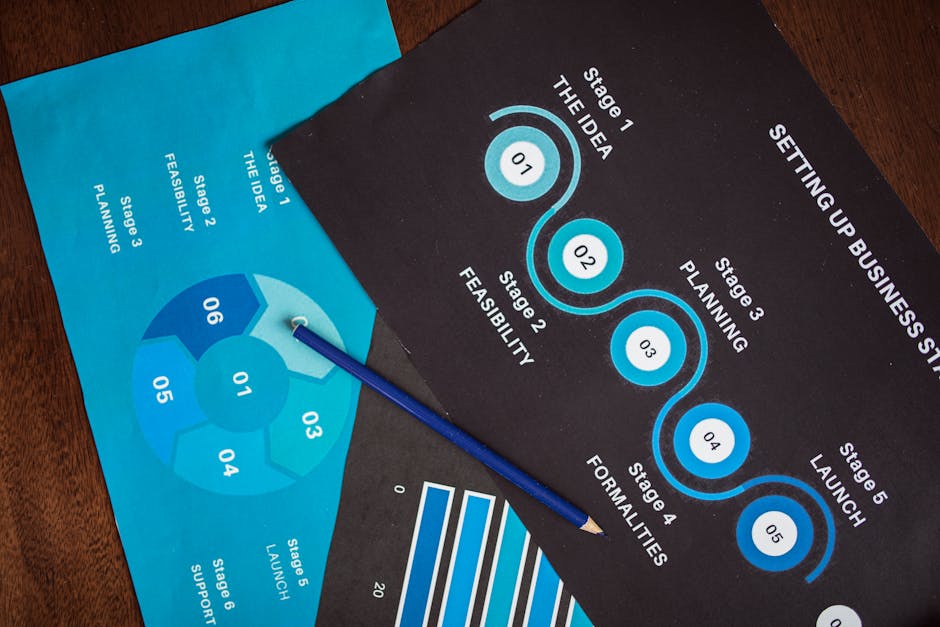
The self-introduction in an interview is not for "replaying" the first half of your life, but to set the tone for the upcoming "role-playing." The mistake most job seekers make is turning the self-introduction into an "audio resume," reciting a running account from university graduation to their last job. This method is not only boring but also wastes the golden time for establishing a first impression.
Within the framework of "role-playing," the self-introduction should be a carefully designed "Character Pitch." To ensure logic is clear and easy to remember, we recommend using the "Present-Past-Future" (Present-Past-Future) three-step formula. This not only fits auditory logic but also quickly anchors your professional image in the interviewer's mind.
Core Formula Breakdown
- The Present (The Present) —— Establishing Persona
- Content: Your current identity, core role positioning (Persona), and even a single sentence that best summarizes your capabilities.
- Purpose: Tell the interviewer "who I am" and throw out a hook (Hook) to make them interested in your "character."
- Script Template: "Hello, I am a [Position] with [X] years of experience, currently focusing on [Core Field/Skill]."
- The Past (The Past) —— Providing Evidence
- Content: Select 2-3 highlight moments or skill accumulations most relevant to the current position. Do not list them chronologically; filter them by "persona match."
- Purpose: Provide credible evidence support (Proof Points) for the "persona" just established.
- Script Template: "In my past work, I was mainly responsible for [Relevant Responsibilities], and I led [Project A], achieving [Quantifiable Results]."
- The Future (The Future) —— Building Connection
- Content: Explain why you are interested in this new "script" (new position) and how your "persona" can help the company solve problems.
- Purpose: Demonstrate motivation (Motivation) and fit (Fit), completing the transition from "I" to "we."
- Script Template: "I understand that your company is laying out [Business Direction], which fits my experience very well, so I really hope to bring my [Core Skills] to this position."
---
Practical Drill: Running Account VS Professional Persona
To let you intuitively feel the difference between the two, we will use a "New Media Operations" job seeker as an example for comparison.
Dimension | ❌ Wrong "Running Account" Mode (Boring Biography) | ✅ Correct "Professional Persona" Mode (Thematic Pitch) |
|---|---|---|
Opening | "Hello interviewer, my name is Little Wang. I graduated from the Chinese Department of XX University in 2019. I usually like reading and writing..." | "Hello interviewer, I am Little Wang, a content operations expert focused on data-driven growth." |
Experience | "After graduation, I first went to an advertising company to do copywriting. After doing it for a year, I felt it was boring, so I jumped to the current e-commerce company to manage the official account. I am mainly responsible for writing articles and typesetting, and occasionally shooting videos..." | "Over the past 4 years, I have been deeply cultivating the content e-commerce field. What I am best at is increasing GMV through high-conversion copywriting design. For example, in my last job, I led the 618 promotion series tweets, increasing the user click-through conversion rate from 2% to 5%." |
Closing | "Because I think your company is very famous, I want to change the environment to challenge myself, and I hope you can give me a chance." | "I noticed that your company is building a private domain traffic pool, which is exactly the direction I am good at and passionate about. I hope to use my practical experience to help the team achieve new breakthroughs in user retention and monetization." |
Key Difference Analysis:
- The bad answer is like reading an instruction manual; the interviewer hears trivial background information and cannot extract your core value.
- The good answer is like an exciting trailer; every sentence reinforces the professional tags of "data-driven" and "high conversion." In the interviewer's notes, you are no longer a "Chinese major who ran an official account," but a "content expert who can help the company make money."
Remember, in this "role-playing" of an interview, your opening statement is your character profile. Once this setting is established, all subsequent Q&A (including handling weaknesses and behavioral interview questions) will revolve around this setting, making your answers more self-consistent and powerful.
Handling Weaknesses: "Full Confession" or "Strategic Vulnerability"?
Under the framework of "interview as role-play," when interviewers ask "what is your greatest weakness," they are not expecting a game of Truth or Dare, nor are they seeking counseling-style confessions. They are actually testing: Is the logic of the "workplace persona" you have constructed self-consistent? Are you clear about where the boundaries of this role lie?
This is just like in a game: it is an acceptable setting for a high-defense "Tank" character to have slow movement speed, but if its weakness is "HP is too low," then that character is completely useless. Therefore, the core principle of handling weaknesses is not unreserved honesty, but ensuring that your weakness is a "Non-fatal Flaw" for the "role" you are currently applying for.
1. Identifying "Fatal Flaws" and "Safe Zones"
Before answering about weaknesses, you must examine your "Role Card" (Job Description). Every position has its untouchable bottom lines (fatal flaws) and tolerable side effects (safe zones).
- Fatal Flaw: Directly negates the core competency of the position.
- Accountant/Finance: Absolutely cannot say "I am not careful enough" or "I am not sensitive to numbers."
- Sales/BD: Absolutely cannot say "I am afraid of rejection" or "I am not good at socializing."
- Programmer: Absolutely cannot say "I don't like learning new technologies."
- Safe Flaw: Does not conflict with core capabilities, and may even be a side effect of a certain strength.
- Data Analyst: Can say "Sometimes, in pursuit of absolute data accuracy, I spend a lot of time cleaning data in the early stages, resulting in chart output not being fast enough" (This is a side effect of "rigor").
- Creative Director: Can say "I tend to have divergent thinking in the early stages of a project and generate too many ideas, needing to rely on the project manager's schedule to converge" (This is a side effect of "creativity").
2. "The Shadow Side Technique": Making Weaknesses the Other Side of the Coin
The most advanced answering strategy is to package the weakness as the "shadow side of a core strength." Any strong character strength will cast a shadow where the light doesn't reach. Since you are here to play this role, your weakness should be a natural extension of the role's strengths, not an abrupt personality defect belonging to you personally.
Formula: Core Strength (Persona Pillar) → Shadow Side (Weakness) → Remedy (Action)
Role Setting | Core Strength | Shadow Side (Weakness Strategy) | Remedy (Action) |
|---|---|---|---|
Execution-oriented PM | Extremely strong sense of responsibility and control | Difficulty delegating: Always worried others won't do it well, tending to do everything personally, leading to self-overload. | "I now force myself to use a task assignment board and set weekly Check-points, learning to control quality at key nodes rather than doing everything myself." |
Technical Expert | Pursuit of ultimate technical solutions | Over-engineering: Prone to fixating on non-core functions, pursuing perfect code while ignoring delivery speed. | "I have started applying MVP (Minimum Viable Product) thinking, aligning with business stakeholders on the standard of 'good enough' before starting, and setting time limits (Time-boxing)." |
Sales Champion | Extremely strong sense of goals and action | Lack of patience: Easily impatient with tedious administrative work, hoping to spend all time on customers. | "I realized that compliance and processes are also part of the business moat. Now I specifically reserve Friday afternoons to concentrate on administrative tasks to avoid emotions interfering with daily deal-closing." |
3. Avoiding "False Prosperity" and "Over-Honesty"
When executing this strategy, there are two common extremes to avoid:
- Reject "Humblebrag" answers: Never say "my biggest weakness is that I pursue perfection too much" or "I work too hard and don't pay attention to my health." These answers sound like nonsense to interviewers and may even be judged as a Lack of Authenticity. According to 233.com's analysis of sales interview scripts, excellent candidates should be able to "analyze themselves objectively and rationally," rather than using fake virtues to cover up problems.
- Reject "Self-Destructive" confessions: Do not talk about the dark sides deep in your personality, such as "I have a bad temper," "I find it hard to trust others," or "I am often late." These are "personal factory setting" issues that are difficult to correct through simple professional training and will make the interviewer think your "persona" is extremely unstable.
Summary: In the role-play of an interview, a weakness is not evidence of your "crime," but a "setting" that makes your character more real and three-dimensional. As long as this setting doesn't affect your leveling up (core business) and you have a strategy to deal with it (remedial measures), it can actually prove that you have clear self-awareness and strong self-management capabilities.
Advanced Challenge: A Guide to Passing Roleplay Interviews
If the previous "character building" was writing the script, then the Roleplay Interview is the live "audition." In many high-paying positions—especially Sales, Customer Success (CSM), Consulting, or Management roles—interviewers are often not satisfied with hearing you "say" you are excellent; they require you to "act" it out on the spot.
This is commonly referred to as a Situational Interview or Sales Simulation Interview. Many candidates fail here, not because of a lack of ability, but because they are still trying to "answer questions" while the interviewer is already "waiting for a reaction."
1. Core Misconception: "Explaining the Plot" or "Getting into Character"?
The biggest trap in roleplay is breaking the fourth wall.
- Wrong Approach (Explaining the Plot):
> Interviewer (playing angry client): "Your product caused our system to crash, I want a refund!"
> Candidate: "Uh, if this is the situation, I would first soothe your emotions, and then contact the technical department..."
> (Comment: Out. You are describing countermeasures, not solving the problem.) - Correct Approach (Getting into Character):
> Candidate (leaning forward, focused gaze): "Mr. Wang, I am very sorry to hear about the system crash, and I fully understand the serious impact this has on your business. To solve the problem immediately, I need to confirm: are all terminals unable to log in, or is it a specific error message?..."
> (Comment: Score. You didn't "say" you would soothe; you directly "did" the soothing and needs diagnosis.)
Golden Rule for Passing: In the Roleplay segment, the interviewer is no longer the "interviewer"; they are the "client" or "opponent" that must be won over. Unless the interviewer yells "Cut," absolutely do not break character to explain your intentions.
2. What Are Interviewers Actually Testing? (Process & Reactions)
According to the analysis in the Bank Spring Recruitment Interview Guide, situational simulations are usually drawn from "typical conflicts that are difficult to resolve" at work. Interviewers do not expect you to perfectly solve a complex business problem in 5 minutes; what they are really assessing is your reaction patterns (Reactions) and handling process (Process):
- Emotional Stability (EQ): When the "client" is being unreasonable or constantly interrupting you, will you become incoherent due to stress, or can you maintain a professional demeanor?
- Questioning Ability (Discovery): Are you eager to push the product (Pitching), or do you know how to uncover needs first?
- Resilience and Rebound: Faced with rejection (Objection), do you give up directly, or can you try to bypass the obstacle?
3. Strategies for Passing High-Frequency Scenarios
A. Sales Simulation Interview (The Sales Demo / Cold Call)
This is the most classic scenario, such as "sell me this pen" or "simulate a Cold Call."
- Strategy: Retreat to advance, ask before selling.
Novices fail by talking too much; experts succeed through listening. Do not start by reciting product specifications. - Practical Script Structure:
- Ice Breaking and Permission: "Mr. Wang, I know your time is precious. Can you give me 30 seconds to briefly explain why I am calling today?"
- Pain Point Excavation (SPIN): "In your current process, which part do you feel is the most time-consuming?" (Do not assume the client has a need; ask to find out).
- Solution Matching: "Since you mentioned the efficiency issue, our automation feature happens to solve..."
- Handling Rejection: The key here is not to refute the client, but to dig into the underlying reasons. When a client says "It's too expensive," do not rush to lower the price, but ask: "Apart from the price, does this solution meet your expectations in terms of functionality?"
B. Conflict Resolution Simulation (Angry Client / Crisis Management)
The interviewer will play an extremely disappointed or even aggressive client.
- Strategy: Emotional De-escalation -> Fact Isolation -> Solution Commitment.
- Key Actions:
- No Defensive: Even if the client is wrong, do not refute them in the early stages of the simulation.
- Empathic Connection: Use phrases like "I fully understand your frustration" or "This is indeed unacceptable."
- Pivot to Action: "To make up for your loss, what I can do right now is..."
4. Advanced Techniques: How to Use "Non-Verbal Signals"
In roleplay simulations, your body language accounts for a large proportion of the score.
- Eye Contact: In high-pressure conversations, avoiding eye contact will be interpreted as "guilty conscience" or "lack of confidence."
- Note-taking Habit: When the "client" states needs or complaints, pick up a pen to take notes. This not only gives you time to think but also conveys a professional signal of "I take this seriously" to the other party.
- Voice Control: When the other party's voice gets louder (angry), your voice should instead become steadier and deeper, rather than raising your volume to match.
Final Reminder: Even if the result of the simulation is a "failure" (e.g., the deal wasn't closed), as long as you demonstrate closed-loop thinking and professionalism during the process, you can still get a high score. Remember, the interviewer is not looking for a perfect actor, but a professional who knows what to do in the face of a crisis.
Practical Drill: The "Script" for Sales and Customer Communication Scenarios

In interviews for positions such as Sales, Customer Success Manager (CSM), or Key Account Manager, "Roleplay" is often not a metaphor, but a tangible assessment component. The interviewer will suddenly switch modes: "Now I am that customer who is furious because of a shipping delay. What do you do?"
At this moment, please enter "combat mode" immediately, like a professional actor. Do not attempt to justify yourself using your real self; what you need is a standardized professional script. Here are the "three-step" director's notes for handling high-pressure communication scenarios:
Act One: Acknowledge & Validate
This is the anchor point for building a connection. Many candidates' first reaction is to explain the reason ("It's because there was an issue with logistics"), which looks like shifting the blame in the eyes of the customer.
- Script Core: Address emotions first, then address the issue. No matter how unreasonable the other party is, the first thing you must do is not to refute, but to validate that their feelings are reasonable.
- Dialogue Example: "Mr. Wang, I completely understand how you feel right now. If my project were delayed by three days, I would be very angry too. Thank you for telling me about this situation directly."
- Director's Note: Keep your speaking pace steady and your gaze firm. The purpose of this step is to make the other party feel "I am listening," not "I am being defensive."
Act Two: Pivot to Solution
After empathizing, you must quickly regain control of the conversation. This is the critical moment to demonstrate "professional control." If you only apologize, you are customer service; if you can propose a solution, you are a consultant.
- Script Core: Use transition words to pull the conversation from "past problems" to "future solutions."
- Dialogue Example: "Since the issue has already occurred, in order to minimize your losses, I have prepared two emergency remedial plans. First, we can immediately allocate local inventory... Second, if you are willing to wait..."
- Director's Note: Do not ask the customer "What do you want to do?"; give the customer multiple-choice questions. Professionals always enter the scene with solutions.
Act Three: Close / Next Steps
The scenario simulation must have a clear ending (Action). Many interviewees stop and wait for the interviewer to speak after presenting the solution, which is a major taboo.
- Script Core: Clarify the next steps (Call to Action).
- Dialogue Example: "Considering the project timeline, I suggest executing the first plan immediately. I will contact the warehouse to lock the order right now. Does that work for you?"
- Director's Note: End the round with a closed-ended question to force the other party to make a commitment or provide feedback, demonstrating your drive.
Fatal Error: Avoid "Breaking Character"
During the simulation, the most serious mistake is not an imperfect solution, but breaking character mid-way.
- Wrong Example: The interviewee suddenly stops to ask the interviewer: "Um... in this scenario, do I know the product price?" or "Sir, by saying that just now, did you want me to refute you?"
- Professional Advice: Once started, you are that character. If information is lacking, please ask questions in character (e.g., "In order to give you the most accurate quote, I need to confirm your purchase volume"), or confidently invent reasonable hypothetical data.
Even if the customer played by the interviewer is extremely rude and constantly interrupts you, do not panic. This is a "stress test" to examine your emotional stability. Maintain your Professional Frame, do not be swayed by the other party's emotions, and persist in acting out your script until the interviewer calls "Cut."
Conclusion: Authentic Core, Professional Packaging
When we talk about an interview being a "role-playing" game, we are not encouraging deception or disguise by negating "being yourself." Quite the opposite, this is a manifestation of a higher level of professionalism. The essence of an interview is not a private conversation seeking psychological comfort, but a high-density business showcase. In this scenario, the so-called "role-playing" is actually the process of you mobilizing all soft skills to provide the best user experience for the interviewer.
"Role-Playing" Is Not Fabrication, But Translation
Many job seekers worry that once they start "acting," they lose sincerity. But we need to clarify a concept: Authenticity refers to the truthfulness of the content, while Packaging refers to the suitability of the expression.
- The core must be real: Your past performance, mastered skills, and core values must be solid "hard currency." If you falsify these basic facts, that is not role-playing; that is commercial fraud, and you will ultimately fail the probation period test. As mentioned in the Interview Skills Mind Map, efficient dialogue requires "sincerity" to ensure information is not distorted, but it also requires "sufficient" context to prevent misunderstanding.
- Packaging needs to be professional: As a candidate, you have the responsibility to translate your complex, multi-faceted, and perhaps slightly rough "true self" into "professional language" that the interviewer can understand and is willing to listen to. Just as a product manager would not show messy code at a launch event but rather a smooth functional experience—this is not called hypocrisy; this is called being responsible to the audience.
Finding the "Best Version" of Yourself
Do not view the interview as a struggle between the "original you" and the "fake you," but rather as a switch between the "daily you" and the "highlight you."
In these few dozen minutes of the interview, your goal is not to show a relaxed self on the sofa on a weekend, but to demonstrate a professional who has entered a battle-ready state, is emotionally stable, and thinks logically. This state may require you to deliberately maintain it (i.e., "role-play"), but it remains a part of your capabilities.
Ultimately, the best interview state is not turning into another person, but through sufficient preparation and a deep understanding of the role, eliminating the interference caused by nervousness, chaotic expression, or emotionality, allowing the interviewer to see your most excellent version without obstruction.
When you are no longer fixated on "whether I am comfortable right now" but focus on "whether my current performance meets the job requirements," you will actually gain true confidence. Because you clearly know: the authentic core gives you the foundation, while professional packaging gives you the opportunity.