

In an increasingly competitive tech hiring market, traditional resume submissions often face high rejection rates, while technical competitions and Meetups offering "Hackathon interview passes" or "campus recruitment green cards" are becoming prime avenues for job seekers to bypass tedious processes and reach core hiring teams directly. However, not all "fast-track privileges" hold equal value. From "priority resume screening" that only skips machine filters to high-value "written test waivers" or even "direct final interviews," candidates must discern the underlying recruitment hierarchy to avoid marketing traps. For developers aspiring to join tech giants, understanding the logic behind these "green cards" is crucial: recruiters host Hackathons not just for ideas, but for low-cost, high-efficiency "pre-validation." Unlike traditional LeetCode grinding or brief interviews, Hackathon job seeking offers a high-fidelity workplace simulation, allowing Hiring Managers to comprehensively assess code implementation, teamwork EQ, and engineering mindset under extreme pressure within 24 to 48 hours. Therefore, the key strategy for securing referrals or Hackathon resume boosts lies not in standing on the podium, but in shifting from a participant mindset to a "prospective employee" mindset. This means stepping out of your comfort zone to team up with strangers to demonstrate adaptability, showcasing soft skills through quality documentation and communication, and gaining "proactive exposure" with technical mentors. By leveraging the unique context of technical Meetup recruiting to prove your Senior Engineer potential, you transform a weekend event into a career springboard that bypasses ATS algorithms and directly locks in an Offer.
Unveiling the True Value of "Interview Direct Pass" and "Campus Recruitment Green Card"
On promotional posters for Hackathons or technical Meetups, "Interview Direct Pass," "Campus Recruitment Green Card," or "Resume Screening Exemption" are often the most tempting prizes. However, many job seekers find after obtaining these so-called "privileges" that they are not equivalent to an Offer, and sometimes even the interview opportunity fails to materialize.
To make good use of these opportunities, one must first break the information asymmetry and understand the true value of these "cards" from the underlying logic of the recruitment process. Within companies, these passes are not of a single specification but are strictly classified into different levels based on recruitment costs and candidate validation degrees.
The Grading System of Recruitment Passes
"Direct Pass" is a general marketing term. In actual execution, it typically corresponds to the following three tiers of recruitment privileges:
Tier | Common Terms | Actual Benefits | Saved Recruitment Steps | Value |
|---|---|---|---|---|
Tier 1 | Resume Priority Screening / Resume Screening Exemption | Resume goes directly to the HR or Hiring Manager's inbox, skipping the ATS (Applicant Tracking System) keyword automatic filtering. | ❌ Only skips machine preliminary screening | ⭐ (Low) |
Tier 2 | Skip OA / Technical Screening Exemption | Default assumption that the candidate's coding ability has been verified by the event; proceeds directly to the first round of technical interviews. | ✅ Skips Online Assessment (OA) / Written Test | ⭐⭐⭐ (Medium) |
Tier 3 | Direct to Final Round / Green Card | Skips all basic technical and HR interviews, proceeding directly to the final assessment with the Department Head or "Bar Raiser." | ✅✅ Skips written test + 1-2 rounds of technical interviews | ⭐⭐⭐⭐⭐ (High) |
Beware of the "Priority Screening" Word Game
Job seekers' misunderstandings are most concentrated on Tier 1 (Resume Priority Screening). Many participants mistakenly believe that "Screening Exemption" means "Guaranteed Interview."
In fact, from a Hiring Manager's perspective, "Priority Screening" only means your resume will be marked with a high-priority Tag. A human HR will indeed take a look at your resume instead of letting it drown in a sea of submissions. However, if your resume itself does not match the JD (Job Description), or if the Headcount is full, HR will still process a rejection.
Practical Warning: If an event's prize is merely "Priority Screening Rights," it is essentially just helping you gain a chance to be "seen," not a promise to be "hired."
Hiring Manager Perspective: Why Do Companies Issue "Green Cards"?
To understand the "value," one also needs to understand the motivation behind companies issuing these cards. Companies are not doing charity; they are conducting Pre-validation.
Traditional recruitment processes (Resume -> OA -> 1st Round -> 2nd Round) have extremely high costs and a not-insignificant misjudgment rate. In a Hackathon, recruiters can directly observe the following qualities of candidates through high-intensity practical combat within 24-48 hours:
- Code Implementation Ability: Events like the Huawei LiteOS Hackathon require developing a commercializable project in 2 days and 1 night, which is in itself a "computer-based exam" of the highest difficulty.
- Collaboration and Communication: How to argue, compromise, and reach a consensus with teammates under pressure; these are soft skills that LeetCode problem-solving cannot reflect.
- Technical Passion: People willing to stay up late writing code on weekends usually have stronger internal drive than those who work solely for a salary.
Therefore, when you get a Tier 2 or Tier 3 direct pass, it means you have passed an "invisible assessment" stricter than an interview. Companies issue direct passes essentially to lock in these verified high-quality assets, thereby saving subsequent screening costs.
Hackathon Job Hunting in Action: Strategies to Secure an Offer Without Winning the Championship
Many job seekers harbor a misconception that only the champion or runner-up teams standing on the podium can gain the favor of companies. However, in the eyes of hiring managers, a Hackathon is essentially a high-intensity Work Simulation. Compared to the final perfection of the code, the collaboration skills, product thinking, and problem-solving paths you demonstrate under extreme pressure within 24 to 48 hours are often more likely to trigger the issuance of an "interview fast-pass" than a mere trophy.
To secure an Offer without winning the championship, the core strategy lies in shifting your mindset from "contestant" to "prospective employee," utilizing every link in the competition process to demonstrate soft skills.
The Process Is the Assessment: Utilizing the "Invisible Scorecard"
Companies sponsor Hackathons not only to find creativity but also to screen high-potential talent at a low cost. Traditional LeetCode grinding cannot assess a candidate's communication and stress resistance capabilities, which is exactly where the advantage of a Hackathon lies.
Smart job seekers pay attention to the organizer's judging weights and allocate energy accordingly. Taking the Huawei LiteOS Hackathon as an example, its scoring rules allocate 10% to "Presentation" and 30% to "Commercial Value," and even explicitly state that providing supporting documentation can earn extra points. This means that if you can clearly define the product's commercial value and output high-quality technical documentation beyond just code, your scoring points have already surpassed the simple "code monkey" dimension, demonstrating to interviewers the potential of a Senior Engineer or even a Tech Lead.
Shift from "Heads-Down Coding" to "Active Exposure"
Most contestants fall into a mode of closed development during the competition, which precisely wastes the best opportunity to establish connections with internal company personnel.
- Document your thinking: Don't wait until the end to organize the PPT. Referring to the entry requirements of the Microsoft Cloud Hackathon, project plans, functional description documents, and demo videos are core deliverables. Updating these documents synchronously during the development process and actively seeking feedback from on-site mentors (usually senior corporate engineers or technical managers) is an excellent opportunity to demonstrate logical thinking and communication skills.
- Demonstrate technical acumen: Using the technology stack promoted by the organizer during the competition (such as Azure API or specific IoT systems) and asking in-depth questions can quickly leave the impression of a "fast learner" on the on-site technical judges.
As long as you demonstrate extremely high engineering professionalism and team contribution during the process, even if the final Demo has bugs leading to missing out on the grand prize, you are still highly likely to enter the recruiter's "whitelist." Next, we will delve into how to plant the seeds of job-hunting success at the very beginning of the competition—the team formation stage.
Pre-competition Team Formation: Choosing Teammates Means Choosing Potential Colleagues

Many job seekers are accustomed to teaming up with two or three familiar classmates or former colleagues to compete. While this is a psychological comfort zone, it is typical "inefficient networking" in terms of job-hunting strategy. In a Hackathon, your teammates are not just collaborators, but your first batch of "referrers" or "endorsers." If you only stick with acquaintances, you automatically cut off opportunities to expand your network.
1. Simulate a Real Workplace Environment: Actively Seek Out "Strangers"
Hiring Managers highly value a candidate's adaptability when facing ambiguous requirements and unfamiliar teams. Actively choosing to team up with strangers is essentially a high-fidelity workplace simulation:
- Showcase Soft Skills: You need to quickly break the ice, assign tasks, and resolve conflicts. The trust forged under high pressure within 24-48 hours is far more persuasive than the hollow "good teamwork skills" on a resume.
- Diverse Backgrounds: Try to find teammates with complementary skills. For example, if you are a backend developer, look for a teammate skilled in frontend or UI design, and a product-oriented teammate good at Pitching. According to rules of events like the Microsoft Cloud Hackathon, final deliverables often include non-code assets such as "project proposals, slides, and videos." An all-around configuration (Hacker + Hipster + Hustler) allows you to stand out from competitors with a purely technical perspective.
2. "Trojan Horse" Strategy: Lock in Key Teammates
In some open Hackathons or corporate Developer Days, the organizer's employees, former interns, or even technical evangelists sometimes participate as contestants or mentors.
- Target "Insiders": If the rules allow, try to join a team with company employees (non-judges) or past interns. Working alongside them is the shortest path to understanding the company's internal culture, tech stack preferences, or even directly getting an internal referral.
- Seek "Mentor-type" Teammates: Some events (such as RWA events) explicitly set up sessions where "Hackathon Mentors" lead students in practical projects. In this setup, your performance is directly exposed to experienced industry insiders, and excellent collaboration skills are very likely to earn you a highly valuable recommendation letter.
3. Avoid the "All-Tech" Trap
To get an Offer rather than just prize money, your team must possess the ability to "sell value." Many technical teams lose in the final pitch session because no one can translate technical challenges into commercial value. When forming a team, be sure to recruit a teammate with a business mindset or excellent presentation skills, or take on this role yourself. This proves to the recruiters present: you not only know how to write code but also understand business implementation.
During the Competition: How to Use Mentor Sessions for "Reverse Interviewing"

At a Hackathon site, Mentors are usually senior engineers, technical leads, or even hiring managers from the organizers or sponsoring companies. Most participants merely view them as "error debuggers" or "API documentation explainers," which is a huge waste of resources. In reality, the Mentor walkthrough session is the highest-value invisible interview of the entire competition—it is your only opportunity to engage in deep technical exchanges with potential future supervisors for up to 48 hours in a non-interview environment.
To obtain a "Direct Interview Pass," you need to transform the process of asking Mentors questions into a "reverse interview" that showcases your technical depth and engineering vision.
1. Questioning Strategy: Shift from "Help Seeker" to "Discussion Partner"
When evaluating candidates, senior engineers often value question quality more than mere coding speed. Low-quality questions expose weak foundations, while high-quality questions demonstrate your level of thinking. Please refer to the following "Question Upgrade List" to strike precisely during Mentor walkthroughs:
Question Dimension | ❌ Junior Help (Exposes Weakness) | ✅ Senior Discussion (Shows Depth) | Subtext Analysis |
|---|---|---|---|
Tech Selection | "Why won't this React component run?" | "Considering the competition is only 48 hours, we chose the lightweight Zustand over Redux for state management. Do you think this Trade-off of sacrificing scalability for development speed is reasonable in the current scenario?" | Shows you understand Engineering Trade-offs, rather than blindly stacking technology. |
Architecture Design | "Can you help me check why the database won't connect?" | "Our core business involves high-concurrency writes, and we currently designed a Redis-based buffer layer. I'd like to ask how your company balances data consistency and write latency when handling similar scenarios?" | Implies you possess System Design thinking and have curiosity about industry best practices. |
Business Value | "Is our feature cool?" | "We applied RAG technology to this feature to solve the hallucination problem, which seems to be a pain point for enterprise adoption. From the perspective of industrial implementation, do you think our current accuracy evaluation metrics hit the mark?" | Shows you possess Product Thinking, focusing on the ability of technology to solve actual commercial problems. |
2. Code Review is an "On-site Interview"
When a Mentor stops to check your code or Demo, immediately enter "Technical Defense" mode. Do not just show that "it runs," but actively guide the Mentor through an informal Code Review.
- Actively expose the thinking process: Point to complex logic segments in the code, explain why you wrote it that way, and what alternatives you considered. For example: "I used simple polling here instead of WebSocket because of deployment costs and time constraints, but I know this would be a performance bottleneck in a production environment."
- Show Coachability: If the Mentor offers optimization suggestions, this is the best moment to score points. Do not argue to save face, nor blindly follow instructions. The correct approach is: Understand -> Confirm -> Execute -> Feedback.
- Dialogue Example: "I understand, you suggest moving the calculation logic to the backend for security. I will go refactor this part now; could you please come back and check the results in an hour?"
- This interaction directly proves that you are not only technically competent but also easy to work with, which is often the key psychological threshold for a Hiring Manager deciding whether to issue an Offer.
3. Lock in the Decision Maker
Not all Mentors have hiring decision power. In the early stages of the competition, by observing name tags (Titles) or chatting ("Which business line are you mainly responsible for?"), quickly identify those Tech Leads of core business groups. Save your "deep questions" for these people. Once you have left a deep impression during the technical discussion, before the competition ends, ask directly: "If I want to continue diving deeper into this direction, does your team currently have any open opportunities?"
In this scenario, you are no longer a stranger casting a wide net with resumes, but a "prospective colleague" who has been battle-tested and possesses problem-solving abilities. This trust-based referral can often directly skip HR resume screening or even the first round of technical interviews.
Post-Competition Review: Turning Hackathon Projects into a "Super Bonus" on Your Resume
Many job seekers often simply write a single line like "Participated in XX Hackathon" on their resumes after the event concludes. This not only wastes the experience of 48 hours of extreme development but also misses the best opportunity to demonstrate "practical delivery capability" to interviewers. To trigger the "Fast Pass" effect in the recruitment process (usually referring to skipping online coding tests or initial resume screening), you need to package this experience as a complete MVP (Minimum Viable Product) delivery case, rather than just a "participation record."
1. The Core of Resume Descriptions: From "Wrote Code" to "Solved Problems"
When HR and technical interviewers look at Hackathon projects, they focus not on whether the code is perfect, but on whether you possess the ability to deliver results under extreme constraints. This is a scarce trait that most candidates who focus solely on algorithmic problems do not possess.
You need to reconstruct your resume description using the Context (Background/Constraints) + Action (Actions/Technical Decisions) + Result (Outcomes/Business Value) framework. Highlight the three dimensions of "48-hour extreme development," "rapid learning of new technologies," and "solving specific business pain points."
Before vs. After Resume Optimization Example:
Version | Description Style | Recruiter Perspective (Subtext) |
|---|---|---|
❌ Traditional | "Participated in the XX Fintech Hackathon, used Python and React to develop a financial management app, and was responsible for writing backend APIs." | "This is just an ordinary toy project; it shows no technical depth, nor does it show his unique value within the team." |
✅ Advanced | "During a 48-hour extreme development sprint, led the construction of an RAG-based smart financial assistant MVP. Addressing financial data privacy pain points, designed a localized vector retrieval scheme, solving compliance risks caused by large model hallucinations. Ultimately won the 'Best Technical Innovation Award' among 50+ teams and was evaluated by judges (a Tech Director from a major tech company) as 'having landing potential'." | "This person has a strong delivery mindset (48 hours), understands business pain points (privacy/compliance), and the technical solution has been validated by industry experts (award/evaluation). Can skip the written test and go straight to the interview." |
2. Building a "Verifiable" Chain of Trust: A Demo Is Worth a Thousand Words
The "Fast Pass" obtained in a Hackathon is often not a physical card, but a form of trust endorsement. To reinforce this endorsement, do not just leave a GitHub link on your resume (interviewers usually don't have time to read your source code).
- Video as a Business Card: Record a 1-2 minute project demo video showcasing the core functions of the product. As mentioned in practical cases from the Product Manager community, this intuitive visual impact is far more persuasive than text descriptions and allows decision-makers to understand your value within seconds.
- README as the Facade: If the interviewer actually clicks on your code repository, the README.md is your face. Be sure to clearly state at the beginning of the document: Project Background, Problem Solved, Technical Architecture Diagram, and How to Run. Even if the code style is slightly messy due to the rush, professional documentation can prove your engineering literacy.
3. "Reverse Interview" Material from the Review
The value of a post-competition review lies not only in the resume but also in the interview stage. When an interviewer asks, "What was the biggest challenge you faced in this project?", do not just answer "not enough time." Instead, use this as an opportunity to showcase your Technical Trade-off ability.
For example: "Midway through the competition, we found that the originally planned API response was too slow. To ensure the quality of the presentation, I decided to sacrifice some data consistency and introduced an Optimistic UI strategy, ultimately ensuring the smoothness of the Demo." This kind of scenario-based technical decision-making is exactly the "bonus item" that is highly valued in senior engineer interviews.
Tech Meetup Recruiting: Turning from "Audience" into "Candidate"
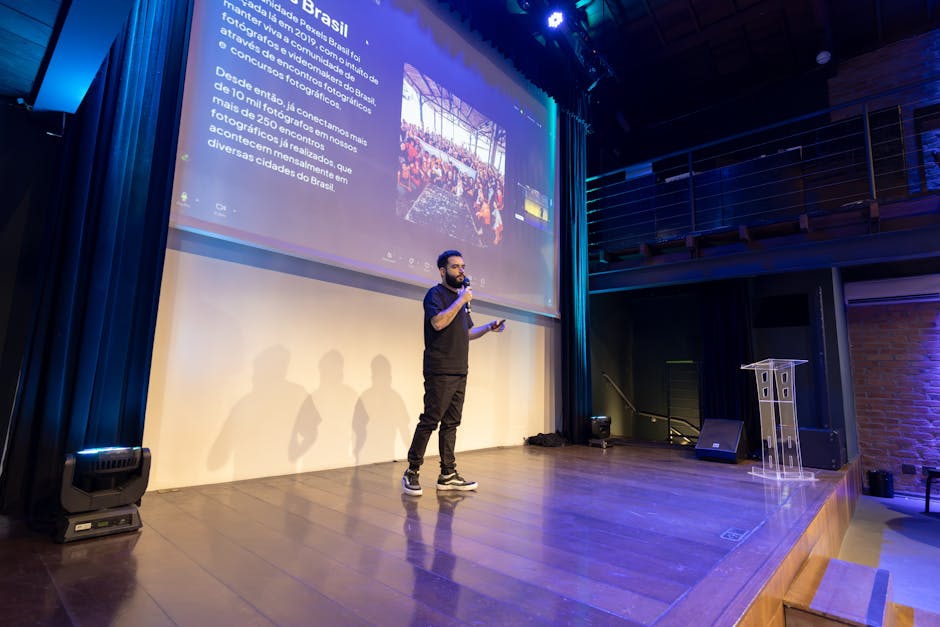
If a Hackathon is a 48-hour extreme pressure test of hard coding abilities, then a technical Meetup (or Tech Talk, Salon) is a fast-paced, high-EQ "soft landing." Compared to the code output of a hackathon, a Meetup usually lasts only 2-3 hours and carries stronger social attributes. Here, hiring managers and senior engineers are not just looking at your technical comprehension, but are also assessing your "Culture Fit" through informal exchanges.
Many job seekers are used to walking around the venue with paper resumes like handing out flyers. This is often the least efficient method and the easiest way to cause annoyance. In a Meetup scenario, your goal is not to get an Offer on the spot, but to establish high-quality "Intellectual Networking," ensuring decision-makers can instantly recognize your name in the subsequent recruitment process.
Identifying the "Invisible Interviewers" in the Room
At a Meetup, not all attendees have equal social value. You need to quickly identify three types of key figures who hold recruitment authority:
- Speakers: They are usually the technical backbone or Tech Leads of the team. Their presentation content is the best entry point, but they are also the busiest people after the session.
- Organizers: Many tech salons are assisted by a company's DevRel (Developer Relations) or HRBP. For example, technology-driven companies like Singularity AI regularly hold technical salons; these events themselves are part of their employer branding and talent pooling. Organizers usually know best which teams are urgently hiring.
- "The Silent Seniors": People standing in the back row, not taking many notes but occasionally nodding or frowning, are often the Engineering Managers accompanying the team.
Refusing "Awkward Chat": Replacing Job-Hunting Anxiety with Technical Curiosity
The key to transforming from a listener to a candidate lies in how you initiate the conversation. Do not use "Are you hiring?" as an opening line, as this quickly downgrades the conversation to a transactional HR Q&A. Instead, you should demonstrate deep curiosity and thinking about the technology itself; this posture of "reverse interviewing" is more likely to win respect.
Comparison of Efficient Communication Strategies:
Communication Dimension | Low Efficiency (Job Seeker Mindset) | High Efficiency (Peer Mindset) |
|---|---|---|
Opening Line | "I am a fresh graduate/engineer looking for a job, here is my resume." | "The distributed lock scheme you mentioned just now was very interesting, but I'm curious how you handle Redis latency jitter under extreme concurrency?" |
Focus of Exchange | Asking about salary, overtime, and headcount (HC). | Discussing architecture Trade-offs, the background of tech stack selection, and business pain points. |
Ending the Conversation | "I hope you can give me an interview opportunity." | "Your insights were very inspiring. Is it convenient to connect on WeChat/LinkedIn for further advice? I previously wrote a retrospective article regarding this issue." |
The "Interview" Here is Two-Way and Invisible
In a Meetup, the quality of your questions, your communication logic, and your attitude when listening to others are actually being secretly evaluated. Senior engineers will judge your technical depth (Expertise) based on the questions you ask.
- Q&A Session: Try to be the first or second to ask a question. Do not ask basic questions that can be Googled (e.g., "Is this framework easy to learn?"), but rather ask scenario-based questions (e.g., "In a multi-tenant scenario, how is the data isolation level of this solution designed?"). A high-quality question can instantly make you stand out from dozens of listeners.
- Networking Break: This is a moment to showcase soft skills. Join a small circle that is currently discussing, listen first, and then add a valuable point or case study at the right moment. Avoid interrupting others or forcibly dragging the topic back to your job search needs.
Remember, the essence of Meetup recruiting is "friends first, colleagues second." When you successfully obtain the contact information of a guest or Hiring Manager by demonstrating technical taste and communication literacy, and send a Follow-up message containing specific technical discussions after the meeting, you have already bypassed the resume screening system and entered directly into the decision-maker's field of view.
The Art of Asking Questions: Attracting Hiring Managers with High-Quality Questions

After the presentation segment at a Meetup or Hackathon, the Q&A time is often wasted by most job seekers on trivial pleasantries or logistical inquiries. In fact, this is the only Public Audition of the entire event—you hold the room's microphone, and everyone's eyes (including potential Hiring Managers) are focused on you.
Using this opportunity, your goal is not to obtain information, but to demonstrate "Engineering Maturity." A high-quality question can instantly establish a "Halo Effect," making the speaker (usually a technical lead) actively willing to engage with you in depth during the networking session after the event.
Distinguishing "Tourist-style Questions" from "Expert-style Questions"
When a Hiring Manager listens to questions, they quickly judge the questioner's Level in their mind. You need to avoid questions with answers that can be found on Google, and instead implant your understanding of technical Trade-offs into your question.
Question Type | Specific Examples (Bad vs. Good) | Signal Sent |
|---|---|---|
❌ Low-Value Questions | "What is your company's current tech stack?"<br>"Do you hire fresh graduates? Do you support remote work?"<br>"What was the name of that tool you just mentioned?" | Handout Seeker / HR Questions<br>These questions reveal that you haven't done prior research, or your focus is solely on benefits rather than the technology itself. |
✅ High-Value Questions | "You mentioned choosing a strong consistency model when refactoring the payment service, but this might affect availability under high concurrency. How does the team make trade-offs between Latency and Data Consistency?" | Possesses Practical Experience<br>You not only understood the talk but also understand the difficulties of distributed systems. You are discussing problems like a peer, not asking for instruction like a student. |
✅ Scenario-based Questions | "I noticed you used Solution A when handling massive logs. I tried a similar architecture in a Demo project, but encountered issues with excessive resource consumption during cold starts. How do you optimize this in a production environment?" | Solution-Oriented Mindset<br>The implied message is: "I not only understand the theory, but I have also written the code myself (Hands-on)." |
Tactical Implementation of the "Halo Effect"
Asking a good question is just the first step; the real conversion happens within the 10 minutes after the Q&A ends.
- The Hook:
When you ask a deep question about "system scalability" or "architectural evolution" in public, the speaker will unconsciously stare at you while answering, trying to confirm if you understood. At this point, you have broken away from the identity of a "random bystander." - The Follow-up:
After the event, the speaker is usually surrounded by a crowd. You can walk straight up and use the "halo" from earlier to cut into the conversation: "Hi, I'm the one who asked about the data consistency issue just now. Actually, the reason I asked is that I recently encountered a similar deadlock challenge in a project I'm working on..." - Establishing Connection:
Because your public question has already validated your technical taste, the other party no longer needs to scrutinize you with the defensive stance of an interviewer, but is more inclined to communicate with you with the equal stance of a "technical discussion." This dialogue often leads directly to: "Why don't we add each other on WeChat/LinkedIn? If you are interested in these kinds of challenges, our team happens to be hiring."
Action Point: Before attending an event, look up the speaker's background and past blogs. Prepare 2-3 "pre-made questions" regarding their core business scenarios to ensure that when the microphone is handed to you, you can calmly demonstrate the depth of thought of a senior engineer.
Guide to Avoiding Pitfalls: How to Identify Low-Value "Fake Fast-Track" Opportunities
In the current job market, job seeker anxiety is often used as a tool for exploitation. When you see terms like "Interview Fast-Pass," "Green Channel," or "Internal Referral at Top Firms," your first reaction should not be excitement, but vigilance. Many so-called recruitment events do not actually possess real hiring validity. Blindly participating not only wastes precious preparation time but may even result in you becoming free labor.
To protect your time investment (Time ROI), before deciding to invest a weekend in a Hackathon or Meetup, be sure to check against the following list.
🚩 Three Red Flags of "Fake Fast-Tracks"
If an event exhibits any of the following characteristics, it is highly likely to be a low-value "fake fast-track" opportunity:
- Charging Job Seekers (Entry Fees)
- Red Line Warning: Real recruitment events are held by companies to lower Customer Acquisition Costs (CAC), and the budget should be covered by the company. If an event requires you to pay for tickets, registration fees, or "referral fees," pass immediately. You should be the talent companies are competing for, not the victim being harvested.
- Organizers Are Not the Hiring Party (Third-Party Agencies)
- Risk Point: Check if the event organizer is a specific tech company (e.g., Google, ByteDance, Shopee) or an unknown "career consulting agency" or "EdTech company." Hackathons hosted by third-party agencies are often just for Resume Harvesting; they do not have the authority to issue Interview Invites. The so-called "fast-track" is usually just "we will hand your resume to HR," which is essentially no different from applying on the official website.
- Vague Reward Promises (Vague Promises)
- Keyword Trap: Beware of events that only promise "Industry Exposure," "Networking with Big Shots," or "Rich Prizes." Events with a genuine hiring purpose will clearly state in the FAQ or promotional posters: "Top 3 teams exempt from written test," "Top 10 contestants go directly to HR interview," or "On-site Internship Offers." If there is no specific Hiring Quota, the direct help of the event for job hunting is almost zero.
💰 ROI Calculation: Hackathon vs. LeetCode
Participating in a Hackathon usually requires 48 hours of high-intensity work, plus prior team building and preparation time. This is equivalent to the time you could spend solving 20-30 LeetCode Medium problems. To ensure this time investment is worthwhile, you need to perform a rational ROI (Return on Investment) calculation:
Dimension | When to Choose Hackathon / Meetup | When to Choose LeetCode at Home |
|---|---|---|
Goal Clarity | You very much want to join a specific company, and the event is officially hosted or deeply sponsored by that company. | You are in the mass application phase, have no specific target company, or the target company does not hold such events. |
Skill Advantage | Your engineering implementation ability is stronger than your algorithmic problem-solving ability, or you have very dazzling project presentation skills. | Your algorithmic foundation is weak, or the target company's interview process includes an OA (Online Assessment) that is extremely difficult and cannot be skipped. |
Resume Competitiveness | Your resume background (school/past companies) is relatively weak and easily filtered out automatically by systems during the resume screening stage. | Your resume background is already strong enough (top school/big tech) to easily get interview opportunities through regular channels. |
Key Decision Point: If an event cannot explicitly promise to help you skip the top-of-funnel stages like "Resume Screen" or "Online Assessment," then its job-seeking ROI is far lower than systematically reviewing algorithms and system design at home.
⚠️ Recognize the True Definition of "Fast-Pass Cards"
Finally, expectations need to be managed. In most formal processes, a "Pass Card" does not mean a direct Offer.
- Common "Fast-Track": Skip resume screening, skip OA (machine test), skip group interview. You enter directly into the first round of technical interviews.
- Rare "Fast-Track": Skip all technical interviews and go directly to the Hiring Manager interview (usually limited to Hackathon champion teams).
- Fake "Fast-Track": Merely obtaining a "referral code," where you actually have to go through all processes from the beginning.
Before investing energy, be sure to clarify exactly which step of trouble this "card" can save you by checking feedback from previous events or asking the organizers directly. Do not fight a battle you cannot win for a vague promise.
After Getting the Direct Pass: Follow-up Processes Where You Still Can't Let Your Guard Down
Obtaining a "Green Card" or "Direct Pass" from a Hackathon or Meetup is undoubtedly a milestone worth celebrating, but this is merely the first step in a long journey. Many job seekers harbor a fatal misconception, believing that getting a direct pass means having one foot inside the company door. In reality, a direct pass is usually just a "queue-jumping ticket," not a "waiver." It helps you skip the black hole of resume screening and tedious online assessments (OA), but this move often raises the interviewers' psychological expectations of you, making subsequent assessments potentially even stricter.
The Real Scope of the Direct Pass
In most tech company recruitment processes, the effect of a direct pass is mainly concentrated at the top of the funnel. To manage expectations, you need to be clear about exactly which steps it saves you from, and which stages are unavoidable:
- Exempted Stages (Usually):
- Resume Keyword Screening (ATS): You no longer need to worry about being automatically rejected by the system because your resume lacks a certain buzzword.
- Online Algorithm Assessment (OA): Many candidates who get a card through a Hackathon can skip standard tests like HackerRank or CodeSignal directly, because your coding ability has already been verified at the event.
- HR Phone Screen: In some cases, you can go directly to the first technical interview, skipping the routine background check.
- Tough Battles Remaining (Mandatory):
- System Design: On-site coding often only demonstrates small-scale code implementation capabilities, whereas system design assesses architectural thinking. This is a blind spot that the direct pass cannot cover.
- In-depth Technical Interview (Onsite/Virtual Onsite): Interviewers will dig deeper into computer fundamentals, concurrency, or the underlying principles of specific tech stacks.
- Behavioral Interview: Since you have already demonstrated hard technical skills, the weight placed on assessing soft skills and Culture Fit will increase accordingly.
Strategy: Transforming "Event Experience" into "Interview Leverage"
Since the direct pass puts you directly in front of decision-makers or senior engineers, you must make good use of this card's "origin story." Do not present yourself as an ordinary external applicant; instead, show that you already possess a certain degree of practical understanding of the company's business.
1. Reviewing the Hackathon Project as Technical Evidence
In technical interviews, when asked about project experience, actively answer using your work from the Hackathon.
- Context: "In the hackathon hosted by your company last month, I noticed that the provided API had latency when handling high-concurrency callbacks..."
- Action: "Therefore, I implemented a message queue-based asynchronous processing mechanism in my Demo to optimize this flow."
- Result: "Ultimately, this solution allowed our prototype to run smoothly during the demo session and gained recognition from the on-site judges."
This way of answering not only proves technical ability but also implies that you are already familiar with the company's tech stack and business pain points.
2. Leveraging the "Halo Effect" to Build Connections
If you had in-depth exchanges with a Mentor or judge at the event, casually mentioning this during the interview can quickly bridge the gap. For example: "When I spoke with Architect Zhang from your company at the time, the microservice splitting challenge he mentioned left a deep impression on me. After returning, I specifically studied related solutions..." This shows your Proactivity and identification with the company's technical culture.
Warning: Do Not Fail in the "Behavioral Interview"
Many technically strong candidates fall at the final HR interview or Manager Round. The direct pass proves your hands are fast, but interviewers also need to confirm that your mind is steady.
- Verifying Collaboration Skills: Hackathons are usually high-intensity short-term sprints. Interviewers may question whether your code is standard and whether you have the awareness for long-term maintenance. You need to proactively demonstrate how you handled team division of labor, code reviews (even simplified versions), and technical disagreements during the event.
- Culture Fit: Recruiters often look for talent who possess both the "Hacker Spirit" (solving problems quickly) and "Engineering Professionalism" (rigor and stability). Avoid showing tendencies of "doing whatever it takes to win" or "only writing code without caring about the business."
Key Action: Within 48 hours of receiving the direct pass, proactively ask the Recruiter about the specific follow-up process (is it directly Onsite or is there an additional technical round?), and prepare your "event review story" specifically for it. Package this event experience as a highlight project in your career, not just an admission ticket.